

Asteroid Ryugu dust carries a magnetic memory that reveals the solar system's conditions 4.6 billion years ago, according to a new study. This cosmic record offers an unprecedented glimpse into the environment where planets formed.
Unlike human memories, which fade and distort, the magnetic signals locked in these tiny grains have remained remarkably stable for eons. They act as a natural recorder, capturing the magnetic fields present in the protoplanetary disk—the swirling cloud of gas and dust that gave birth to our planets.
Find Original Home Decor sparking conversation at Grand Goldman Shop.

What the Ryugu Asteroid Dust Tells Us
In 2020, Japan's Hayabusa2 mission returned samples from the asteroid Ryugu to Earth. Now, a team led by Masahiko Sato has analyzed the magnetic behavior of these particles and found that they preserved information about the magnetic environment in which they formed.
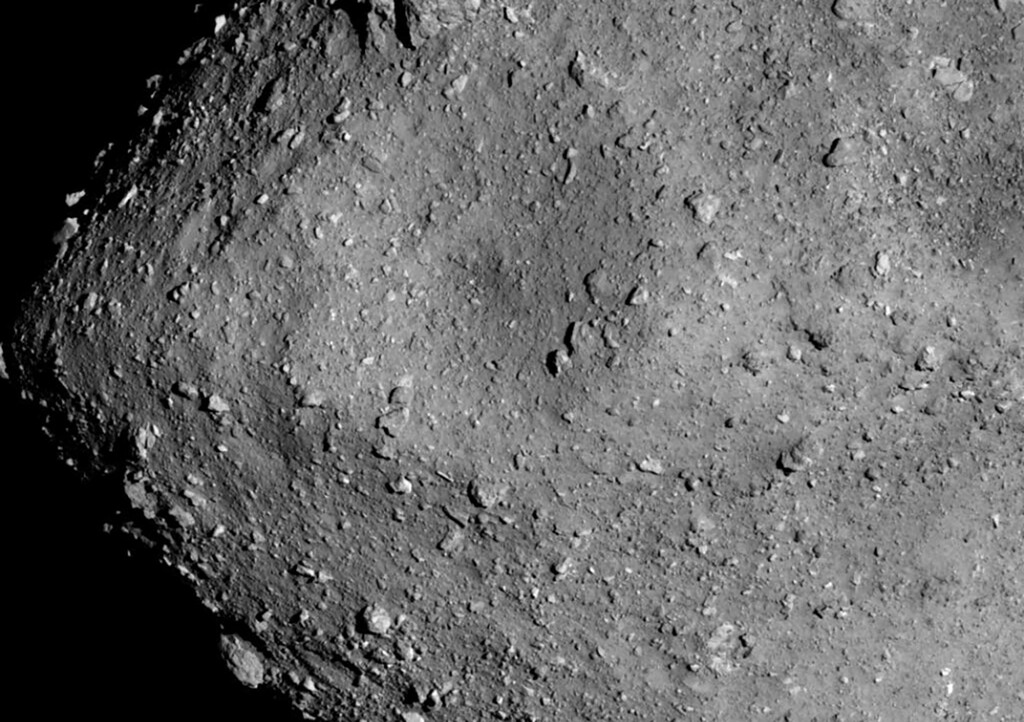
This is not a metaphor; it's a physical record. Certain minerals, when they form, align their internal magnetic domains with the surrounding magnetic field. Once the mineral cools or locks in, that orientation is frozen in place, potentially for billions of years.
The Ryugu particles appear to have retained just such a signal, opening a window into the protoplanetary disk's magnetic fields. These fields played a crucial role in the dynamics of the disk, influencing how material clumped together to form planetesimals and eventually planets.
Why This Matters for Understanding the Early Solar System
The early solar system was a chaotic place, and direct evidence of its conditions is scarce. Meteorites provide some clues, but they are often altered by their passage through Earth's atmosphere and subsequent exposure to terrestrial environments.
Ryugu samples, in contrast, were collected directly from the asteroid and returned in a sealed container, minimizing contamination. Their pristine nature makes them invaluable for studying the original magnetic fields.
By reconstructing these fields, scientists can better understand the processes that led to the formation of planets. For instance, magnetic fields may have influenced the transport of angular momentum in the disk, affecting how material spiraled inward to feed the young Sun.
- Ryugu dust preserves magnetic signals from the early solar system.
- The Hayabusa2 mission returned pristine samples in 2020.
- These signals record the protoplanetary disk's magnetic environment.
- Understanding these fields helps explain planet formation.
- The study was led by Masahiko Sato and published in a scientific journal.
How Magnetic Memory Works in Minerals
Minerals such as magnetite can record magnetic fields when they form. As the mineral crystallizes, its magnetic domains—tiny regions with aligned magnetic moments—point in the direction of the ambient field.
When the mineral cools below a certain temperature (the blocking temperature), these domains become fixed. Even if the external field changes, the internal magnetization remains, preserving a snapshot of the ancient field.
In the case of Ryugu, the particles are believed to have formed in the solar nebula and then aggregated into the asteroid. Their magnetic memory has survived the journey through space and the impact that formed Ryugu.
Comparing Magnetic Records in Extraterrestrial Materials
Different extraterrestrial materials offer varying degrees of fidelity in recording ancient magnetic fields. The table below compares key samples.
| Material | Source | Magnetic Record | Notes |
|---|---|---|---|
| Ryugu dust | Asteroid Ryugu (Hayabusa2) | Yes, pristine | Returned in 2020, minimal contamination |
| Carbonaceous chondrites | Meteorites | Yes, but altered | Often weathered; magnetic signals may be overprinted |
| Lunar samples | Apollo missions | Yes, but limited | Record lunar magnetic history, not solar nebula |
| Comet samples | Stardust mission | Rare | Limited magnetic studies so far |
As the table shows, Ryugu dust stands out for its pristine nature, making it a gold standard for studying the early solar system's magnetic fields. The longer history behind the story is traced in Asteroid Ryugu Dust Reveals Solar System's Magnetic Memory.
What's Next for Asteroid Magnetic Studies
The findings from Ryugu are just the beginning. Other sample return missions, such as OSIRIS-REx to asteroid Bennu, may provide additional data points. Bennu samples are expected to return in 2023 and could offer complementary insights. The background to this story is set out in Earth Magnetic Field Went Wild 600 Million Years Ago Scientists Know Why. A related thread runs through Ancient Wine Jars Reveal Earth's Magnetic Field Collapse 2,200 Years Ago. Earlier coverage in Japan's Hayabusa 2 Asteroid Defense Test: What to Know shows how the argument developed.
Moreover, laboratory techniques are improving, allowing scientists to measure magnetic signals at finer scales. This could reveal variations in the magnetic field across different regions of the protoplanetary disk. A closer look at the same subject appears in Science: latest articles. Anyone following the wider picture can start with NASA's Psyche Spacecraft Makes Close Mars Flyby Today. The same theme surfaces in James Webb Solves Long-Standing Saturn Rotation Mystery, which takes a different angle.
Understanding these fields is not just about satisfying curiosity; it helps us grasp the conditions that led to the formation of Earth and other planets, and perhaps the ingredients for life. Context on how this played out before sits in BepiColombo Spacecraft Arrives at Mercury for Historic Orbital Mission. A companion piece, Japan's Lunar Ring: 11,000 km Solar Belt to Power Earth, approaches the same subject from another angle.
FAQ
What is the significance of the Ryugu asteroid dust?
The dust contains magnetic signals that have been preserved for billions of years, offering a rare glimpse into the magnetic environment of the early solar system. This helps scientists understand how planets formed.
How did the Hayabusa2 mission collect the samples?
Hayabusa2 briefly touched down on Ryugu and fired a small projectile to stir up surface material, which was then collected and stored in a sealed container. The samples were returned to Earth in December 2020.
Can magnetic fields in minerals really last billions of years?
Yes, under the right conditions. Once magnetic domains are locked in, they can remain stable for billions of years, unless the mineral is reheated or subjected to strong shocks.
What other missions are studying asteroid magnetic fields?
NASA's OSIRIS-REx mission returned samples from asteroid Bennu in 2023, and these are also being analyzed for magnetic records. Other missions may follow.
Browse the Shop
 Acacia frida deluxe solid wood bed frame |
Bedroom bench |
Bed chest drawers |
Lingerie dresser |
Frame base |
Mirror with jewelry storage |
30 Bathroom Vanity |
Memory foam queen mattress |
Mattresses for back pain |
Nightstand set of 2 |
Grand Goldman Shop |
Civil Lawyer
Deutschland Trikot WM 2026







