

Japan's Lunar Ring concept proposes an 11,000-kilometer belt of solar panels around the Moon's equator to generate continuous clean energy for Earth. The plan, developed by Shimizu Corporation, aims to overcome Japan's severe energy constraints by harvesting solar power in space, where sunlight is constant and intense.
Why Japan Is Looking to Space for Energy
Japan imports nearly 90% of its primary energy, making it highly vulnerable to fuel price shocks and supply disruptions. With limited land for large-scale renewables, the country has struggled to decarbonize its economy quickly. This resource scarcity makes the energy transition a matter of survival, not just environmental policy.
Find Original Home Decor sparking conversation at Grand Goldman Shop.

Traditional renewables like solar and wind face intermittency and land constraints in Japan. Wave energy, while promising, has proven difficult to commercialize at scale. Space-based solar power offers a way to bypass these limitations by tapping into the constant sunlight available outside Earth's atmosphere.
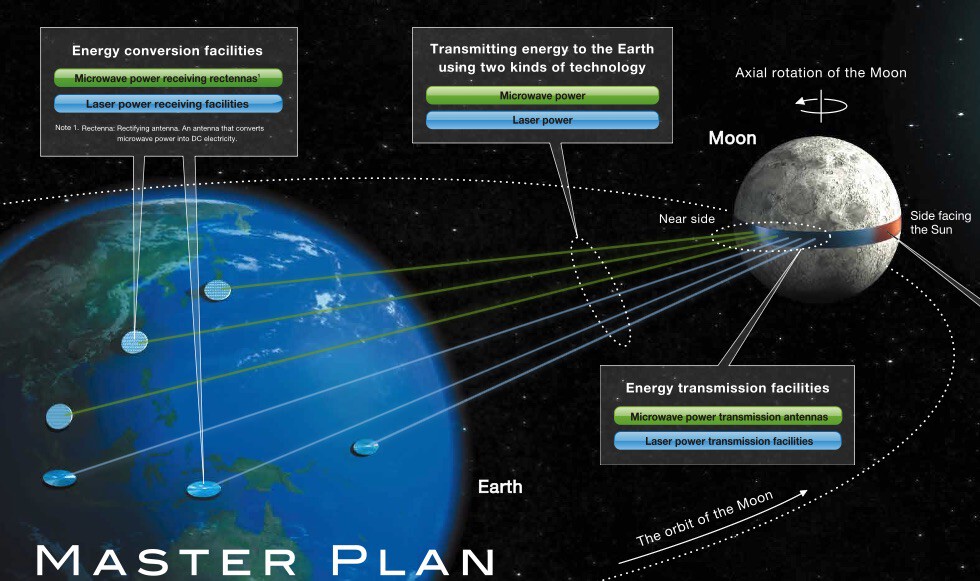
How the Lunar Ring Would Work
The Lunar Ring envisions a continuous band of photovoltaic cells installed along the Moon's equator, spanning approximately 11,000 kilometers. Because the Moon rotates, at least part of the ring would always be exposed to direct sunlight, enabling 24/7 power generation. This constant exposure eliminates the day-night cycling that limits terrestrial solar farms.
The generated electricity would be converted into microwaves or high-density laser beams and transmitted to receiving stations on Earth. These beams would then be converted back into electricity for distribution. The concept builds on Japan's earlier space solar experiments, including the Ohisama satellite, which tested wireless power transmission from orbit.
Key Components of the Lunar Ring Proposal
- 11,000 km solar belt: A continuous ring of solar panels along the lunar equator.
- 24/7 generation: At least part of the ring is always in sunlight, ensuring constant power.
- Wireless transmission: Electricity converted to microwaves or lasers for beaming to Earth.
- Ground receiving stations: Large antenna arrays on Earth to capture and convert the beams.
- Robotic construction: Plans rely on robots and lunar resources to build and maintain the ring.
Challenges and Feasibility
Building a structure of this scale on the Moon presents enormous technical and financial hurdles. Transporting materials from Earth would be prohibitively expensive, so the plan depends on using lunar regolith to manufacture solar cells and other components in situ. Robotic construction and self-replicating machinery would be essential to assemble and maintain the ring.
Wireless power transmission also faces efficiency losses and safety concerns. Microwaves and lasers must be precisely aimed to avoid harming people or ecosystems. International regulations for space-based power beaming are still in early stages, and coordinating such a project would require unprecedented global cooperation.
Comparison with Other Space Solar Concepts
| Concept | Location | Generation | Transmission | Status |
|---|---|---|---|---|
| Lunar Ring (Shimizu) | Moon's equator | Continuous (24/7) | Microwaves/lasers | Conceptual |
| Ohisama satellite | Low Earth orbit | Intermittent | Microwaves | Tested |
| Space solar power (NASA/DOE) | Geostationary orbit | Near-continuous | Microwaves | Studied |
| Ground solar | Earth's surface | Intermittent | Grid | Mature |
Compared to Earth-based solar, the Lunar Ring offers constant generation but at vastly higher cost and complexity. Geostationary solar power satellites are closer to reality but still face transmission and assembly challenges. The Lunar Ring's advantage lies in using lunar materials, potentially reducing launch costs over the long term. The background to this story is set out in Reform UK Proposes Benefits Claimants Clean High Streets. A related thread runs through Valex LN860 Belt Sander Review: Power for Heavy-Duty Sanding. Earlier coverage in Energy Utilities: latest articles shows how the argument developed.
What This Means for the Energy Transition
If realized, space-based solar power could provide a baseload source of clean energy, complementing intermittent renewables like wind and solar on Earth. For Japan, it could reduce dependence on imported fossil fuels and enhance energy security. However, the timeline for such a project is likely decades away, and significant technological breakthroughs are needed. A closer look at the same subject appears in Meta Turns to Space Solar to Power AI Data Centers. Anyone following the wider picture can start with China's Energy Strategy Pays Off as Oil Crisis Boosts Solar. The same theme surfaces in EU Bans Chinese Solar Inverters: Major Blow for Spain's Green Energy, which takes a different angle.
The Lunar Ring also raises questions about equity and governance. Who would own and operate such a system? How would benefits be shared? These issues will need to be addressed as space-based energy moves from concept to reality. Context on how this played out before sits in NASA's Self-Recharging Lunar Battery Runs on Just Two Ingredients. A companion piece, Japan's Lunar Ring: 11,000 km Solar Belt to Power Earth, approaches the same subject from another angle.
FAQ
What is Japan's Lunar Ring plan?
The Lunar Ring is a conceptual proposal by Shimizu Corporation to build an 11,000-kilometer belt of solar panels around the Moon's equator. It would generate continuous solar power and beam it to Earth via microwaves or lasers.
How would the Lunar Ring transmit energy to Earth?
Electricity generated on the Moon would be converted into microwaves or high-density laser beams and sent to receiving stations on Earth. These stations would convert the beams back into electricity for the grid.
Is the Lunar Ring feasible?
It faces major technical and financial challenges, including lunar construction, wireless transmission efficiency, and international regulation. The project is likely decades away and depends on advances in robotics and in-situ resource utilization.
Why is Japan interested in space-based solar power?
Japan imports about 90% of its primary energy and has limited land for renewables. Space-based solar power offers a way to achieve energy security and decarbonization by tapping constant sunlight outside Earth.
Browse the Shop
 Acacia frida deluxe solid wood bed frame |
Bedroom bench |
Bed chest drawers |
Lingerie dresser |
Frame base |
Mirror with jewelry storage |
30 Bathroom Vanity |
Memory foam queen mattress |
Mattresses for back pain |
Nightstand set of 2 |
Grand Goldman Shop |
Civil Lawyer
Deutschland Trikot WM 2026







