

Alibaba's Qwen AI model has become the new crown jewel of the company's artificial intelligence efforts, but there's a catch: it's not making money. Despite its popularity, the open-source model has yet to translate into significant revenue, raising questions about the company's AI strategy.
Qwen, launched in 2023, quickly became a favorite among developers and researchers. With open weights and a permissive license, it's easy to use locally and fine-tune for various applications. By January 2026, Qwen was the most downloaded open AI model in the world, with nearly one million daily downloads on Hugging Face, according to the platform's data.
Find Original Home Decor sparking conversation at Grand Goldman Shop.

Qwen's Popularity Soars
The model's success is undeniable. It has been adopted by a wide range of users, from hobbyists to enterprises, who appreciate its flexibility and performance. Open-source AI models like Qwen are particularly attractive because they can be customized and run on-premises, giving organizations more control over their data and infrastructure.
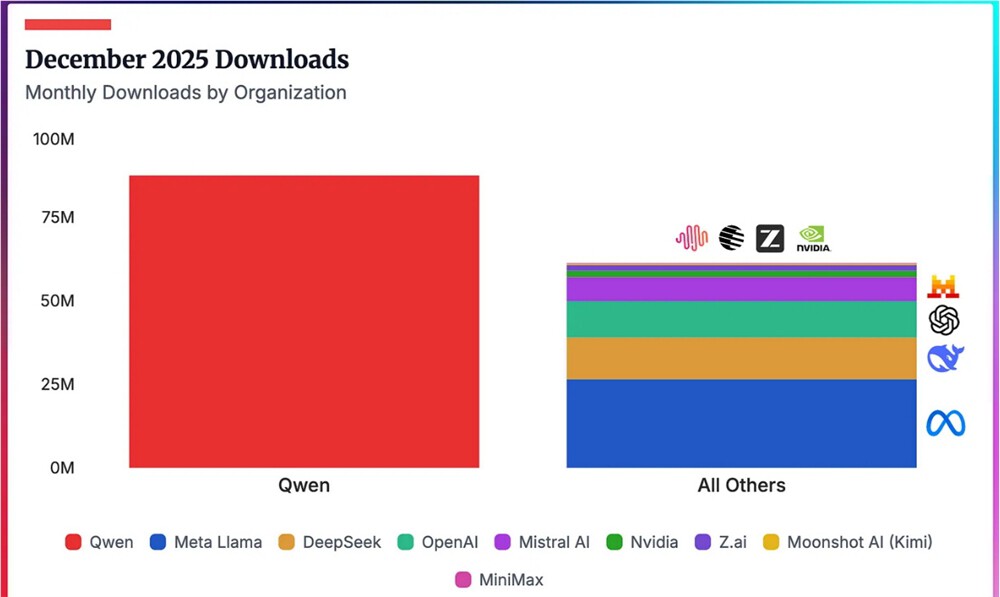
But popularity doesn't always equal profit. Alibaba's AI-related revenue in the first quarter of 2026 was around $1.3 billion, which is only about 4% of its total revenue. That's a small fraction, especially considering the company's ambitious investment plans.
- Massive downloads: Qwen is the most downloaded open AI model, with ~1 million daily downloads on Hugging Face.
- Low revenue contribution: AI-related revenue is only 4% of Alibaba's total revenue.
- Heavy investment: Alibaba plans to invest $55 billion in AI infrastructure by the end of 2027.
- Investor concern: Alibaba's stock has fallen 37% on the Hong Kong exchange this year, reflecting worries about AI returns.
The Monetization Challenge
Alibaba's strategy of offering Qwen as an open-source model has its trade-offs. While it drives adoption and innovation, it also makes it harder to monetize directly. Unlike proprietary models that charge for API access, open-source models can be used for free, and companies often build their own services on top of them without paying royalties.
Alibaba is not alone in this struggle. Other tech giants like Meta and Google have also released open-source AI models, and they too face the challenge of turning widespread use into profit. The difference is that Alibaba's core business is e-commerce, not AI, so the pressure to monetize AI is perhaps less immediate but still significant.
To address this, Alibaba could offer premium versions of Qwen with additional features, provide enterprise support, or integrate Qwen into its cloud services. However, these strategies require time and may not yield immediate results.
Investor Pressure Mounts
Investors are growing impatient. Alibaba's stock has dropped 37% this year on the Hong Kong exchange, reflecting concerns about the company's AI investments and their returns. The $55 billion commitment to AI infrastructure is a bold bet, but without clear monetization, it's a risky one.
Jack Ma's return to the international stage in February last year, alongside Chinese President Xi Jinping, was seen as a strong endorsement for the tech leader. Since then, Alibaba has been relentless in releasing open AI models, but the financial results have yet to impress.
What This Means for the AI Industry
Alibaba's situation highlights a broader issue in the AI industry: the gap between adoption and revenue. Many companies are investing heavily in AI research and development, but the path to profitability is unclear. Open-source models, in particular, pose a challenge because they are freely available and can be used by anyone. Context on how this played out before sits in Alibaba's Qwen AI Model: The Crown Jewel That Doesn't Make Money.
This doesn't mean open-source AI is doomed. Companies can still make money through services, support, and integration. But it requires a different business model, one that may take time to mature. For now, Alibaba's Qwen is a technical success but a financial question mark. The background to this story is set out in Ai Video: latest articles. A related thread runs through Alibaba's Qwen Open AI Model Now Charges High-Volume Users.
| Metric | Value |
|---|---|
| Daily downloads (Jan 2026) | ~1 million |
| AI-related revenue (Q1 2026) | $1.3 billion |
| AI revenue as % of total | 4% |
| Planned AI infrastructure investment | $55 billion (by end of 2027) |
| Stock price change (YTD) | -37% |
What to Watch Next
Alibaba's next moves will be crucial. Will it introduce paid tiers for Qwen? Will it leverage its cloud business to drive AI revenue? Or will it continue to prioritize adoption over monetization? The answers will shape not only Alibaba's future but also the open-source AI landscape. Earlier coverage in Kimi K3 Was Just the Warning: Qwen 3.8 Confirms China Is Closing the AI Model shows how the argument developed. A closer look at the same subject appears in Elon Musk Calls Kimi K3 'Impressive' as Open-Source AI Race Heats.
For now, the crown jewel is shining, but its value is yet to be realized. Investors and industry watchers alike will be keeping a close eye on how Alibaba turns popularity into profit. Anyone following the wider picture can start with Revolut Cuts AI Coding Costs 10x by Switching 2,000 Engineers to GLM 5.3. The same theme surfaces in Brazilian YouTuber Recreates Photoshop in GIMP for Free, which takes a different angle.
FAQ
What is Qwen?
Qwen is a family of open-source AI models developed by Alibaba. Launched in 2023, it has become the most downloaded open AI model globally, known for its flexibility and performance.
Why isn't Alibaba making money from Qwen?
Because Qwen is open-source, it's freely available, making direct monetization difficult. Alibaba earns from AI mainly through cloud services and enterprise solutions, but these contribute only a small fraction of its total revenue.
How are investors reacting to Alibaba's AI strategy?
Investors are concerned about the lack of return on Alibaba's massive AI investments. The stock has fallen 37% this year, reflecting worries about the company's ability to monetize its AI efforts.
What does this mean for the future of open-source AI?
It highlights the challenge of monetizing open-source AI. While adoption is high, generating revenue requires innovative business models, such as offering premium services or integrating AI into existing products.
Browse the Shop
 Acacia frida deluxe solid wood bed frame |
Bedroom bench |
Bed chest drawers |
Lingerie dresser |
Frame base |
Mirror with jewelry storage |
30 Bathroom Vanity |
Memory foam queen mattress |
Mattresses for back pain |
Nightstand set of 2 |
Grand Goldman Shop |
Civil Lawyer
Deutschland Trikot WM 2026







