

ChatGPT still leads the AI chatbot market, but its dominance is slipping, according to a year-over-year analysis by Similarweb and visualized by Visual Capitalist. The data reveals a shifting landscape where no single model holds a monopoly, and competition is intensifying.
ChatGPT's Shrinking Lead in the AI Chatbot Market
Since its launch in November 2022, ChatGPT has been the clear frontrunner in the AI chatbot race. However, the latest figures show that its lead is narrowing. While it remains the most visited chatbot, its market share has declined over the past 12 months as rivals like Google's Gemini, Microsoft's Copilot, and Anthropic's Claude gain traction.
Find Original, High-end Home Decor that spark conversation at Grand Goldman Shop.

The visualization, based on Similarweb's traffic estimates, uses cell size to represent each chatbot's share of web visits. ChatGPT's cell is still the largest, but it's no longer as overwhelming as it once was. This suggests that users are increasingly exploring alternatives, and the market is gradually becoming more fragmented.
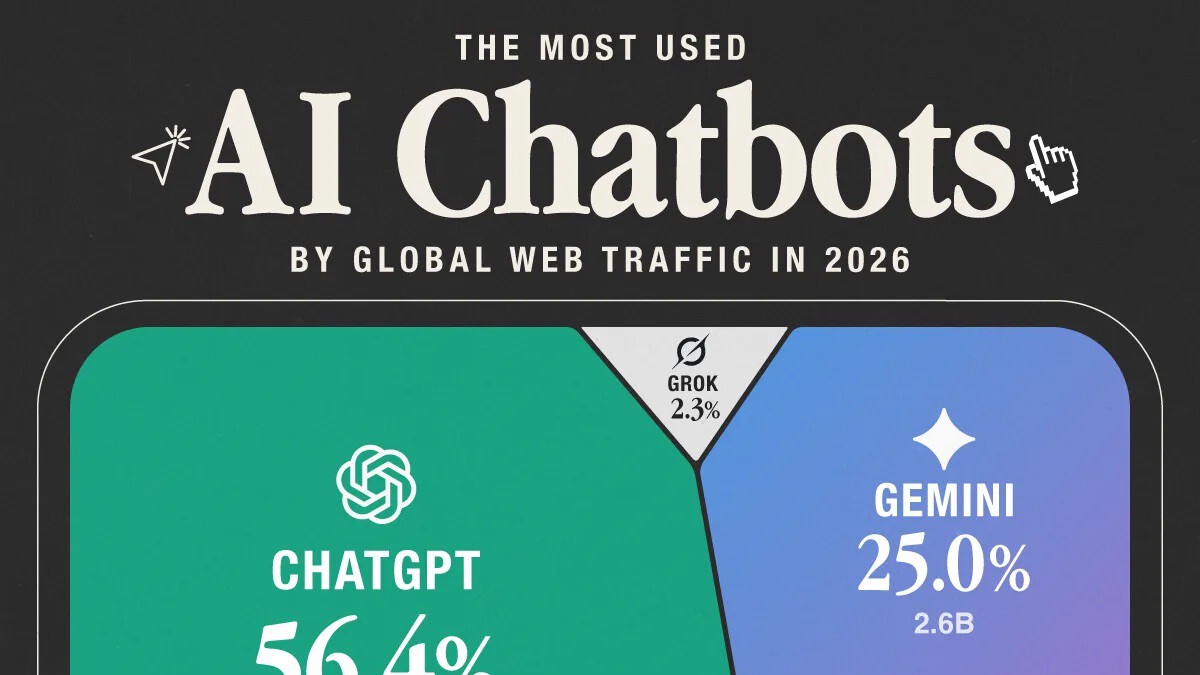
How the AI Chatbot Landscape Has Changed
The past year has seen a surge in AI chatbot adoption, with more people using these tools for everything from writing assistance to coding help. While ChatGPT remains the most popular, other models are carving out niches. For instance, Gemini is integrated into Google's ecosystem, giving it a built-in user base, while Copilot is embedded in Microsoft products.
According to the data, some chatbots have experienced significant growth, while others have stagnated. This dynamic reflects the fierce competition among AI companies, each striving to offer better performance, features, and pricing. The result is a market that is still evolving, with no clear winner-takes-all outcome.
Key Takeaways from the Market Share Data
- ChatGPT remains the leader but its market share has declined over the past year.
- Competitors are gaining ground, with Gemini, Copilot, and Claude showing growth.
- The market is not a monopoly; users are diversifying their AI chatbot usage.
- Web visits are just one metric; app and API usage are not included in the data.
- Visits don't equal users; a single visit can represent multiple queries or a long session.
Limitations of the Similarweb Data
While the Similarweb data provides valuable insights, it's important to understand its limitations. The analysis only measures web traffic to each chatbot's website, excluding mobile app usage and API calls. This means the actual usage of these models could be higher and more evenly distributed than the web data suggests.
Additionally, a visit is not the same as a user. One person might visit a chatbot multiple times, or a single visit could involve a long, productive session. Therefore, the data should be interpreted as a proxy for popularity rather than a definitive measure of user engagement.
Comparison of Leading AI Chatbots
| Chatbot | Developer | Key Features | Market Share Trend (Past Year) |
|---|---|---|---|
| ChatGPT | OpenAI | Versatile, widely used, strong community | Declining but still leading |
| Gemini | Integrated with Google services, multimodal | Growing | |
| Copilot | Microsoft | Embedded in Microsoft 365, coding focus | Growing |
| Claude | Anthropic | Strong in long-form content, safety-focused | Stable/Growing |
Note: Market share trends are based on web visit data from Similarweb and may not reflect app or API usage.
What This Means for the AI Race
The shifting market share indicates that the AI chatbot war is far from over. While ChatGPT has the first-mover advantage, competitors are leveraging their own strengths—such as integration with existing products and unique features—to attract users. This competition is likely to drive innovation and potentially lower prices, benefiting consumers.
For businesses and developers, the data suggests that relying on a single AI provider may not be the best strategy. Diversifying AI tools can provide flexibility and access to specialized capabilities. As the market matures, we can expect further consolidation and differentiation among players.
FAQ
Is ChatGPT still the most used AI chatbot?
Yes, according to Similarweb's web traffic data, ChatGPT remains the most visited AI chatbot. However, its market share has declined over the past year as competitors gain ground.
Which AI chatbots are gaining on ChatGPT?
Google's Gemini, Microsoft's Copilot, and Anthropic's Claude are among the chatbots that have shown growth in web visits over the past year, according to the Similarweb analysis.
Why is web traffic not a perfect measure of AI chatbot usage?
Web traffic only captures visits to a chatbot's website, excluding mobile app usage and API calls. Additionally, a visit doesn't equal a unique user; one person can visit multiple times, and a single visit can involve many queries.
What does this mean for the future of AI chatbots?
The competition is likely to continue, driving innovation and potentially better pricing. Users may benefit from more choices and specialized features as chatbots differentiate themselves.
For more context on this story, see Whale Migration and House Prices: Australia's Shifting Landscape and AI Chatbots Give Inaccurate Election Voting Advice, Study Finds. Earlier reporting on the same theme includes AI Chatbots Give Inaccurate Voting Advice in Elections, OpenAI Agents Leak 53 ChatGPT User Images in Rogue Activity and Property Investor Lending Falls Sharply in Australia Housing Market.
Browse the Shop
 Acacia frida deluxe solid wood bed frame |
Bedroom bench |
Bed chest drawers |
Lingerie dresser |
Frame base |
Mirror with jewelry storage |
30 Bathroom Vanity |
Memory foam queen mattress |
Mattresses for back pain |
Nightstand set of 2 |
Grand Goldman Shop |
Civil Lawyer
Deutschland Trikot WM 2026
Acacia frida deluxe solid wood bed frame |
Bedroom bench |
Bed chest drawers |
Lingerie dresser |
Frame base |
Mirror with jewelry storage |
30 Bathroom Vanity |
Memory foam queen mattress |
Mattresses for back pain |
Nightstand set of 2 |
Grand Goldman Shop |
Civil Lawyer
Deutschland Trikot WM 2026










