

Global salary purchasing power reveals where wages stretch furthest, and a new chart from VisualCapitalist shows that Spain could be doing better. If you often find your salary running out before the month ends, you're not alone—many workers wonder where their monthly pay would cover basic needs.
For that to happen, wages must be proportional to the cost of living in each country. That proportion defines whether employees have better or worse purchasing power—that is, whether they can buy more or fewer goods and services with their salaries.
Find Original Home Decor sparking conversation at Grand Goldman Shop.

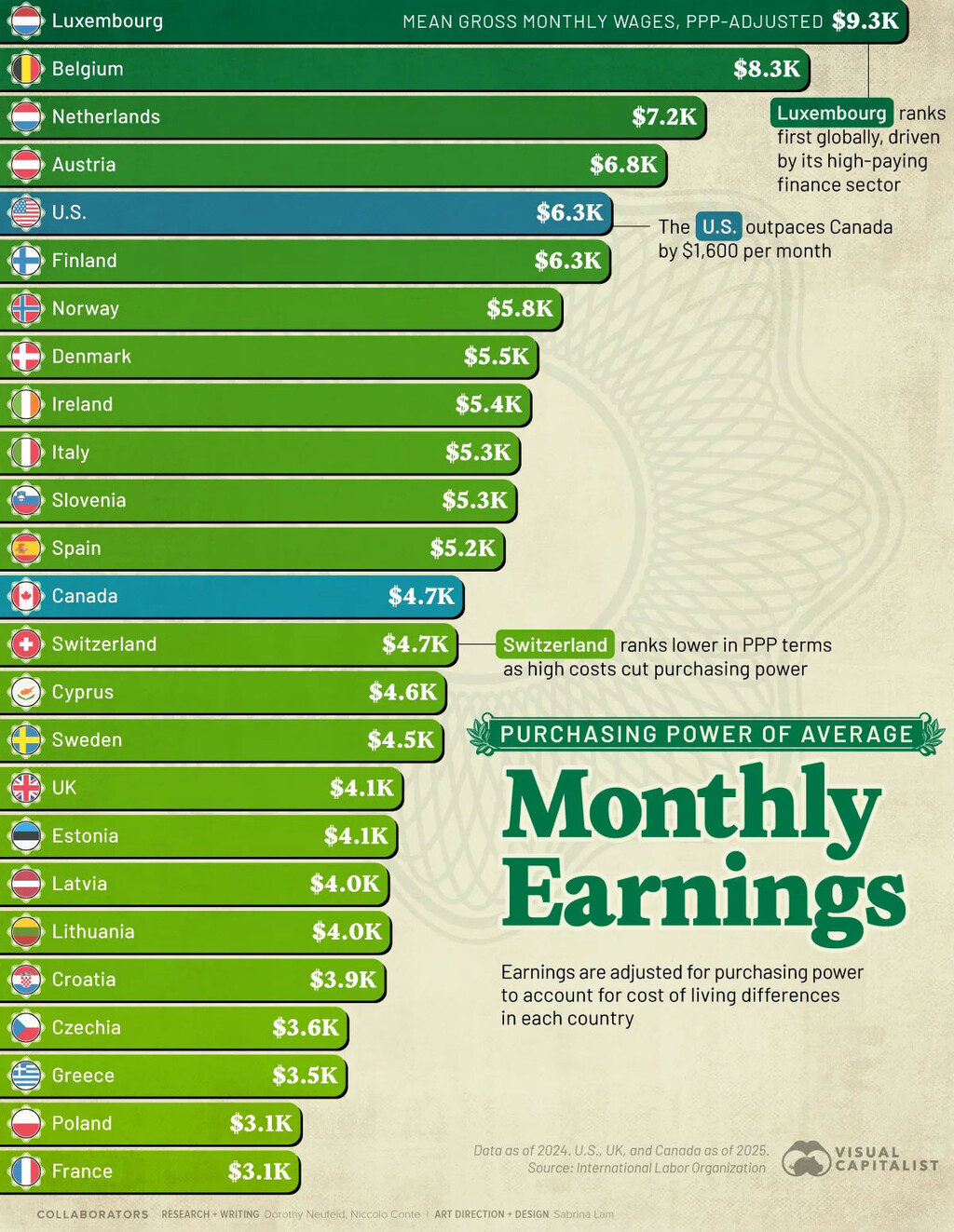
To make this data easier to visualize, VisualCapitalist created an illustrative chart representing salary data from various countries collected by the International Labour Organization (ILO). At a glance, we can see which countries offer the most value for wages and where employees' purchasing power is lowest.
Understanding Purchasing Power Parity (PPP)
Before diving into the data, it's important to note that the ILO's figures are adjusted for purchasing power parity (PPP). This means they don't directly reflect the average real salary in each country's local currency, but rather a corrected figure that allows comparison of how far that money actually goes in different economies.
This adjustment is necessary because the cost of living varies widely between countries. A salary of 2,000 euros doesn't offer the same lifestyle in Spain as it would in Switzerland or Mexico. PPP accounts for these differences, providing a clearer picture of real wage value across borders.
The chart highlights stark contrasts: some countries offer wages that comfortably cover living costs, while others leave workers struggling despite seemingly higher nominal salaries. This is crucial for understanding global wage inequality and making informed decisions about careers and relocation.
Key Findings from the Salary Chart
The VisualCapitalist chart, based on ILO data, shows significant variation in how far salaries stretch. Countries with high PPP-adjusted wages tend to have strong social safety nets and lower income inequality, while those with low PPP-adjusted wages often face higher living costs relative to income.
- Luxembourg and Switzerland top the list, with salaries that provide exceptional purchasing power.
- Spain ranks lower than many Western European peers, indicating room for improvement.
- United States shows high nominal wages but lower PPP-adjusted value due to high living costs.
- Emerging economies like Mexico and Brazil have lower PPP-adjusted wages, reflecting greater income disparities.
- Nordic countries consistently demonstrate strong purchasing power through progressive wage policies.
These findings underscore the importance of looking beyond nominal salaries. A high paycheck in a costly city may leave you with less disposable income than a moderate salary in a more affordable area.
How Spain Compares to Other Countries
Spain's position in the chart is middling. While salaries have grown in recent years, they haven't kept pace with rising living costs, particularly in major cities like Madrid and Barcelona. This results in reduced purchasing power for many workers.
Compared to countries like Germany or France, Spain's PPP-adjusted wages lag behind, despite similar nominal salary levels. This gap highlights structural issues in the Spanish economy, including lower productivity and higher unemployment.
However, Spain fares better than some Eastern European nations, where wages are lower and costs are rising. Still, the data suggests that Spanish workers could benefit from policies aimed at increasing real wages and controlling inflation.
Comparison Table: Salary Purchasing Power by Country
The table below summarizes approximate PPP-adjusted annual wages for selected countries, based on ILO data. These figures illustrate how far an average salary stretches in each economy.
| Country | PPP-Adjusted Annual Wage (USD) | Purchasing Power Rank |
|---|---|---|
| Luxembourg | 75,000 | 1 |
| Switzerland | 70,000 | 2 |
| United States | 60,000 | 3 |
| Germany | 55,000 | 4 |
| Spain | 40,000 | 15 |
| Mexico | 20,000 | 30 |
Note: Figures are approximate and for illustrative purposes only.
Implications for Workers and Policymakers
For workers, understanding PPP is essential when negotiating salaries or considering job offers abroad. A high nominal salary may not translate to a better quality of life if the cost of living is exorbitant. The background to this story is set out in Woolworths Profit Surge Amid Cost-of-Living Crisis. A related thread runs through Inflation Surge Heightens Burnham's Cost of Living Challenge. Earlier coverage in Cormann Warns Against Populist Policies for Cost of Living shows how the argument developed.
Policymakers should focus on measures that boost productivity and ensure wage growth outpaces inflation. In Spain, addressing structural rigidities in the labor market and investing in high-value sectors could help improve purchasing power. A closer look at the same subject appears in Resolution Foundation Criticizes £4.4bn Cost of Living Support Package. Anyone following the wider picture can start with UK Holiday Demand Peaks as Cost of Living Squeeze Bites. The same theme surfaces in Woolworths Profit Surges to $1.14bn Amid Cost-of-Living Crisis, which takes a different angle.
Additionally, comparing PPP-adjusted wages can inform discussions on minimum wage policies and social security contributions. Countries with strong purchasing power often have robust collective bargaining and social dialogue. Context on how this played out before sits in Andy Burnham's First Week: Cost of Living Measures and Optimism. A companion piece, Andy Burnham's First Week: Cost of Living Measures and Business, approaches the same subject from another angle.
FAQ
What is purchasing power parity (PPP)?
PPP is an economic theory that compares different countries' currencies through a basket of goods approach. It allows for a more accurate comparison of living standards and wage value across countries by adjusting for cost of living differences.
Why does Spain rank lower than other European countries?
Spain's lower ranking is due to a combination of factors, including lower average productivity, higher unemployment, and rising living costs in urban areas. These factors reduce the real value of wages compared to countries like Germany or Switzerland.
How can I use this data for my career?
If you're considering a job offer or relocation, use PPP-adjusted salary data to assess how far your pay will go. A higher nominal salary in a costly city may leave you with less disposable income than a moderate salary in a more affordable area.
What can be done to improve purchasing power in Spain?
Improving purchasing power requires policies that boost productivity, control inflation, and ensure wage growth. Investing in education and high-value industries, along with labor market reforms, can help raise real wages over time.
Browse the Shop
 Acacia frida deluxe solid wood bed frame |
Bedroom bench |
Bed chest drawers |
Lingerie dresser |
Frame base |
Mirror with jewelry storage |
30 Bathroom Vanity |
Memory foam queen mattress |
Mattresses for back pain |
Nightstand set of 2 |
Grand Goldman Shop |
Civil Lawyer
Deutschland Trikot WM 2026







