

Ken Imhoff, a Wisconsin engineer, spent 17 years building a Lamborghini Countach from scratch in his basement. This is the story of how one man turned a movie-inspired dream into a handcrafted supercar.
From Movie Screen to Basement Workshop
In 1990, Ken Imhoff watched Cannonball Run (1981), directed by Hal Needham, and was captivated by the Lamborghini Countach LP 400 S featured in the film. That moment sparked a decision that many would call crazy: he would build his own Lamborghini from the ground up.
Find Original Home Decor sparking conversation at Grand Goldman Shop.

Rather than saving for years to buy one, Imhoff chose to fabricate it by hand in his own basement. The project would consume nearly two decades of his life.
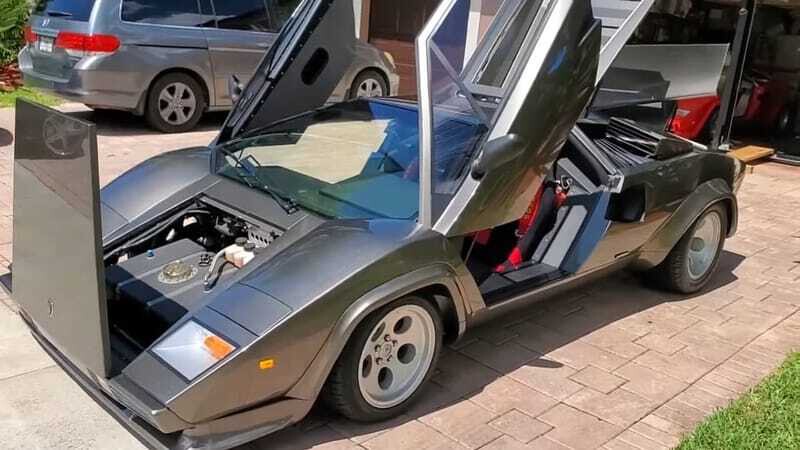
How to Build a Lamborghini in a Basement
Imhoff started by constructing a wooden frame to serve as a mold for shaping the body panels. To work the aluminum, he used an English wheel, a metal-forming tool that allows complex curves in sheet metal.
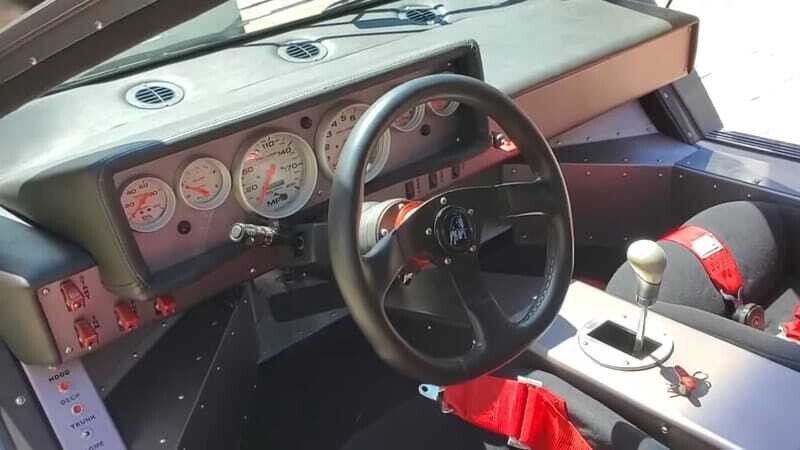
He learned the hard way that welding too much at once causes warping, so he perfected his technique with short, controlled spot welds. The chassis is made of steel tubing, and the body is entirely aluminum. His reference model was the 1982 Countach LP 5000S.

Authentic Details and Parts
To make the result as faithful as possible to the original, Imhoff incorporated genuine Lamborghini parts, such as the taillights and other components. This attention to detail elevated the project from a mere replica to a true labor of love.
- 17 years of dedicated work in a basement.
- Built from scratch using a wooden mold and English wheel.
- Steel tube chassis with hand-formed aluminum body.
- Incorporated authentic Lamborghini parts for accuracy.
- Inspired by the 1981 film Cannonball Run.
Key Specifications of the Build
| Aspect | Detail |
|---|---|
| Builder | Ken Imhoff, Wisconsin engineer |
| Time spent | 17 years |
| Reference model | 1982 Lamborghini Countach LP 5000S |
| Chassis material | Steel tubing |
| Body material | Aluminum |
| Tools used | English wheel, welding equipment |
| Authentic parts | Taillights and other Lamborghini components |
Why This Story Matters
Imhoff's project is a testament to human ingenuity and perseverance. It shows that with enough determination and skill, even the most ambitious dreams can be realized—one weld at a time.
It also highlights the challenges of metal fabrication and the steep learning curve involved. Imhoff's journey from novice to expert is an inspiration to DIY enthusiasts and car lovers alike. The background to this story is set out in How to Waterproof Basement Walls Against Ground Moisture. A related thread runs through How to Renovate a Basement with Targeted Interventions. Earlier coverage in Convert Attic & Basement into Livable Spaces: A DIY Guide shows how the argument developed.
What to Watch Next
As the finished car emerges from the basement, the automotive world will be watching. Imhoff's creation raises questions about the limits of home-built vehicles and the passion that drives such projects. A closer look at the same subject appears in Prefabricated Basement Rooms: Ready-to-Install Underground Spaces. Anyone following the wider picture can start with Cold Asphalt ONDUBLACK: DIY Waterproofing for Basement Walls & More. The same theme surfaces in How to Insulate Your Basement or Garage Ceiling: A DIY Guide, which takes a different angle.
For those fascinated by extraordinary builds, this story is a reminder that sometimes the most rewarding journeys are the ones we create ourselves. Context on how this played out before sits in Incredible basement remodel into a movie theater.
FAQ
Who is Ken Imhoff?
Ken Imhoff is an engineer from Wisconsin who built a Lamborghini Countach replica by hand in his basement over 17 years.
How long did it take to build the Lamborghini?
It took 17 years to complete the project, from 1990 to around 2007.
What inspired Ken Imhoff to build the car?
He was inspired by the 1981 film Cannonball Run, which featured a Lamborghini Countach LP 400 S.
Did he use real Lamborghini parts?
Yes, he incorporated authentic Lamborghini parts such as taillights to make the replica as accurate as possible.
Browse the Shop
 Acacia frida deluxe solid wood bed frame |
Bedroom bench |
Bed chest drawers |
Lingerie dresser |
Frame base |
Mirror with jewelry storage |
30 Bathroom Vanity |
Memory foam queen mattress |
Mattresses for back pain |
Nightstand set of 2 |
Grand Goldman Shop |
Civil Lawyer
Deutschland Trikot WM 2026







