

The Golden Sahara II is widely considered the first self-driving car, a 1950s marvel that featured sensors, glowing tires, and even fish scales in its paint. This bizarre vehicle predated modern autonomous technology by decades and remains a fascinating chapter in automotive history.
The Birth of the Golden Sahara II
In 1953, legendary car customizer George Barris, known for creating the Batmobile, crashed his Lincoln Capri into a hay truck. Instead of scrapping the wreck, Barris invested $5,000—a fortune at the time—to transform it into the Golden Sahara. The car retained its 200-horsepower V8 engine but gained a futuristic makeover.
Find Original Home Decor sparking conversation at Grand Goldman Shop.

Barris unveiled the Golden Sahara II in 1956, showcasing features that seemed straight out of science fiction. It became a symbol of 1950s space-age optimism and automotive innovation.
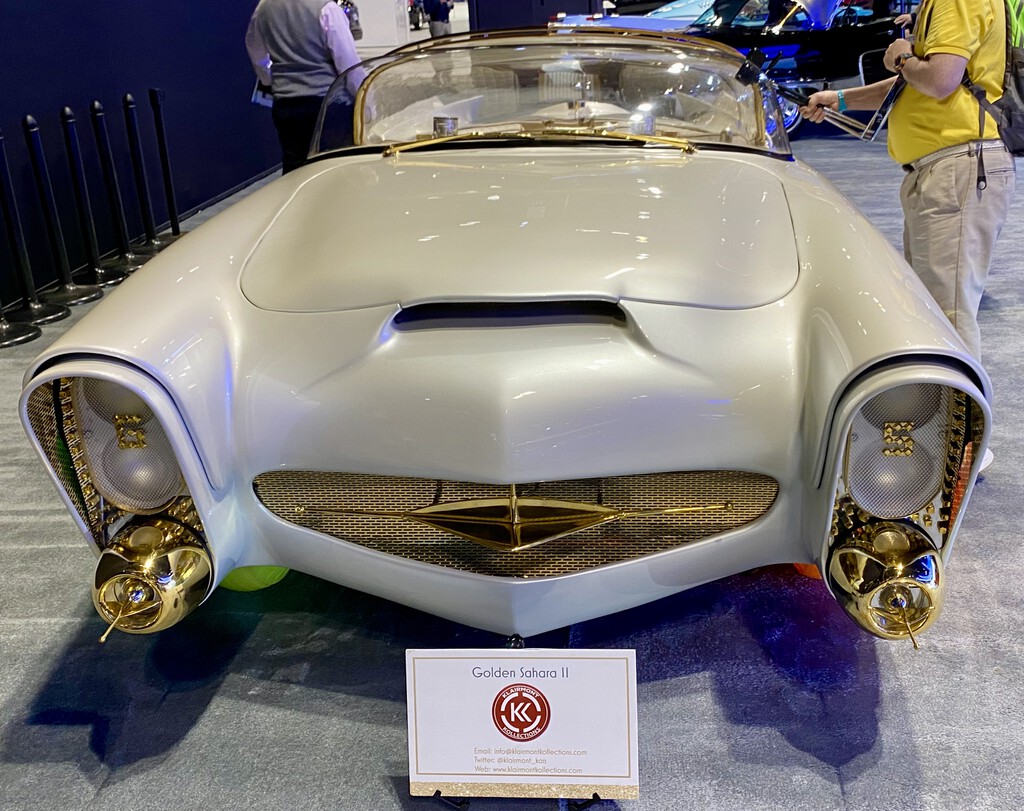
Cutting-Edge (and Bizarre) Features
The Golden Sahara II was packed with technology that wouldn't become mainstream for decades. It had electronic sensors that could detect obstacles and automatically apply the brakes—a precursor to modern collision avoidance systems.
Its light-up tires, made of translucent synthetic rubber, glowed in various colors and were controlled from the dashboard. The car also featured a remote control system, allowing it to be driven without a person behind the wheel, and a connected communication system that could receive messages.
Perhaps the most unusual detail was its paint job: fish scales were mixed into the paint to give it a shimmering, iridescent effect. This unconventional choice added to the car's mystique and reflected the era's fascination with unconventional materials.
Why the Golden Sahara II Mattered
The Golden Sahara II was more than a showpiece; it was a testbed for ideas that would shape the future of driving. Its driver assistance features and connectivity were revolutionary, even if they were rudimentary by today's standards. Context on how this played out before sits in Golden Sahara II: The First Self-Driving Car Had Fish Scales.
It captured the public imagination and demonstrated what was possible when automotive design embraced technology. The car appeared in films and exhibitions, cementing its place in pop culture. The background to this story is set out in Car: latest articles. A related thread runs through Tesla FSD Tested: The Surprising Reality of Supervised Self-Driving.
Key Takeaways
- The Golden Sahara II was built by George Barris from a crashed Lincoln Capri.
- It featured early versions of autonomous driving tech like sensors and remote control.
- Its light-up tires and fish-scale paint made it a unique spectacle.
- The car symbolized 1950s space-age optimism and innovation.
- It laid the conceptual groundwork for modern smart cars.
Golden Sahara II vs. Modern Autonomous Cars
| Feature | Golden Sahara II (1956) | Modern Autonomous Car (2020s) |
|---|---|---|
| Obstacle Detection | Basic electronic sensors | LiDAR, radar, cameras |
| Remote Control | Yes, limited range | Yes, via smartphone |
| Connectivity | Radio-based messaging | 5G, V2X communication |
| Tires | Light-up synthetic rubber | Smart tires with sensors |
| Paint | Fish scales for shimmer | Advanced coatings, no fish |
The Legacy and What to Watch Next
The Golden Sahara II eventually faded into obscurity, but it was rediscovered and restored in recent years. It now serves as a reminder of how far automotive technology has come and how bold ideas can shape the future. Earlier coverage in Seres Patents In-Car Toilet: Chinese EV Innovation Goes There shows how the argument developed. A closer look at the same subject appears in Europe's First Robotaxi Service Launches in Zagreb With Chinese Tech.
As we move toward fully autonomous vehicles, the spirit of the Golden Sahara II lives on in every self-driving car. Its story encourages us to think beyond conventions and embrace innovation, even if it involves fish scales. Anyone following the wider picture can start with Pet Travel Solved: How the JAECOO 5 EV Uses Software and Design. The same theme surfaces in Electric Cars and Driving Pleasure: What Enthusiasts Need to Know, which takes a different angle.
FAQ
What was the Golden Sahara II?
The Golden Sahara II was a custom car built by George Barris in the 1950s, known for its early autonomous features and unique design.
Why did it have fish scales?
Fish scales were mixed into the paint to create a shimmering, iridescent effect, adding to the car's futuristic look.
What autonomous features did it have?
It had electronic sensors for obstacle detection, remote control operation, and a basic communication system.
Where is the Golden Sahara II now?
After being lost for decades, it was rediscovered and restored, and it now appears at car shows and museums.
Browse the Shop
 Acacia frida deluxe solid wood bed frame |
Bedroom bench |
Bed chest drawers |
Lingerie dresser |
Frame base |
Mirror with jewelry storage |
30 Bathroom Vanity |
Memory foam queen mattress |
Mattresses for back pain |
Nightstand set of 2 |
Grand Goldman Shop |
Civil Lawyer
Deutschland Trikot WM 2026







