

Fashion exhibitions often celebrate beauty, craftsmanship, or celebrity. But the new “Schiaparelli: Fashion Becomes Art” show at the Victoria and Albert Museum goes further, asking a sharper cultural question: when does clothing stop being luxury design and start becoming art?
Opening in London this spring, the exhibition traces the legacy of Elsa Schiaparelli, the Italian couturière who transformed 20th-century fashion through surrealism, wit, and spectacle. It also connects her vision to the house’s modern rebirth under Daniel Roseberry, whose red-carpet creations have made Schiaparelli newly unavoidable in the social media era.
Find Bleeding Edge Supplements at Scandalous Prices on iHerb.

For a wide audience—not just fashion insiders—the show matters because it reframes Schiaparelli not merely as a designer of beautiful garments, but as a cultural force who blurred the boundaries between fashion, performance, sculpture, branding, and art history.
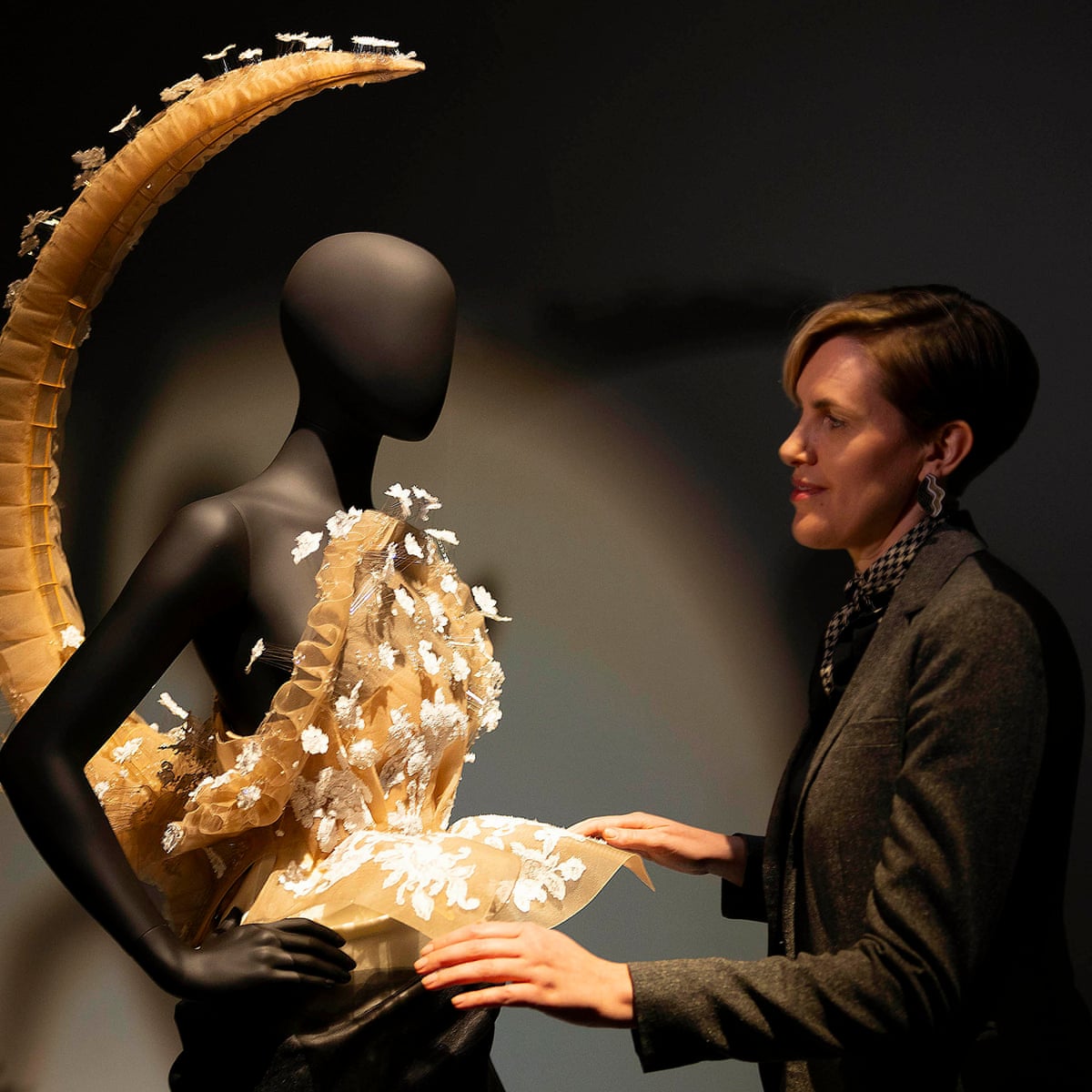
Why this exhibition matters now
The timing feels deliberate. Fashion today is increasingly consumed not in boutiques or magazines, but in viral clips, red carpets, museum halls, and Instagram close-ups. Schiaparelli’s work, with its exaggerated silhouettes and surreal details, feels almost designed for that environment—even though much of it was first imagined nearly a century ago.
That is the exhibition’s central argument: Elsa Schiaparelli was ahead of her time not just stylistically, but conceptually. She understood fashion as image-making, storytelling, provocation, and illusion long before those ideas became central to luxury branding.
Vogue Arabia’s preview captures this especially well, describing the exhibition as an exploration of how Schiaparelli’s legacy still pushes visitors to think about “the idea beyond the design and its symbolism.”
Who was Elsa Schiaparelli?
Before her name became synonymous with surreal couture, Elsa Schiaparelli was already a rule-breaker. Born in Rome in 1890, she emerged in interwar Paris as one of the most original designers of her generation, challenging the notion that women’s fashion had to be elegant, restrained, or purely decorative.
Unlike many of her contemporaries, Schiaparelli approached dress almost like a conceptual artist. Her designs played with illusion, humor, symbolism, anatomy, and absurdity. She was not simply making garments to flatter the body; she was using the body as a site for visual experimentation.
That helps explain why her work still feels modern. Much of contemporary high fashion—from statement couture to theatrical celebrity dressing—can be traced back to ideas Schiaparelli was already testing in the 1930s.
The surrealist designer who changed fashion
Fashion as visual art
Schiaparelli’s biggest contribution was not a single dress or accessory. It was the way she reimagined what fashion could do.
She collaborated with major surrealist figures including Salvador Dalí and Jean Cocteau, turning garments into conversation pieces and wearable provocations. Her work made clothes feel closer to painting, sculpture, and theatre than to conventional couture.
Some of her most famous creations include:
- The Lobster Dress, created with Dalí
- The Skeleton Dress, with padded bones protruding from the surface
- The Cocteau evening coat, whose embroidered facial profiles form a vase of roses
- Trompe l’oeil knitwear that played tricks on the eye
- Whimsical accessories, perfume bottles, and sculptural buttons
These pieces are important because they do not just decorate the wearer. They transform the wearer into part of the artwork.
The power of “shocking”
Schiaparelli also understood branding before branding became a discipline. Her signature “shocking pink” was not just a color preference—it was a visual identity. Her world was built around surprise, contradiction, and theatricality.
That instinct now feels incredibly current. In an era where fashion houses compete for attention through spectacle, Schiaparelli’s visual language looks less like history and more like prophecy.
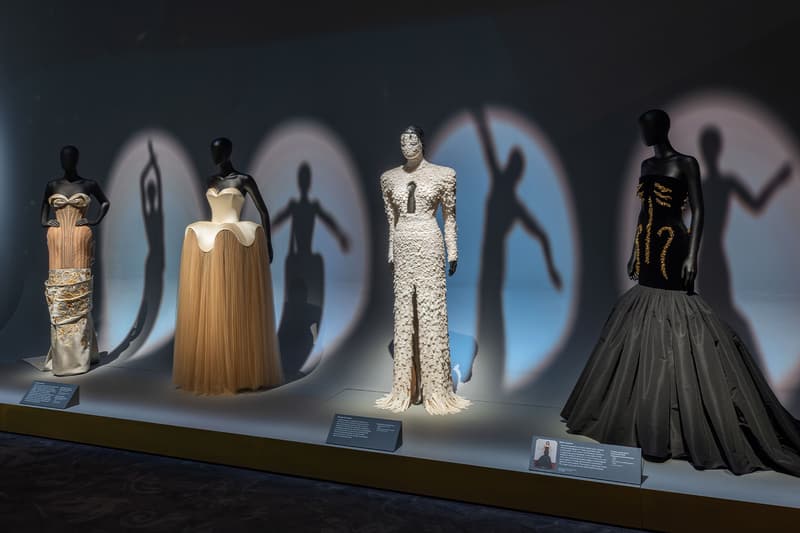
Inside the V&A exhibition
The exhibition at the V&A South Kensington is the first UK exhibition dedicated to Elsa Schiaparelli, spanning the 1920s to the present day. According to the museum, it traces both the house’s original innovations and its modern continuation under Roseberry.
Reports from the V&A and early reviews say the show brings together hundreds of objects across fashion, art, jewelry, photography, furniture, and accessories. That breadth matters because it reflects Schiaparelli’s real influence: she was never confined to dresses alone.
Key themes visitors can expect
| Theme | Why it matters |
|---|---|
| Surrealism | Shows how Schiaparelli used dream logic, distortion, and humor in clothing |
| Art collaborations | Places her work in direct conversation with major 20th-century artists |
| Female self-expression | Highlights how she offered women fashion with irony, intellect, and boldness |
| Brand image | Reveals how she built a visual universe long before modern luxury marketing |
| Modern revival | Connects her original ideas to Schiaparelli’s current cultural relevance |
One of the exhibition’s strengths appears to be its refusal to treat Schiaparelli as a dusty archive figure. Instead, it positions her as a living influence—someone whose ideas continue to shape how fashion is seen, staged, and shared today.
Daniel Roseberry and the modern Schiaparelli revival
Any serious look at Schiaparelli in 2026 also has to include Daniel Roseberry. Since taking over the house in 2019, he has helped transform Schiaparelli into one of the most visually recognizable couture brands in the world.
His work has fueled some of the most talked-about celebrity fashion moments of recent years, including sculptural breastplates, exaggerated gold hardware, and surreal runway concepts. These are not just “viral looks.” They are part of a larger effort to revive Schiaparelli’s original language of wit, excess, and visual tension.
Roseberry told Vogue Arabia that surrealism remains the house’s natural language because it exists in the space “between the real and the unreal.” That idea is useful for understanding why Schiaparelli resonates now: it reflects a world increasingly shaped by performance, fantasy, and image culture.
So, when does fashion become art?
This is the question hanging over the entire exhibition, and there is no simple answer. But Schiaparelli makes a strong case that fashion becomes art when it does more than serve function or trend.
It becomes art when it:
- communicates an idea
- creates emotional or intellectual tension
- reshapes how the body is seen
- interacts with broader culture
- endures beyond the season it was made for
That does not mean every couture garment belongs in a museum. But Schiaparelli’s best work clearly operates on a different level than ordinary luxury clothing. It invites interpretation the same way painting, sculpture, or performance does.
Final takeaway
“Schiaparelli: Fashion Becomes Art” is more than a stylish museum event. It is a persuasive reminder that some of fashion’s most powerful creations are not just worn—they are read, debated, remembered, and exhibited.
For readers interested in culture, design, celebrity fashion, or modern luxury, the exhibition lands on a timely truth: the most influential fashion has never been only about clothes. In Schiaparelli’s hands, it became spectacle, symbolism, provocation—and yes, art.
Browse the Shop
 Acacia frida deluxe solid wood bed frame |
Bedroom bench |
Bed chest drawers |
Lingerie dresser |
Frame base |
Mirror with jewelry storage |
30 Bathroom Vanity |
Memory foam queen mattress |
Mattresses for back pain |
Nightstand set of 2 |
Grand Goldman Shop |
Civil Lawyer
Deutschland Trikot WM 2026
Acacia frida deluxe solid wood bed frame |
Bedroom bench |
Bed chest drawers |
Lingerie dresser |
Frame base |
Mirror with jewelry storage |
30 Bathroom Vanity |
Memory foam queen mattress |
Mattresses for back pain |
Nightstand set of 2 |
Grand Goldman Shop |
Civil Lawyer
Deutschland Trikot WM 2026










