

Scientists have created a body map of hangover symptoms, revealing that the day after drinking is a complex chemical, immune, and cognitive collapse—not just dehydration. The research, from the Catholic University of Leuven, used a mobile app to track 34 young adults and pinpoint exactly where hangovers hurt.
This map challenges the common belief that a hangover is simply a headache and dry mouth. Instead, it shows a systemic response that affects muscles, mood, and sleep quality.
Find Original Home Decor sparking conversation at Grand Goldman Shop.

What the Hangover Body Map Shows
Participants used the app to report the intensity of their hangover, sleep quality, and exact locations of pain, weakness, or numbness in real time. The result was a detailed map highlighting areas of the body most affected.
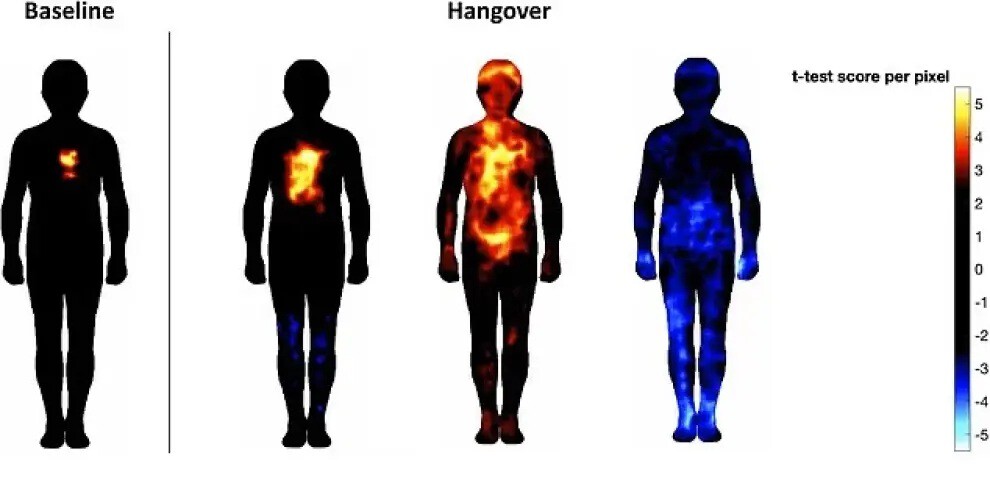
Unsurprisingly, the head and neck were common sites of discomfort, but many also reported muscle aches and fatigue in the limbs. This suggests that hangovers involve more than just the brain—they impact the entire musculoskeletal system.
Why Hangovers Are More Than Dehydration
While dehydration plays a role, the study underscores that hangovers are a multi-faceted condition. Alcohol triggers inflammation, disrupts sleep, and affects neurotransmitter balance, leading to a range of symptoms.
The body map approach helps researchers visualize these effects and may lead to better remedies. It also validates the experience of millions who feel physically drained and achy after a night of heavy drinking.
The Role of the Immune System
Alcohol consumption can activate the immune system, causing inflammation that contributes to muscle pain and fatigue. This immune response is part of why hangovers feel like a mild flu.
Cognitive Effects and Sleep Disruption
Alcohol interferes with sleep architecture, reducing restorative REM sleep. This leads to cognitive fog and irritability the next day, which the app also tracked through self-reported sleep quality.
Key Takeaways from the Research
- Hangovers involve body-wide symptoms, including muscle weakness and pain.
- Dehydration is only one factor; inflammation and immune response play key roles.
- Sleep disruption exacerbates cognitive symptoms like fogginess and mood swings.
- Mobile apps can effectively gather real-time data on hangover experiences.
- Understanding the full body map may lead to more targeted hangover remedies.
How This Research Could Help
By identifying the specific areas and systems affected, researchers can develop interventions that address the root causes. For example, anti-inflammatory measures or sleep aids might be more effective than simply drinking water. The longer history behind the story is traced in Scientists Map the Hangover: Body-Wide Effects Revealed.
Additionally, the body map could help individuals recognize the severity of their hangovers and make informed decisions about alcohol consumption. It also provides a tool for doctors to assess patients who frequently experience severe hangovers. The background to this story is set out in Does a Beer Really Cure a Hangover? The Science Says. A related thread runs through Westminster's Alcohol Culture: MPs' Health at Risk. Earlier coverage in Westminster's Alcohol Culture: MPs' Health Risks Exposed shows how the argument developed.
Comparison of Hangover Symptoms
| Symptom | Common Location | Underlying Cause |
|---|---|---|
| Headache | Head, temples | Dehydration, inflammation |
| Muscle aches | Arms, legs, back | Immune response, inflammation |
| Fatigue | Whole body | Sleep disruption, energy depletion |
| Nausea | Stomach | Gastric irritation, toxin buildup |
| Cognitive fog | Brain | Neurotransmitter imbalance, poor sleep |
What to Watch Next
Future studies may expand the sample size and include more diverse populations. Researchers also aim to explore how different types of alcohol and drinking patterns affect the body map. A closer look at the same subject appears in Best UK Universities for Chemical Engineering: League Table. Anyone following the wider picture can start with England Water Pollution: All Bodies of Water Fail Toxic Chemical. The same theme surfaces in Westminster Drinking Culture Exposed: MPs’ Alcohol Problem, which takes a different angle.
Ultimately, this research could lead to personalized hangover treatments and a better understanding of alcohol's impact on the body. For now, it serves as a reminder that hangovers are a serious physiological event. Context on how this played out before sits in Westminster Alcohol Culture Report Exposes Workplace Drinking. A companion piece, Wildfire Effects Linger for Years: Climate Crisis Insights, approaches the same subject from another angle.
FAQ
What is a hangover body map?
A hangover body map is a visual representation of where people experience physical symptoms after heavy drinking. It was created using data from a mobile app that tracked participants' symptoms in real time.
Is a hangover just dehydration?
No, while dehydration is a factor, hangovers involve inflammation, immune system activation, sleep disruption, and neurotransmitter changes. The body map shows symptoms across multiple systems.
How was the study conducted?
Researchers at the Catholic University of Leuven used a mobile app to monitor 34 young adults. Participants reported hangover intensity, sleep quality, and specific body areas affected.
Can this research help find a cure for hangovers?
It may lead to more effective remedies by identifying the underlying mechanisms. Targeted treatments addressing inflammation and sleep could be more successful than simple hydration.
Browse the Shop
 Acacia frida deluxe solid wood bed frame |
Bedroom bench |
Bed chest drawers |
Lingerie dresser |
Frame base |
Mirror with jewelry storage |
30 Bathroom Vanity |
Memory foam queen mattress |
Mattresses for back pain |
Nightstand set of 2 |
Grand Goldman Shop |
Civil Lawyer
Deutschland Trikot WM 2026







