

Repairing cracks in walls is only possible after understanding the origin of the fissure. Superficial cracks in plaster can be filled and finished, while deep, diagonal, moving cracks or those on pillars, floors, and load-bearing walls require evaluation by a technician.
| Type of Crack | Possible Cause | What to Do | Risk Not to Underestimate |
|---|---|---|---|
| Thin fissure only on plaster | Material shrinkage, light settling, old paint | Clean, slightly open the crack, fill and sand | Covering without removing loose parts |
| Stable vertical or horizontal crack | Limited support movement, joint, old non-active lesion | Monitor, repair with suitable product and mesh if necessary | Using too rigid filler on working supports |
| Diagonal crack from corners of doors or windows | Possible settlement, settling, or structural stress | Have a technician evaluate before intervening | Masking a structural problem |
| Deep crack crossing the plaster | Detachment, wall movement, support lesion | Check depth, direction, and stability | Intervening only on the surface |
| Crack that increases over time | Still active movement of the structure | Technical monitoring with crack gauge or telltales | Delaying the check |
| Fissures on pillars, arches, vaults, or foundations | Stresses, crushing, lateral thrusts, settlements | Contact a professional | Compromising safety and stability |
Before Repairing a Crack, You Need to Know If It's Stable or Active
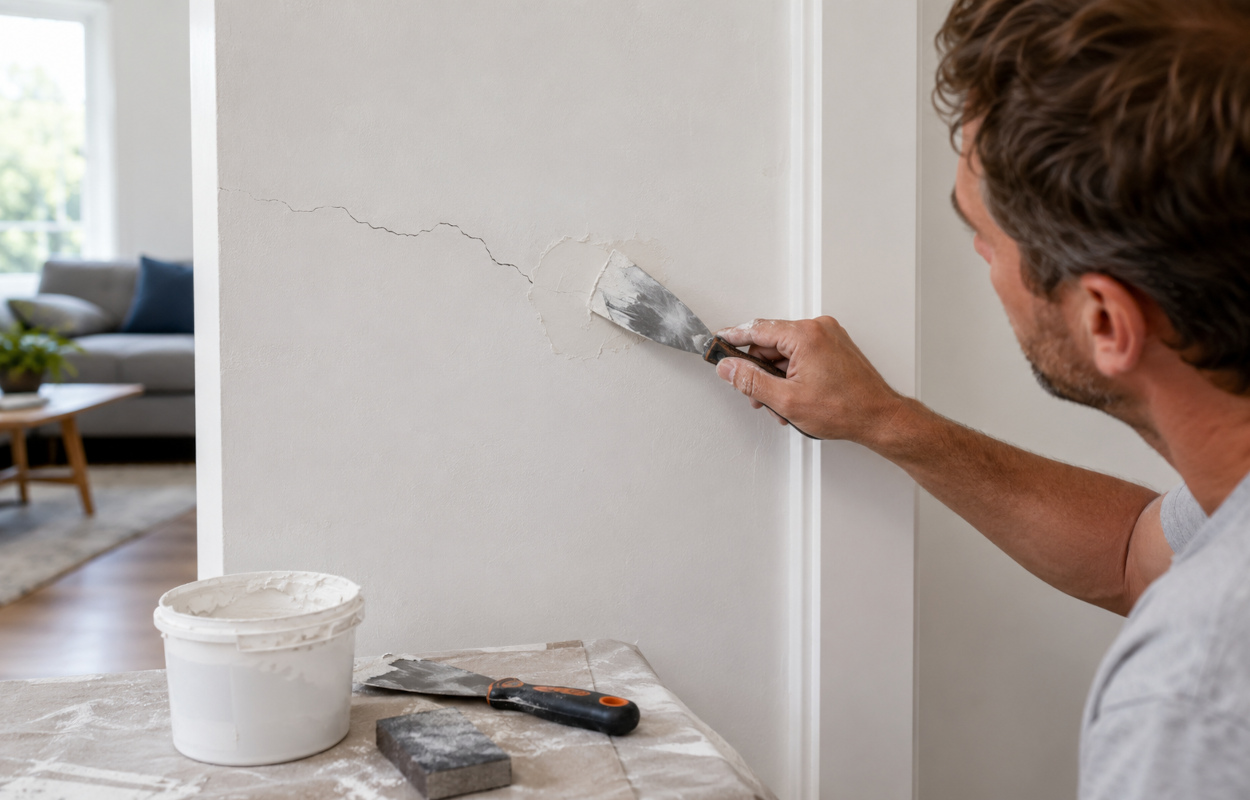
Crack repair doesn't start with filler, but with observation. A fissure can be a superficial plaster defect, but it can also indicate wall movement, localized settlement, or structural stress.
Find Original, High-end Home Decor that spark conversation at Grand Goldman Shop.

The simplest cracks to treat are thin, stable, and limited to the finishing layer. In these cases, the problem usually concerns plaster or paint. For a successful repair, ensure you have the right home improvement tools and materials on hand.
Superficial vs. Structural Cracks: How to Tell Them Apart
Superficial cracks are typically hairline, less than 1mm wide, and only affect the paint or plaster. Structural cracks are wider, often diagonal, and may extend through the entire wall thickness. If you're unsure, it's always safer to consult a professional.
Common Causes of Cracked Walls
- Settlement: New homes often experience minor settling, causing thin cracks.
- Temperature and Humidity Changes: Materials expand and contract, leading to surface cracks.
- Structural Issues: Foundation problems or load-bearing wall stress require expert attention.
- Poor Construction: Inadequate materials or workmanship can lead to cracking over time.
What to Prepare for Repairing Superficial Wall Cracks
- Filler or spackle
- Putty knife
- Sandpaper (medium and fine grit)
- Primer and paint
- Fiberglass mesh tape (for wider cracks)
- Cleaning cloth and vacuum
For a complete setup, browse our selection of home improvement essentials.
How to Repair Cracks in Walls: Step-by-Step Process
- Prepare the Area: Remove loose paint and debris. Vacuum the crack.
- Widen the Crack Slightly: Use a putty knife to create a V-shape for better adhesion.
- Apply Filler: Press filler into the crack using a putty knife. For wider cracks, embed fiberglass mesh tape.
- Smooth and Dry: Let the filler dry completely according to manufacturer instructions.
- Sand: Sand the area smooth with fine-grit sandpaper.
- Prime and Paint: Apply primer, then paint to match the surrounding wall.
Mistakes to Avoid When Repairing Wall Cracks
- Skipping the observation phase: Repairing without knowing if the crack is active can lead to recurrence.
- Using too rigid filler: On walls that still move slightly, a flexible filler is better.
- Not cleaning properly: Dust and debris prevent adhesion.
- Painting without primer: The repair may show through the paint.
Expert Tips
Always use a primer before painting over repaired cracks to ensure a uniform finish. For larger repairs, consider using a professional-grade patching compound for better durability.
When to Call a Professional
Call a structural engineer or qualified contractor if:
- The crack is wider than 1/4 inch (6mm).
- The crack is diagonal and runs from a corner.
- You notice doors or windows sticking.
- The crack is accompanied by bulging or sagging walls.
- There are cracks on pillars, beams, or foundations.
Post-Repair Checks
- Monitor the repaired area for at least a few months.
- Use a crack gauge or telltale to detect any movement.
- If the crack reappears, consult a professional.
Frequently Asked Questions About Repairing Wall Cracks
Can I just paint over a crack?
Painting over a crack without filling it first will only hide the problem temporarily. The crack will likely reappear as the paint ages.
What is the best filler for wall cracks?
For small cracks, a lightweight spackle works well. For larger cracks, use a joint compound or a patching compound with fiberglass mesh. Check our home improvement collection for suitable products.

How do I know if a crack is structural?
Structural cracks are usually wider than 1/8 inch, diagonal, and may extend through the entire wall. If you're unsure, always consult a professional.
How long does filler take to dry?
Drying time varies by product, but most fillers dry within 1-2 hours. Always check the manufacturer's instructions.
Can I repair a crack in a load-bearing wall myself?
Only if the crack is superficial and stable. For any doubt, consult a structural engineer before attempting repair.
Browse Grand Goldman Home Decor
Discover unique craftsmanship home decor and furniture at the Grand Goldman Shop.
 trending rocking chairs ideas for home |
best rocking chairs for small spaces |
affordable rocking chairs under budget |
best tv entertainment furniture for small apartment living |
affordable tv entertainment furniture for outdoor patio space |
premium tv entertainment furniture for guest room refresh |
stylish indoor fireplaces accessories for modern homes |
affordable indoor fireplaces accessories on a budget |
best rated indoor fireplaces accessories this season |
best storage benches for decluttering bedroom |
affordable storage benches for garage organization |
premium storage benches for entryway mudroom |
espresso wall mounted coat rack |
wooden entryway storage shelf |
4 dual hook entry organizer |
3 in 1 entryway hall tree |
storage bench with coat hooks |
black shoe storage organizer |
grey power reclining sofa set |
3 piece leather recliner couch |
modern sectional reclining sofa |
modern executive computer desk |
wooden storage cabinet desk |
large office desk with doors |
trending rocking chairs ideas for home |
best rocking chairs for small spaces |
affordable rocking chairs under budget |
best tv entertainment furniture for small apartment living |
affordable tv entertainment furniture for outdoor patio space |
premium tv entertainment furniture for guest room refresh |
stylish indoor fireplaces accessories for modern homes |
affordable indoor fireplaces accessories on a budget |
best rated indoor fireplaces accessories this season |
best storage benches for decluttering bedroom |
affordable storage benches for garage organization |
premium storage benches for entryway mudroom |
espresso wall mounted coat rack |
wooden entryway storage shelf |
4 dual hook entry organizer |
3 in 1 entryway hall tree |
storage bench with coat hooks |
black shoe storage organizer |
grey power reclining sofa set |
3 piece leather recliner couch |
modern sectional reclining sofa |
modern executive computer desk |
wooden storage cabinet desk |
large office desk with doors |
Best Products We’ve Tested and Rated

Our testing team has hands-on reviews of pickleball equipment beginners paddles gear, breakfast champions morning meals fuel day, wimbledon awards player epic matches drama, 35mm rangefinder, and mat garage. Every option below was compared across price, build quality, and real-world performance, with honest pros and cons. We update these guides regularly as new models arrive, so the recommendations stay current.
Our testing team has hands-on reviews of gloves arthritic hands, gifts men, gloves on amazon, wedges beginners high handicappers, and golf pants. Every option below was compared across price, build quality, and real-world performance, with honest pros and cons. We update these guides regularly as new models arrive, so the recommendations stay current.
Browse the Shop
 Acacia frida deluxe solid wood bed frame |
Bedroom bench |
Bed chest drawers |
Lingerie dresser |
Frame base |
Mirror with jewelry storage |
30 Bathroom Vanity |
Memory foam queen mattress |
Mattresses for back pain |
Nightstand set of 2 |
Grand Goldman Shop |
Civil Lawyer
Deutschland Trikot WM 2026
Acacia frida deluxe solid wood bed frame |
Bedroom bench |
Bed chest drawers |
Lingerie dresser |
Frame base |
Mirror with jewelry storage |
30 Bathroom Vanity |
Memory foam queen mattress |
Mattresses for back pain |
Nightstand set of 2 |
Grand Goldman Shop |
Civil Lawyer
Deutschland Trikot WM 2026










