
Connecting electrical wires safely means using insulated connectors appropriate for the conductor gauge, securing the cables properly, and working only on a de-energized circuit. The joints must ensure mechanical strength, insulation, and neatness inside the junction box, avoiding accidental contact and makeshift connections.
| Checkpoint | Why It Matters | Common Mistake | Correct Solution |
|---|---|---|---|
| Circuit power | Reduces risk of electrocution | Working thinking “just flipping the switch is enough” | Disconnect power at the panel and verify with a tester |
| Connector type | Each connection needs the right connector | Joining wires with tape or bare twists | Use insulated wire nuts, push-in connectors, or terminal blocks rated for the wire gauge |
| Conductor size | The clamp must hold all wires without damage | Inserting wires that are too large or too small into the same connector | Choose connectors compatible with the number and gauge of conductors |
| Wire stripping | Wrong length can leave bare copper or create a poor contact | Stripping too much or too little | Expose only the required length per the connector instructions |
| Tightening | A loose connector can heat up and cause arcing | Tightening too little or crushing the conductor | Tighten firmly without deforming the copper |
| Position in box | Wires must stay organized and protected | Leaving joints compressed or under tension | Arrange connectors without forcing the conductors |
| Fixed installation work | May require verification and compliance | Modifying circuits without expertise | Call a qualified installer for complex or existing systems |
What Are Electrical Connectors Used For?
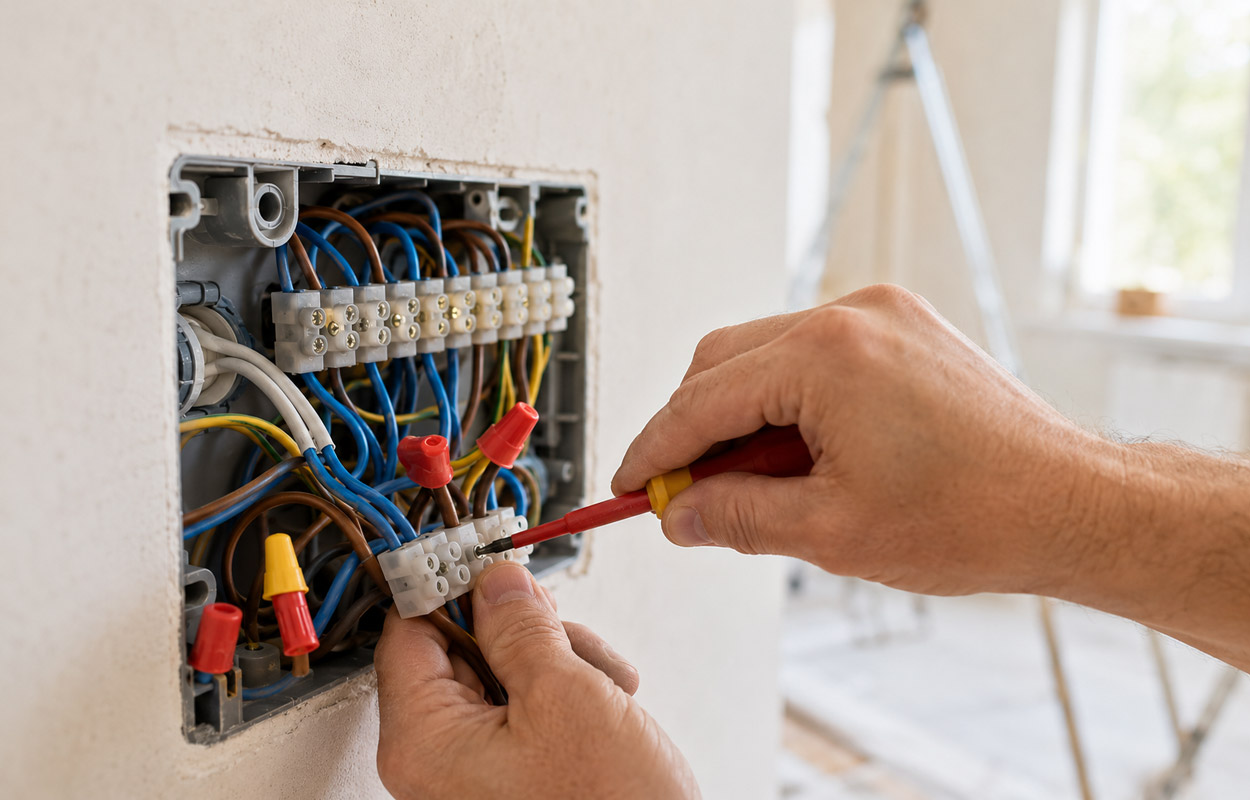
Electrical connectors (also called wire nuts or terminal blocks) are used to join two or more conductors safely. They provide a secure mechanical and electrical connection while insulating the joint. Whether you're installing a new light fixture, wiring a garden light, or setting up a home improvement project, choosing the right connector is essential.
Find Original, High-end Home Decor that spark conversation at Grand Goldman Shop.

Types of Connectors for Joining Electrical Wires
Wire Nuts (Cappellotti)
Wire nuts are the most common type of connector for residential wiring. They screw onto twisted wires and provide a strong, insulated joint. They are available in different sizes for various wire gauges and numbers of conductors. For any home improvement task, having a set of wire nuts on hand is a must.
Push-In Connectors
These are quick-connect blocks where you simply push the stripped wire into a hole. They are ideal for lighting fixtures and low-current applications. Many DIYers prefer them when installing indoor or outdoor lighting because they save time and reduce errors.
Terminal Blocks in Electrical Panels
Terminal strips are used inside distribution boards and junction boxes to organize multiple connections. They allow for easy troubleshooting and future modifications. If you're upgrading your electrical system, terminal blocks offer a professional finish.
Flying Connectors for Testing and Low Voltage
These are small, often color-coded connectors used for temporary connections or low-voltage circuits like doorbells and thermostats. They are also handy when testing garden equipment or outdoor decor wiring.
How to Choose the Right Connector
Select a connector based on the wire gauge (AWG), the number of wires to join, and the environment (dry or damp). Always check the manufacturer’s specifications. For outdoor patio furniture with built-in lighting, use weatherproof connectors rated for exterior use.
What to Prepare Before Connecting Wires
- Voltage tester or multimeter
- Wire strippers
- Appropriate connectors (wire nuts, push-ins, or terminal blocks)
- Screwdrivers for terminal screws
- Electrical tape (for extra insulation if needed)
- Flashlight or work light
Step-by-Step Procedure
- Turn off power at the main breaker and verify with a tester.
- Strip wires to the length recommended by the connector manufacturer (usually about 1/2 inch).
- Twist wires together (if using wire nuts) or align them for push-in connectors.
- Attach the connector and tighten or push until secure.
- Gently tug each wire to ensure it is locked in place.
- Arrange wires neatly inside the junction box and close the cover.
- Restore power and test the circuit.
Common Mistakes to Avoid When Connecting Electrical Wires
- Using tape instead of proper connectors
- Mixing wire gauges in the same connector
- Over-tightening screw terminals and crushing the copper
- Leaving bare wire exposed outside the connector
- Forgetting to turn off the power
Expert Tips
Always use connectors listed by a recognized testing laboratory (like UL or CE). For kitchen islands or bathroom vanities, consider GFCI protection and moisture-resistant connectors. When installing entertainment centers, label wires for future maintenance.
When to Call a Professional
If you are unsure about local electrical codes, working with aluminum wiring, or modifying a main panel, hire a licensed electrician. Complex jobs like adding a shed or greenhouse electrical supply should be done by a pro.

Final Checks After Connection
- Verify all connectors are tight and wires are secure.
- Check that no bare copper is visible.
- Ensure the junction box is not overcrowded.
- Test the circuit with a multimeter or plug-in tester.
Frequently Asked Questions
Can I use wire nuts for outdoor wiring?
Yes, but only if they are rated for wet locations. For outdoor lighting or BBQ grills, use silicone-filled or gel-filled connectors for extra moisture protection.
What size wire nut do I need for 12-gauge wire?
Most manufacturers color-code their wire nuts. For two 12-gauge wires, a gray or blue wire nut is typically correct. Always check the packaging for the exact range.
Is it safe to connect different gauge wires together?
Yes, but the connector must be rated for both gauges. The smaller wire may not make good contact if the connector is designed only for larger wires. Use a connector that accommodates both sizes.
Do I need to twist wires before using a push-in connector?
No, push-in connectors are designed for straight, untwisted wires. Simply strip the wire and push it into the hole until it clicks.
Can I reuse wire nuts?
It is not recommended. Wire nuts can lose their grip after removal, leading to loose connections. Always use new connectors for each job.
Browse Grand Goldman Home Decor
Discover unique craftsmanship home decor and furniture at the Grand Goldman Shop.
 stylish desks work surfaces for modern homes |
affordable desks work surfaces on a budget |
best rated desks work surfaces this season |
best office chairs for home workspace |
affordable office chairs for small home office |
premium office chairs for corner desk setup |
best file cabinets storage cabinets for decluttering bedroom |
affordable file cabinets storage cabinets for garage organization |
premium file cabinets storage cabinets for entryway mudroom |
best safes decor for every home |
stylish safes accessories online |
affordable safes for any room |
espresso wall mounted coat rack |
wooden entryway storage shelf |
4 dual hook entry organizer |
3 in 1 entryway hall tree |
storage bench with coat hooks |
black shoe storage organizer |
grey power reclining sofa set |
3 piece leather recliner couch |
modern sectional reclining sofa |
modern executive computer desk |
wooden storage cabinet desk |
large office desk with doors |
stylish desks work surfaces for modern homes |
affordable desks work surfaces on a budget |
best rated desks work surfaces this season |
best office chairs for home workspace |
affordable office chairs for small home office |
premium office chairs for corner desk setup |
best file cabinets storage cabinets for decluttering bedroom |
affordable file cabinets storage cabinets for garage organization |
premium file cabinets storage cabinets for entryway mudroom |
best safes decor for every home |
stylish safes accessories online |
affordable safes for any room |
espresso wall mounted coat rack |
wooden entryway storage shelf |
4 dual hook entry organizer |
3 in 1 entryway hall tree |
storage bench with coat hooks |
black shoe storage organizer |
grey power reclining sofa set |
3 piece leather recliner couch |
modern sectional reclining sofa |
modern executive computer desk |
wooden storage cabinet desk |
large office desk with doors |
Best Products We’ve Tested and Rated

Our testing team has hands-on reviews of pickleball equipment beginners paddles gear, breakfast champions morning meals fuel day, wimbledon awards player epic matches drama, 35mm rangefinder, and mat garage. Every option below was compared across price, build quality, and real-world performance, with honest pros and cons. We update these guides regularly as new models arrive, so the recommendations stay current.
Our testing team has hands-on reviews of gloves arthritic hands, gifts men, gloves on amazon, wedges beginners high handicappers, and golf pants. Every option below was compared across price, build quality, and real-world performance, with honest pros and cons. We update these guides regularly as new models arrive, so the recommendations stay current.
Browse the Shop
 Acacia frida deluxe solid wood bed frame |
Bedroom bench |
Bed chest drawers |
Lingerie dresser |
Frame base |
Mirror with jewelry storage |
30 Bathroom Vanity |
Memory foam queen mattress |
Mattresses for back pain |
Nightstand set of 2 |
Grand Goldman Shop |
Civil Lawyer
Deutschland Trikot WM 2026
Acacia frida deluxe solid wood bed frame |
Bedroom bench |
Bed chest drawers |
Lingerie dresser |
Frame base |
Mirror with jewelry storage |
30 Bathroom Vanity |
Memory foam queen mattress |
Mattresses for back pain |
Nightstand set of 2 |
Grand Goldman Shop |
Civil Lawyer
Deutschland Trikot WM 2026










