

China is preparing to become the only power with its own space station as the International Space Station (ISS) nears retirement. The Tiangong space station, currently orbiting Earth with three modules, is set to double in size, according to recent announcements from China's space program. This expansion comes as NASA plans to deorbit the ISS around 2030 or 2031 due to increasing leaks and system failures.
The ISS has been a symbol of international cooperation for decades, but its aging infrastructure is showing signs of wear. Frequent leaks in the Russian module and maintenance issues have forced NASA to set a retirement date. Once the ISS is gone, Tiangong will be the largest human-made object in low Earth orbit, marking a significant shift in the space race between China and Western space agencies.
Find Original Home Decor sparking conversation at Grand Goldman Shop.

Tiangong's Current Configuration and Expansion Plans
Tiangong, which means "Heavenly Palace" in Chinese, currently consists of three modules assembled in orbit between 2021 and 2022. These modules have been hosting astronauts and conducting experiments, but they are becoming insufficient for the growing number of missions. To address this, China has announced plans to add three more modules: a 20-ton multifunctional module attached to the main module and two experimental modules.
This expansion will increase Tiangong's mass from about 90 tons to 180 tons, effectively doubling its size. The new modules will provide additional space for scientific research, technology demonstrations, and international collaboration. The plan is part of China's broader strategy to maintain a long-term human presence in space and attract global partners.
Xuntian: A Space Telescope with a Wider View
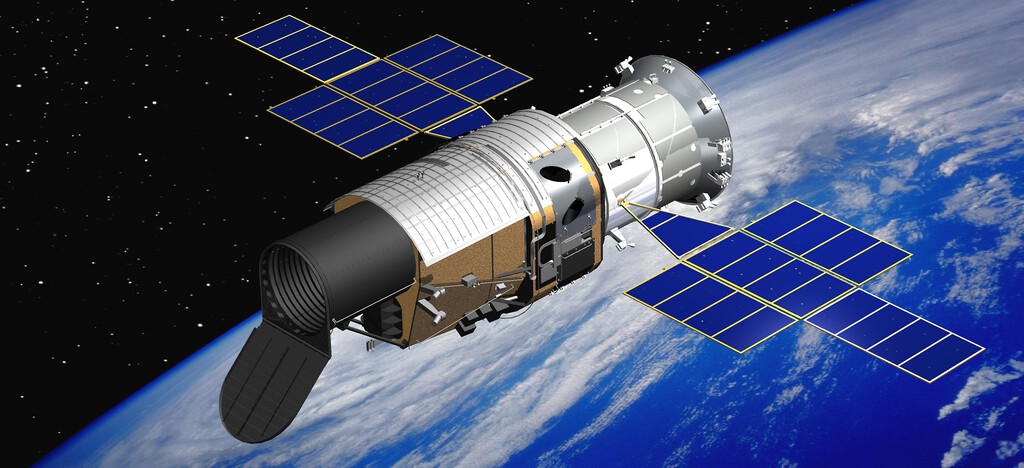
Before the new modules are installed, China will launch the Xuntian space telescope, which will be closely linked to the space station. Xuntian will feature a 2-meter primary mirror, slightly smaller than the Hubble Space Telescope's 2.4-meter mirror. However, Xuntian's field of view will be about 300 times larger than Hubble's, allowing it to survey vast areas of the sky with remarkable efficiency.
The telescope will be able to dock with Tiangong for maintenance and upgrades, a capability that Hubble lacked after the space shuttle program ended. This flexibility could extend Xuntian's operational life and enable continuous improvements. The launch of Xuntian is expected before the first new module is added, highlighting China's ambition to advance its astronomical research.
Why This Matters for the Space Race
The retirement of the ISS will leave a void in low Earth orbit, and Tiangong is poised to fill it. While the ISS was a collaborative effort involving the United States, Russia, Europe, Japan, and Canada, Tiangong is solely Chinese. This shift could reshape international space partnerships and influence global space policy. Context on how this played out before sits in China's Tiangong Space Station Set to Double in Size by 2030.
China has already expressed openness to hosting foreign astronauts and experiments on Tiangong, but political tensions and NASA's restrictions on bilateral cooperation with China may limit collaboration. The Wolf Amendment, passed by the U.S. Congress in 2011, prohibits NASA from working directly with China without congressional approval. This could hinder joint efforts and accelerate a bifurcated space landscape. The background to this story is set out in 20 Evil Cats That Terrorized Dogs Double Their Size. A related thread runs through Science: latest articles.
- Tiangong will double in size with three new modules, increasing its mass from 90 to 180 tons.
- Xuntian telescope will have a 2-meter mirror and a field of view 300 times larger than Hubble's.
- ISS retirement around 2030-2031 will leave Tiangong as the only operational space station.
- NASA's Wolf Amendment restricts direct cooperation with China, potentially isolating the U.S. in future space collaborations.
- China's space program is advancing rapidly, with plans for lunar and Mars missions in the coming decades.
Comparing Space Stations: ISS vs. Tiangong
| Feature | International Space Station (ISS) | Tiangong (current) | Tiangong (planned) |
|---|---|---|---|
| Mass | ~420 tons | ~90 tons | ~180 tons |
| Modules | ~15 | 3 | 6 |
| Operational Status | Active until ~2030 | Active | Expanding |
| Partners | International (US, Russia, Europe, Japan, Canada) | China | China (with potential international experiments) |
What to Watch Next
The coming decade will be crucial for space station operations. China's expansion of Tiangong and the launch of Xuntian will demonstrate its growing capabilities in space. Meanwhile, NASA and its partners are planning future commercial space stations and lunar missions under the Artemis program. Earlier coverage in China Tests Space Reproduction: Can Babies Be Born in Orbit shows how the argument developed. A closer look at the same subject appears in Lunar Time Clash: How a Microsecond GPS Error Threatens Moon Landings.
The competition between China and the U.S. in space is not just about prestige; it has implications for technological leadership, national security, and international alliances. As Tiangong grows, it may attract countries that are looking for alternatives to Western-led space initiatives. The space race is entering a new phase, and Tiangong is at the center of it. Anyone following the wider picture can start with NASA's Swift Telescope Breaks Apart Over Sumatra After 22 Years. The same theme surfaces in NASA's Swift Observatory to Make Uncontrolled Reentry After 20 Years, which takes a different angle.
FAQ
What is Tiangong?
Tiangong is China's space station, currently consisting of three modules in low Earth orbit. It was assembled between 2021 and 2022 and is designed for scientific research and international collaboration.
When will the ISS be deorbited?
NASA plans to deorbit the ISS around 2030 or 2031 due to increasing maintenance issues and leaks. The exact date will depend on the readiness of commercial space stations and other factors.
What is the Xuntian telescope?
Xuntian is a space telescope China plans to launch and operate in conjunction with Tiangong. It will have a 2-meter primary mirror and a field of view 300 times larger than Hubble's, enabling wide-field surveys of the sky.
How does the Wolf Amendment affect space cooperation?
The Wolf Amendment, passed in 2011, prohibits NASA from engaging in bilateral cooperation with China without congressional approval. This restricts direct collaboration between the U.S. and China on space station activities.
Browse the Shop
 Acacia frida deluxe solid wood bed frame |
Bedroom bench |
Bed chest drawers |
Lingerie dresser |
Frame base |
Mirror with jewelry storage |
30 Bathroom Vanity |
Memory foam queen mattress |
Mattresses for back pain |
Nightstand set of 2 |
Grand Goldman Shop |
Civil Lawyer
Deutschland Trikot WM 2026







