

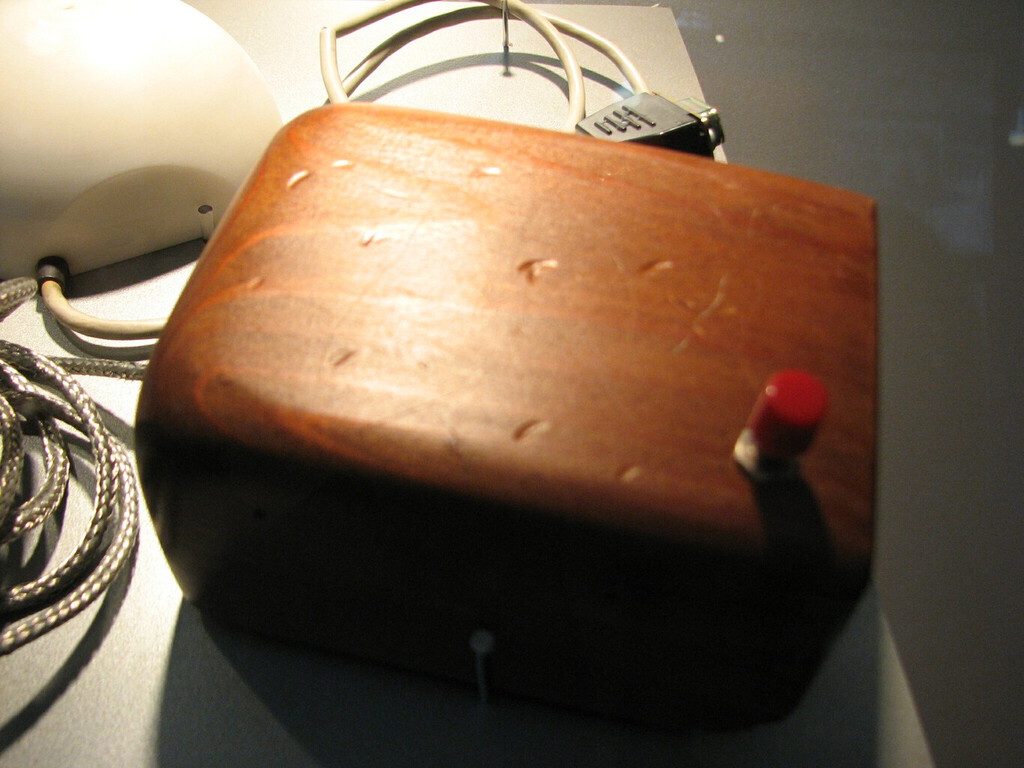
Douglas Engelbart, a World War II veteran and pioneering engineer, believed that interacting with computers could be simpler. In 1967, he and colleague William English created the first computer mouse, a wooden device with two metal wheels that would eventually revolutionize how we use computers.
Engelbart was head of the Augmentation Research Center (ARC) at Stanford Research Institute (SRI). He had a clear vision: make technology accessible and easy to use. His experiences during the war and his reading of Vannevar Bush's influential article inspired him to bring knowledge to the masses through better tools.
Find Original Home Decor sparking conversation at Grand Goldman Shop.

The Vision Behind the First Mouse
Engelbart didn't set out to invent a mouse; he wanted to make computers more user-friendly. At the time, computers were massive machines operated by experts using punch cards and switches. Engelbart envisioned a future where people could interact with computers more naturally.
To test candidates' empathy for users, Engelbart would give them a pencil attached to a brick and ask them to write their name. The exercise demonstrated how difficult simple tasks become without the right tools. This philosophy drove him to develop interfaces that were intuitive and efficient.
The Birth of the X-Y Position Indicator
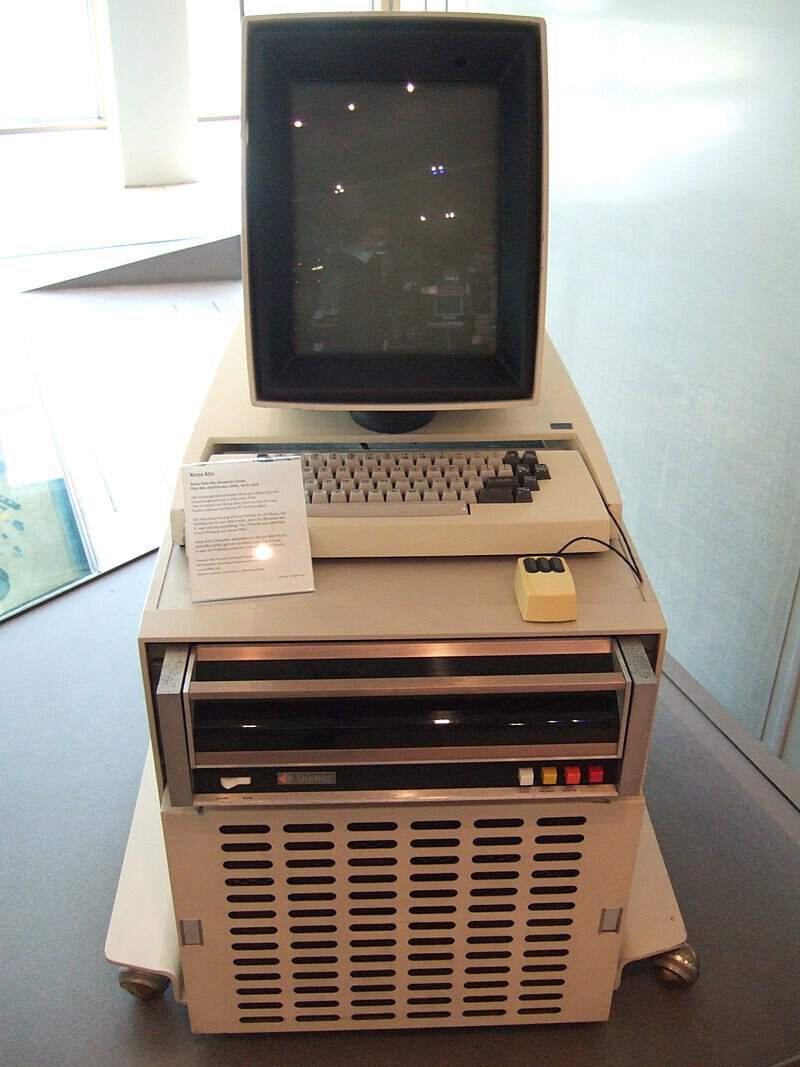
In the early 1960s, Engelbart and William English developed the first prototype of what we now call a mouse. They called it the "X-Y Position Indicator for a Display System." It was a simple wooden shell with two metal wheels: one for horizontal movement and one for vertical movement.
The device was crude by today's standards, but it was a breakthrough. It allowed users to control a cursor on a screen by moving the device across a surface. The wheels translated physical motion into digital signals, enabling precise positioning.
Why the Mouse Mattered
Before the mouse, interacting with computers was cumbersome. Users had to type commands or use light pens, which were imprecise and tiring. The mouse offered a more natural way to point, click, and drag, making computers more accessible to non-experts.
Engelbart's mouse was ahead of its time. It wasn't until the 1980s, with the rise of personal computers like the Apple Macintosh, that the mouse became a standard tool. But its impact on user interface design is undeniable.
- First mouse: Invented by Douglas Engelbart and William English in the 1960s.
- Original name: X-Y Position Indicator for a Display System.
- Design: Wooden shell with two metal wheels.
- Purpose: To make computer interaction simpler and more intuitive.
- Legacy: Paved the way for modern graphical user interfaces.
From Wooden Prototype to Modern Peripheral
The evolution of the mouse is a testament to Engelbart's vision. Today's mice are wireless, ergonomic, and packed with features like scroll wheels and extra buttons. But the core idea remains the same: a handheld device that translates movement into cursor control. The longer history behind the story is traced in Douglas Engelbart and the First Computer Mouse in 1967.
Engelbart's work didn't stop at the mouse. He and his team at ARC developed many foundational technologies, including hypertext, networked computers, and graphical user interfaces. Their work laid the groundwork for the modern computing era. The background to this story is set out in Felicity Green: Pioneering Fashion Editor and Tabloid Innovator. A related thread runs through Gerda Taro Biopic Shines Light on Pioneering War Photographer. Earlier coverage in Science: latest articles shows how the argument developed.
| Feature | First Mouse (1960s) | Modern Mouse |
|---|---|---|
| Material | Wood | Plastic/Metal |
| Movement Mechanism | Two metal wheels | Optical/Laser sensor |
| Connectivity | Wired | Wired/Wireless |
| Buttons | One | Multiple (including scroll wheel) |
The 1968 Demo: The Mother of All Demos
On December 9, 1968, Engelbart and his team gave a legendary presentation that showcased the mouse and many other innovations. Dubbed "The Mother of All Demos," it introduced the world to video conferencing, hypertext, and collaborative editing. A closer look at the same subject appears in Remote Control Invented in 1901 by Spanish Engineer Torres Quevedo. Anyone following the wider picture can start with Japanese Scientist Cloned 1,000 Mice in 20 Years: Biology's Limit. The same theme surfaces in China's 15th Five-Year Plan: The Most Ambitious Yet for Global Tech Dominance, which takes a different angle.
The demo was a turning point. It showed what the future of computing could look like and inspired a generation of engineers and designers. The mouse was a key part of that vision, demonstrating how intuitive interaction could unlock the power of computers. Context on how this played out before sits in Upland by Ed Douglas Review: Britain’s High Places Explored. A companion piece, Windows Format Dialog: The 1994 Interface Still in Windows 11, approaches the same subject from another angle.
FAQ
Who invented the first computer mouse?
Douglas Engelbart and William English invented the first computer mouse in the 1960s. Engelbart was the visionary behind the project, while English helped with the technical design.
What was the first mouse called?
It was originally called the "X-Y Position Indicator for a Display System." The nickname "mouse" came later, likely because of its shape and the cord that resembled a tail.
When was the mouse first demonstrated to the public?
The mouse was first publicly demonstrated on December 9, 1968, during what became known as "The Mother of All Demos." This event showcased many revolutionary technologies.
Why was the invention of the mouse important?
The mouse made computers more accessible by providing a simple way to interact with graphical user interfaces. It replaced complex command-line inputs with intuitive pointing and clicking.
Browse the Shop
 Acacia frida deluxe solid wood bed frame |
Bedroom bench |
Bed chest drawers |
Lingerie dresser |
Frame base |
Mirror with jewelry storage |
30 Bathroom Vanity |
Memory foam queen mattress |
Mattresses for back pain |
Nightstand set of 2 |
Grand Goldman Shop |
Civil Lawyer
Deutschland Trikot WM 2026







