

Mars tunnel exploration may soon be revolutionized by a robot inspired by the humble pill bug, or roly-poly. This biomimetic creation, developed by researchers at New Mexico Tech, is designed to carry a swarm of tiny dandelion-inspired drones into the Martian underground.
For 30 years, humans have sent rovers to Mars, uncovering many secrets of its surface. Yet, the planet's extensive tunnel networks remain largely unexplored. These tunnels, the largest known in the solar system, could hold clues to past life or future human habitation. But until now, no vehicle has been able to navigate them.
Find Original Home Decor sparking conversation at Grand Goldman Shop.

The Challenge of Exploring Mars' Tunnels
Mars' tunnels, likely formed by ancient volcanic activity, are vast and complex. They could provide shelter from radiation and harsh surface conditions, making them prime targets for exploration. However, their narrow entrances and unpredictable interiors pose significant challenges for traditional rovers.
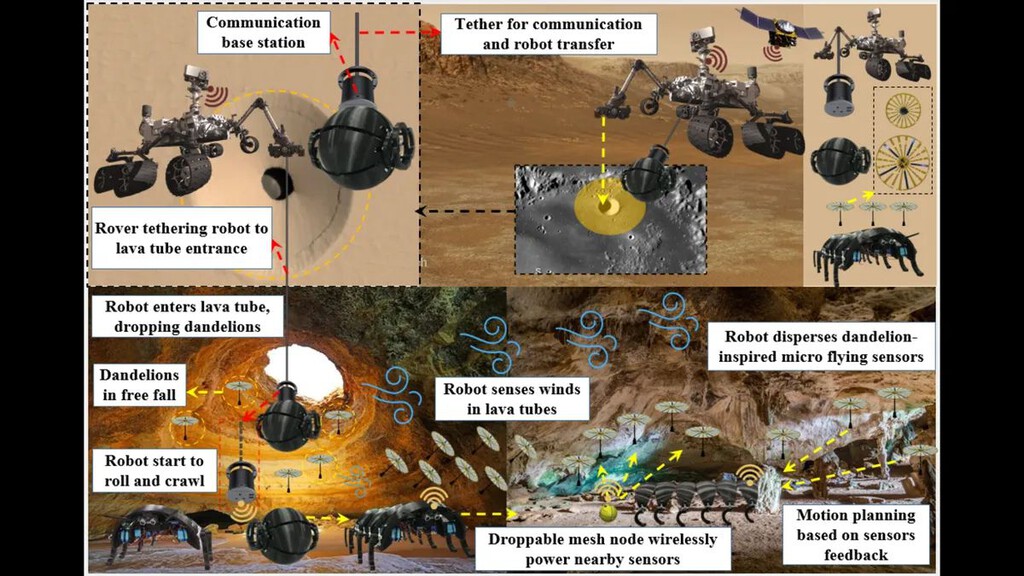
Enter biomimicry. By mimicking nature's designs, scientists aim to overcome these obstacles. The pill bug robot and dandelion drones are prime examples of this approach, offering a creative solution to a daunting problem.
Biomimicry: Nature-Inspired Solutions
Biomimicry is the practice of designing technology based on biological entities and processes. Professor Mostafa Hassanalian of New Mexico Tech has been leading a project that draws inspiration from two natural wonders: the pill bug and the dandelion.
The pill bug, known for its ability to roll into a protective ball, serves as the model for the mother robot. The dandelion, with its lightweight seeds that disperse on the wind, inspires the tiny drones that will be released inside the tunnels.
The Pill Bug Robot: A Protective Carrier
The pill bug robot is designed to roll into a sphere, protecting its internal payload during the rough journey to Mars. Once on the surface, it can navigate to tunnel entrances and deploy its cargo.
Inside the pill bug are numerous dandelion drones, each small enough to fit through tight spaces. The pill bug's shell shields them from the harsh Martian environment until they are ready to be released.
Dandelion Drones: Tiny Explorers
The dandelion drones are inspired by the way dandelion seeds are carried by the wind. These micro-drones are equipped with sensors and communication devices, allowing them to map the tunnels and relay data back to the mother robot.
Their small size and lightweight design enable them to be dispersed easily, and they can navigate through narrow passages that would be impossible for larger robots. Together, the pill bug and dandelion drones form a synergistic system for exploration.
- Biomimicry drives the design of both the pill bug robot and dandelion drones.
- The pill bug robot acts as a protective carrier for the drones.
- Dandelion drones are small, lightweight, and capable of navigating tight spaces.
- This system could unlock the secrets of Mars' vast tunnel networks.
- Professor Mostafa Hassanalian leads the research at New Mexico Tech.
How the System Works
The pill bug robot would land on Mars and move to a tunnel entrance. Once in position, it would open up and release the dandelion drones. These drones would then disperse into the tunnel, using their sensors to collect data.
The drones communicate with each other and the mother robot, forming a network that can cover large areas. After completing their mission, they could return to the pill bug for data retrieval or be left behind.
| Component | Function | Inspiration |
|---|---|---|
| Pill Bug Robot | Carries and protects drones | Pill bug (Armadillidiidae) |
| Dandelion Drones | Explore tunnels and collect data | Dandelion seeds |
| Communication Network | Relays data between drones and mother robot | Swarm intelligence |
Why This Matters for Mars Exploration
Exploring Mars' tunnels could yield invaluable scientific insights. These subterranean spaces might harbor evidence of past microbial life, shielded from the harsh surface conditions. Additionally, they could serve as potential habitats for future human missions.
The pill bug and dandelion drone concept represents a significant leap in robotic exploration. By leveraging biomimicry, scientists are pushing the boundaries of what's possible, opening new avenues for discovery. The background to this story is set out in Unitree's Rise in Robotics Has an Unexpected Backer: the US Army. A related thread runs through My Dog Has a Bigger Social Network Than Me: A Humble Confession. Earlier coverage in China's Robot Hotel: Full Automation with Pudu Robotics shows how the argument developed.
Challenges and Future Directions
While the concept is promising, several challenges remain. The drones must be able to withstand the extreme cold and dust of Mars. Communication over long distances and within tunnels is another hurdle. A closer look at the same subject appears in Robotic Hands: The Hardest Challenge in Humanoid Robotics. Anyone following the wider picture can start with Science: latest articles. The same theme surfaces in Is Mars Habitable? Tardigrades Can't Survive Its Toxic Soil, which takes a different angle.
Professor Hassanalian's team is continuing to refine the design. Future tests will likely focus on improving durability and autonomy. If successful, this technology could be adapted for other planetary exploration missions. Context on how this played out before sits in Perseverance Finds Mars Dust Threatens Astronaut Suits. A companion piece, Mars Tunnel Exploration: Pill Bug Robot and Dandelion Drones, approaches the same subject from another angle.
FAQ
What is the pill bug robot?
The pill bug robot is a biomimetic carrier designed to transport tiny drones to Mars. It rolls into a ball to protect its payload during travel and deployment.
How do dandelion drones work?
Dandelion drones are micro-robots inspired by dandelion seeds. They are lightweight and can be dispersed into tunnels to collect data using onboard sensors.
Why explore Mars' tunnels?
Mars' tunnels could contain evidence of past life and offer shelter for future human explorers. They are among the last unexplored frontiers on the planet.
Who is leading this research?
Professor Mostafa Hassanalian at the New Mexico Institute of Mining and Technology is leading the project, which has been in development for several years.
Browse the Shop
 Acacia frida deluxe solid wood bed frame |
Bedroom bench |
Bed chest drawers |
Lingerie dresser |
Frame base |
Mirror with jewelry storage |
30 Bathroom Vanity |
Memory foam queen mattress |
Mattresses for back pain |
Nightstand set of 2 |
Grand Goldman Shop |
Civil Lawyer
Deutschland Trikot WM 2026







