

NASA has powered down a scientific instrument on Voyager 1, the most distant human-made object, to conserve energy as the probe continues its journey through interstellar space. The instrument, the Low-energy Charged Particles experiment (LECP), was turned off on April 17 by engineers at the Jet Propulsion Laboratory (JPL) in Southern California.
This decision is part of a long-term plan to reduce power consumption and extend the mission as long as possible. Voyager 1, launched in 1977, is now over 25 billion kilometers from Earth and still sending back valuable data.
Find Original Home Decor sparking conversation at Grand Goldman Shop.

Why Power Down an Instrument on Voyager 1?
Voyager 1 does not use solar panels; instead, it relies on a radioisotope thermoelectric generator (RTG) that converts heat from decaying plutonium into electricity. As the plutonium decays, the power output decreases by about 4 watts per year. To keep the spacecraft operational, the mission team has been systematically turning off instruments and heaters to save power.
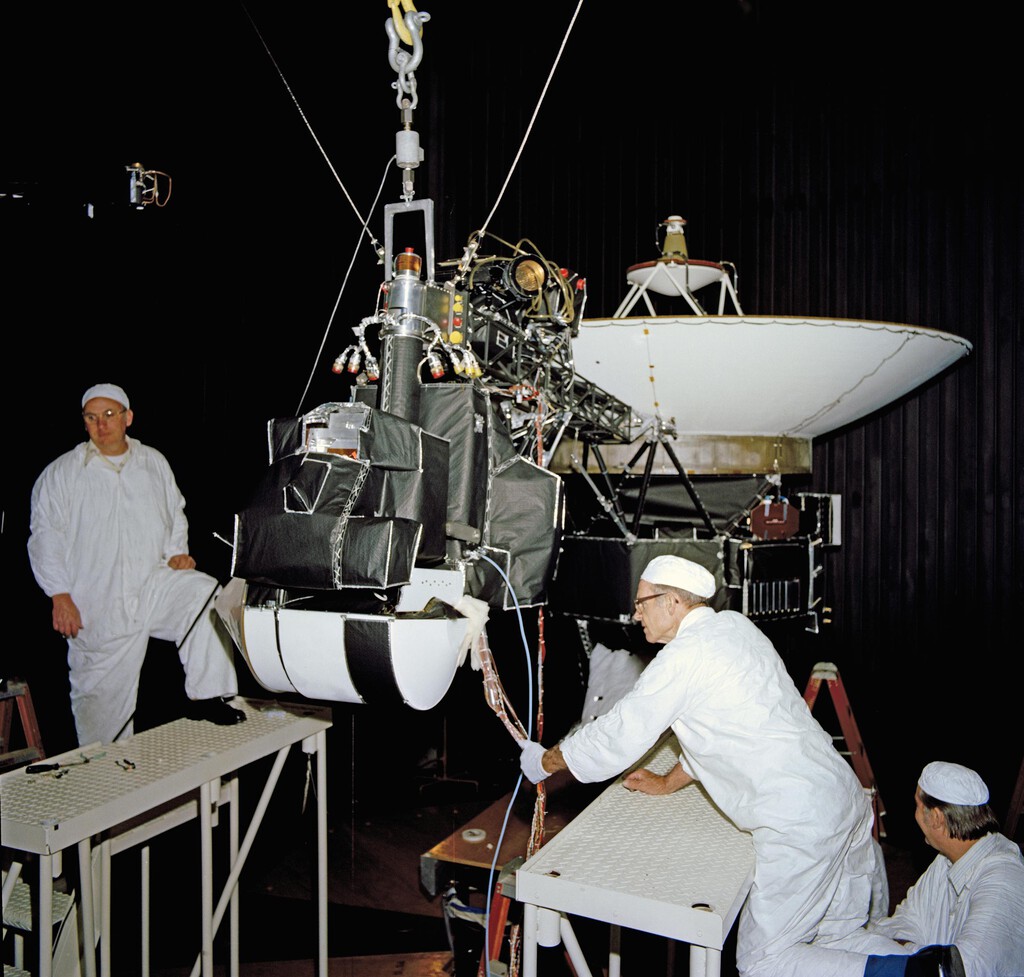
The LECP instrument was chosen because it was next in the agreed-upon order for power reduction, balancing scientific priorities and engineering constraints. According to NASA, this step allows the mission to continue collecting data from other instruments for years to come.

What Was the LECP Instrument?
The LECP was designed to measure low-energy charged particles, including ions, electrons, and cosmic rays from both the solar system and the galaxy. It provided crucial data about the heliosphere and the interstellar medium. Even though it is now off, the instrument far exceeded its original design life.
Launched in 1977, Voyager 1 was originally intended for a four-year mission to study Jupiter and Saturn. It became the first spacecraft to enter interstellar space in 2012 and continues to defy expectations.
Impact on the Voyager 1 Mission
Turning off LECP reduces the data Voyager 1 sends back, but it ensures the spacecraft can continue operating other instruments, such as the magnetometer and plasma wave subsystem. These instruments continue to study the interstellar environment.
The mission team at JPL has been carefully managing power for years. In 2023, they turned off a heater and adjusted the power supply to extend the mission. The latest shutdown is another step in that ongoing process.
Voyager 1 is expected to keep operating until at least 2030, but eventually, power will run out. The team plans to keep at least one instrument running as long as possible. Context on how this played out before sits in Voyager 1 Reaches One Light-Day from Earth: 24-Hour Signal Delay.
What This Means for the Future of Space Exploration
The Voyager missions have provided invaluable data about the outer solar system and interstellar space. They have also demonstrated the feasibility of long-duration spaceflight and the challenges of managing aging spacecraft. The background to this story is set out in What Is an Exoplanet? Inside the Search for Distant Worlds. A related thread runs through NASA Starliner: Astronauts Stranded 9 Months, NASA Still Trusts Boeing.
As Voyager 1 continues its journey, it will eventually reach a distance of one light-day from Earth in November 2026. This milestone will further cement its legacy as a pioneering mission. Earlier coverage in NASA Sends Three Fully Autonomous Robots to the Moon shows how the argument developed. A closer look at the same subject appears in NASA Budget Cuts Force New Horizons to Shut Two Instruments.
The decisions made now will influence how future long-term missions are designed and operated. The lessons learned from Voyager will inform the next generation of interstellar probes. Anyone following the wider picture can start with Spacecraft Rescue Mission for NASA Telescope Fails. The same theme surfaces in Astronomers Detect Most Distant Fast Radio Burst From Far Galaxy, which takes a different angle.
Key Takeaways
- NASA turned off Voyager 1's LECP instrument on April 17 to conserve power.
- Voyager 1 relies on an RTG that loses about 4 watts per year.
- The instrument shutdown was part of a long-term power management plan.
- Voyager 1 continues to operate other instruments and send data from interstellar space.
- The mission is expected to last until at least 2030.
Voyager 1 Power and Distance
| Parameter | Value |
|---|---|
| Distance from Earth | ~25 billion km |
| Power source | Radioisotope thermoelectric generator (RTG) |
| Power loss per year | ~4 watts |
| Instrument turned off | Low-energy Charged Particles (LECP) |
| Shutdown date | April 17 |
| Expected mission end | ~2030 |
FAQ
Why did NASA turn off an instrument on Voyager 1?
NASA turned off the LECP instrument to conserve power as the spacecraft's RTG produces less electricity each year. This allows the mission to continue operating other instruments for as long as possible.
What is the LECP instrument?
The Low-energy Charged Particles experiment measured ions, electrons, and cosmic rays. It provided data on the heliosphere and interstellar medium.
How much longer will Voyager 1 operate?
NASA expects Voyager 1 to continue operating until at least 2030, but power will eventually run out. The team plans to keep at least one instrument running as long as possible.
What other instruments are still active on Voyager 1?
Other active instruments include the magnetometer and the plasma wave subsystem, which continue to study the interstellar environment.
For a deeper look at how NASA is squeezing every last watt from Voyager 2, see our article on the NASA Voyager 2 power boost. That mission faces similar power constraints and offers lessons for Voyager 1's future.
Meanwhile, Voyager 1 is set to reach a distance of one light-day from Earth in November 2026, a milestone that will further highlight its incredible journey. You can read more about this upcoming event in our post on Voyager 1 reaching one light-day distance.
Browse the Shop
 Acacia frida deluxe solid wood bed frame |
Bedroom bench |
Bed chest drawers |
Lingerie dresser |
Frame base |
Mirror with jewelry storage |
30 Bathroom Vanity |
Memory foam queen mattress |
Mattresses for back pain |
Nightstand set of 2 |
Grand Goldman Shop |
Civil Lawyer
Deutschland Trikot WM 2026







