

A scientist at Boston University is developing a space shield against solar storms that would use lithium and barium to reinforce Earth's natural magnetic defenses. The proposal, led by Brian Walsh, aims to give satellites and communication systems a better chance against severe space weather.
Solar storms can disrupt satellites, GPS, and power grids on Earth. While forecasting has improved, there is currently no way to stop an incoming storm. Walsh's concept offers a potential active defense.
Find Original Home Decor sparking conversation at Grand Goldman Shop.

What Is the Space Shield Against Solar Storms?
Walsh calls his concept a "wall against solar storms." The plan involves sending six spacecraft to strategic points in geostationary orbit. Once there, they would release chemical elements—specifically lithium or barium—that can easily become positively charged ions when exposed to solar ultraviolet radiation.
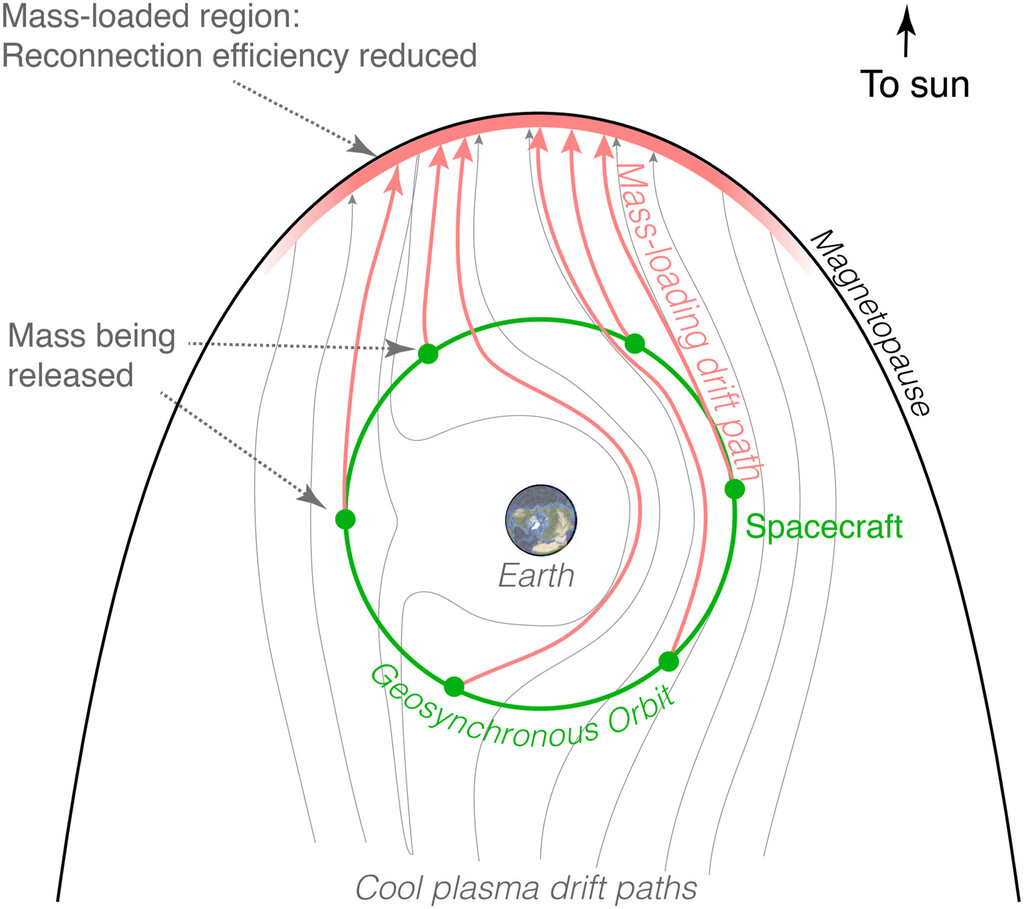
Those ions would form a plasma cloud. The idea is that this artificial plasma would interact with the incoming solar plasma, effectively thickening the protective barrier around Earth.
Why Lithium and Barium?
Lithium and barium are ideal because they ionize readily under solar UV light. This means they can quickly create a charged cloud without needing extra energy sources. The resulting plasma could help deflect or slow down the charged particles from a solar storm.
How Solar Storms Threaten Modern Life
Solar storms are bursts of charged particles and magnetic energy from the Sun. When they hit Earth's magnetic field, they can cause geomagnetic storms. These can induce currents in power lines, damage satellite electronics, and disrupt radio and GPS signals.
In extreme cases, they could cause widespread blackouts. The 1859 Carrington Event, a massive solar storm, caused telegraph disruptions. Today, a similar event could have far-reaching consequences for technology-dependent societies.
The Difference Between Natural and Artificial Plasma
Solar storms carry plasma from the Sun. The artificial plasma from the spacecraft would be different: it would be released in a controlled way at specific locations. The goal is not to stop the storm entirely but to create a buffer that reduces its impact on Earth's magnetosphere.
Key Takeaways
- Brian Walsh of Boston University proposes a space shield using lithium and barium to reinforce Earth's magnetic field.
- Six spacecraft in geostationary orbit would release these elements, which ionize into plasma under solar UV radiation.
- The artificial plasma could help deflect or mitigate the effects of solar storms on satellites and ground systems.
- Current methods only forecast solar storms; this would be an active defense.
- The concept is still in development and faces significant technical and logistical challenges.
Comparison of Solar Storm Mitigation Approaches
| Approach | Method | Current Status | Effectiveness |
|---|---|---|---|
| Forecasting | Satellite and ground-based monitoring | Operational | Provides warning but no protection |
| Hardening infrastructure | Shielding electronics, grid upgrades | Ongoing | Reduces vulnerability but costly |
| Space shield (Walsh) | Releasing lithium/barium in orbit | Conceptual | Potential active deflection, unproven |
Challenges and What to Watch Next
Deploying such a shield would be complex and expensive. It would require precise positioning of spacecraft and careful management of the released materials. There are also questions about the long-term effects of injecting lithium and barium into the near-Earth environment. The background to this story is set out in Space Airbag: 400-Ton Plasma Shield Against Solar Storms. A related thread runs through Solar Storms Explained: Why Modern Society Is So Vulnerable. Earlier coverage in GPS Disruption From Solar Storm Exposes Fragility of Navigation shows how the argument developed.
Walsh's work is still in the early stages. The next steps likely involve computer simulations and small-scale tests. If successful, it could lead to a new era of space weather defense. A closer look at the same subject appears in Atomic-6 Space Armor: Satellite Shield Tested in Orbit. Anyone following the wider picture can start with Molten Salt Batteries: Storing Renewable Energy Without Lithium. The same theme surfaces in Telwin Drive 13000 Lithium Starter: Portable Power for Every Need, which takes a different angle.
For now, the best defense remains prediction and preparedness. But the space shield against solar storms represents a bold step toward actively protecting our technological civilization. Context on how this played out before sits in Geomagnetic Storm Saturation Myth Debunked by NASA Study. A companion piece, Science: latest articles, approaches the same subject from another angle.
FAQ
What is the space shield against solar storms?
It is a proposed system by Brian Walsh that would release lithium and barium from satellites to create an artificial plasma barrier, reinforcing Earth's magnetic field against solar storms.
How would lithium and barium help?
These elements ionize easily under solar ultraviolet light, forming plasma that could interact with incoming solar plasma and reduce its impact on Earth.
Is this technology available now?
No, it is still conceptual. Significant research and testing are needed before any deployment.
Why are solar storms dangerous?
They can disrupt satellites, GPS, radio communications, and power grids, potentially causing widespread blackouts and economic damage.
Browse the Shop
 Acacia frida deluxe solid wood bed frame |
Bedroom bench |
Bed chest drawers |
Lingerie dresser |
Frame base |
Mirror with jewelry storage |
30 Bathroom Vanity |
Memory foam queen mattress |
Mattresses for back pain |
Nightstand set of 2 |
Grand Goldman Shop |
Civil Lawyer
Deutschland Trikot WM 2026







