

The Mac Pro has been discontinued by Apple, marking the end of an era for user-upgradable Macs. After 20 years, Apple has quietly removed the Mac Pro from its website without a press release, farewell, or tribute, and with no plans to replace it. This move signals Apple's final departure from modular, expandable desktop computers.
The writing had been on the wall for years. The Mac Pro had been stuck on the M2 Ultra chip for three years while the rest of the Apple Silicon lineup advanced. Apple continued to sell it starting at $8,399 with that chip, 64GB of unified memory, 1TB SSD, and the iconic cheese-grater tower design that became a meme. But the lack of updates made its discontinuation inevitable.
Find Original Home Decor sparking conversation at Grand Goldman Shop.

Why Apple Discontinued the Mac Pro
The Mac Pro was unique because it offered expansion capabilities that no other Mac had. It featured PCIe slots for specialized cards and the ability to add storage, giving professionals flexibility for specific needs. However, Apple has been telegraphing this farewell for a long time.
Apple's strategy has shifted toward tightly integrated, non-upgradable machines. The company's focus on Apple Silicon and unified architecture means users can no longer swap out components. This gives Apple more control over the user experience and hardware reliability, but it also limits customization.
The Mac Pro's slow demise was evident as other Macs with Apple Silicon advanced. The M2 Ultra was the last chip offered in the Mac Pro, and Apple never released an M3 or M4 version. The lack of updates made it clear that Apple was no longer committed to the product line.
The End of User-Upgradable Macs
With the Mac Pro gone, Apple no longer sells any Mac that allows users to upgrade internal components. The Mac Studio and Mac Mini, which are also powered by Apple Silicon, are sealed units. This means professionals who need to add RAM or storage after purchase are out of luck.
Apple's philosophy is clear: it doesn't want users tinkering with their machines. The company has long discouraged user upgrades, and the Mac Pro was the last holdout. Now, that era is over.
- No more PCIe expansion: The Mac Pro was the only Mac with PCIe slots for specialized cards.
- No user-upgradable RAM or storage: All current Macs have soldered components.
- Apple Silicon dominance: Apple's custom chips are not designed for user upgrades.
- Professionals must adapt: Those needing expansion must look to external solutions like Thunderbolt.
- Apple's control increases: The company can better manage performance and security.
What This Means for Professionals
For professionals who relied on the Mac Pro's expandability, this is a significant blow. Video editors, audio engineers, and 3D artists who needed to add capture cards, extra storage, or specialized PCIe cards now have to find workarounds.
External Thunderbolt enclosures can provide some expansion, but they come with bandwidth limitations and added cost. The Mac Studio offers high performance but is sealed. This forces professionals to either buy a maxed-out machine upfront or rely on external devices.
Apple's decision also affects the used market. Mac Pro prices may drop as users look to offload their machines, but the lack of future support could make them less attractive. However, for some, the Mac Pro remains a powerful tool.
Apple's Shift Away from Modularity
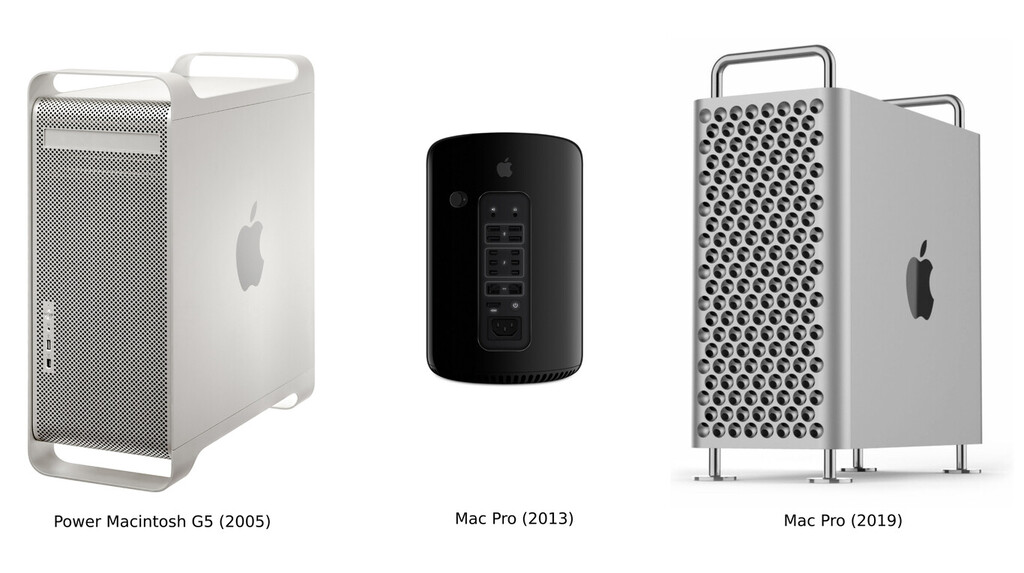
Apple has been moving away from modularity for years. The 2013 Mac Pro, known as the trash can, was criticized for its lack of internal expansion. The 2019 model brought back PCIe slots, but it was based on Intel chips and was never updated with Apple Silicon beyond the M2 Ultra.
Now, Apple's lineup is entirely Apple Silicon, with no room for user upgrades. This aligns with the company's focus on thin, light, and integrated devices. The Mac Pro was the last vestige of a bygone era.
| Model | Year Introduced | Processor | Expandability | Status |
|---|---|---|---|---|
| Mac Pro (2019) | 2019 | Intel Xeon | PCIe slots, user-upgradable RAM/storage | Discontinued |
| Mac Pro (2023) | 2023 | Apple M2 Ultra | PCIe slots (limited), no user-upgradable RAM | Discontinued |
| Mac Studio | 2022 | Apple M1 Max/Ultra | None | Current |
| Mac Mini | 2020 | Apple M1/M2 | None | Current |
What to Watch Next
Apple's focus is now on the Mac Studio and Mac Mini for professional users. The company may introduce new Apple Silicon chips that further blur the line between consumer and pro machines. However, don't expect a return to modularity. The background to this story is set out in Apple Mac mini M6 and Mac Studio M5 Ultra: AI Power on Your Desk. A related thread runs through Mac mini M6 vs M5 Pro: Inside the 2024 Upgrade Differences. Earlier coverage in Mac Studio M5 Max and M5 Ultra: CPU, GPU, and NPU Upgrades Explained shows how the argument developed.
Professionals should consider their needs carefully when buying a new Mac. Since upgrades are impossible, it's crucial to buy the highest specs you can afford upfront. External storage and Thunderbolt expansion will become even more important. A closer look at the same subject appears in Apple Price Hike: Last Chance to Buy Discounted Macs and iPads. Anyone following the wider picture can start with Apple Discontinues 256GB Mac Mini Amid RAM Crisis: What It Means for Buyers. The same theme surfaces in Intel Chip Outperforms Apple M1 in Efficiency Benchmark, which takes a different angle.
The Mac Pro's discontinuation also raises questions about Apple's commitment to high-end users. While the Mac Studio is powerful, it lacks the expandability that some workflows require. Apple may lose some customers to Windows or Linux workstations. Context on how this played out before sits in Apple Watch Ultra 4 Review: The Best Apple Watch for Training. A companion piece, Technology: latest articles, approaches the same subject from another angle.
FAQ
Why did Apple discontinue the Mac Pro?
Apple discontinued the Mac Pro because it no longer fits its strategy of tightly integrated, non-upgradable devices. The company has shifted to Apple Silicon, which doesn't support user upgrades, and the Mac Pro had not been updated in three years.
Will there be a new Mac Pro?
Apple has not announced any plans for a new Mac Pro. The company has removed the product from its website and seems to be focusing on the Mac Studio and Mac Mini for professional users.
What are the alternatives to the Mac Pro?
The Mac Studio is the closest alternative, offering high performance in a compact design. However, it lacks internal expansion. For those needing PCIe slots, external Thunderbolt enclosures are an option, or consider a Windows or Linux workstation.
Can I still buy a Mac Pro?
Apple has removed the Mac Pro from its website, so it is no longer available new from Apple. You may find it at some retailers or in the used market, but availability will decline over time.
Browse the Shop
 Acacia frida deluxe solid wood bed frame |
Bedroom bench |
Bed chest drawers |
Lingerie dresser |
Frame base |
Mirror with jewelry storage |
30 Bathroom Vanity |
Memory foam queen mattress |
Mattresses for back pain |
Nightstand set of 2 |
Grand Goldman Shop |
Civil Lawyer
Deutschland Trikot WM 2026







