

Singapore has become the Strait of Hormuz of the internet and telecommunications, a critical chokepoint where over 30 active submarine cables converge. This concentration makes the city-state a vital hub for global connectivity, but also a single point of failure that could cause chaos if disrupted.
Submarine cables carry 97% of intercontinental traffic, and Singapore's strategic location and business-friendly policies have made it the go-to landing point for these cables. But how did this tiny nation become so indispensable, and what are the risks?
Find Original Home Decor sparking conversation at Grand Goldman Shop.

Why Singapore is the Internet's Strait of Hormuz
Singapore's geography has long made it a maritime hub, but its digital importance stems from deliberate planning. The country has restricted submarine cable landings to three specific zones to avoid a tangled seabed, ensuring resilience and operational efficiency.
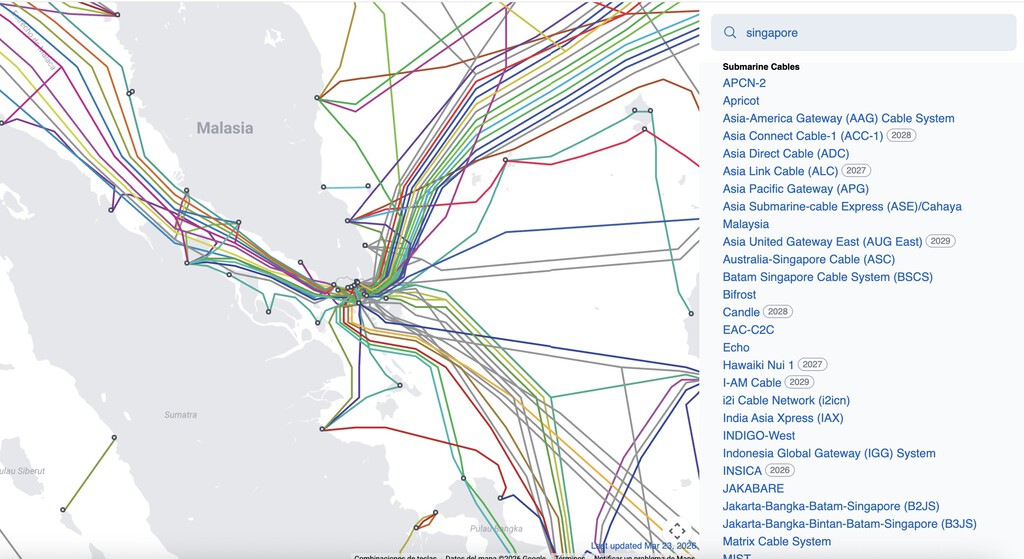
With about 30 active cables and many more planned, Singapore connects East Asia, South Asia, the Persian Gulf, the Mediterranean, and Europe. This density of interconnection is unmatched in the region, making it a linchpin for global data flows.

The Accidental Origins of Singapore's Telecom Dominance
The story begins with a curious Scottish doctor and a native tree of the Malay Peninsula. In the 19th century, Singapore's position as a trading post attracted entrepreneurs and innovators, setting the stage for its later tech ascendancy.
But the real catalyst was the decision to invest heavily in telecommunications infrastructure in the late 20th century. The government's vision of a wired nation, coupled with favorable regulations, attracted global telecom players to land their cables there.
Key Takeaways
- Singapore hosts over 30 active submarine cables, carrying a significant share of global internet traffic.
- The concentration creates a chokepoint similar to the Strait of Hormuz, with risks of widespread disruption if cables are damaged.
- Singapore's success is due to strategic geography, government foresight, and business-friendly policies.
- Diversification efforts are underway, but Singapore's dominance is likely to persist.
- Businesses and governments must consider redundancy to mitigate risks.
Comparing Singapore to Other Global Chokepoints
| Chokepoint | Type | Key Characteristic | Risk Level |
|---|---|---|---|
| Strait of Hormuz | Maritime | 20% of global oil passes through | High |
| Singapore | Telecom | 30+ submarine cables, major data hub | High |
| Suez Canal | Maritime | 12% of global trade | Medium |
| Panama Canal | Maritime | 5% of global maritime trade | Medium |
While maritime chokepoints like Hormuz and Suez are well-known, Singapore's digital chokepoint is less visible but equally critical. A disruption there could cripple internet connectivity across Asia and beyond.
What Happens if Singapore's Cables Are Cut?
If a major cable break occurs near Singapore, the impact would be immediate: slowed internet speeds, disrupted financial transactions, and halted cloud services for millions. The financial hub's own economy would suffer greatly. The longer history behind the story is traced in Strait of Hormuz Closure Threatens Global Tech Supply Chain.
Redundancy exists through other routes, but capacity is limited. Rerouting traffic would cause congestion and latency spikes, affecting businesses reliant on real-time data. The background to this story is set out in Submarine Cables: 30 Years of Internet's Underwater Backbone. A related thread runs through Iran's Submarine Cable Toll Plan in Strait of Hormuz. Earlier coverage in Google's Submarine Cable Plan Makes Dominican Republic Digital Hub shows how the argument developed.
The Future of Singapore's Telecom Hub Status
Singapore continues to expand its cable infrastructure, with new projects like the Southeast Asia-Japan 2 cable and the Bifrost cable system. These additions will further solidify its position but also increase the stakes. A closer look at the same subject appears in Europe's Tech Sovereignty Starts With Submarine Cables, Not AI. Anyone following the wider picture can start with Strait of Hormuz Closure: Iran's Conditions for Reopening. The same theme surfaces in Trump Threatens to Declare Strait of Hormuz US Territory, which takes a different angle.
Meanwhile, alternatives like Indonesia and India are emerging, but none can match Singapore's ecosystem of data centers, skilled workforce, and legal framework. For now, Singapore remains the undisputed king of Asian connectivity. Context on how this played out before sits in Strait of Hormuz crisis deepens as US strategy falters. A companion piece, Russian Oligarch's Superyacht Crosses Strait of Hormuz Alone, approaches the same subject from another angle.
FAQ
Why is Singapore called the Strait of Hormuz of the internet?
Because it is a critical chokepoint for global internet traffic, with over 30 submarine cables converging there, similar to how the Strait of Hormuz is a chokepoint for oil.
How many submarine cables land in Singapore?
Approximately 30 active cables, with many more planned or under construction, according to TeleGeography.
What would happen if Singapore's submarine cables were damaged?
Internet connectivity across Asia and beyond would be severely disrupted, causing slowdowns, outages, and economic losses.
Is there a backup for Singapore's cables?
Yes, there are alternative routes, but they have limited capacity and would cause congestion if Singapore's cables were cut.
Browse the Shop
 Acacia frida deluxe solid wood bed frame |
Bedroom bench |
Bed chest drawers |
Lingerie dresser |
Frame base |
Mirror with jewelry storage |
30 Bathroom Vanity |
Memory foam queen mattress |
Mattresses for back pain |
Nightstand set of 2 |
Grand Goldman Shop |
Civil Lawyer
Deutschland Trikot WM 2026







