

The RAM and NAND crisis is delivering a fatal blow to the cheap smartphone. The Realme C71, launched less than a year ago with 8GB of RAM, 256GB of storage, and a €149 price tag, is now harder to find than a four-leaf clover. It's a species on the brink of extinction—something impossible in 2026. We are witnessing a paradigm shift in the mobile industry.
What's Behind the RAM and NAND Crisis?
For years, smartphone makers benefited from an oversupply of memory chips, allowing them to pack generous RAM and storage into budget devices at rock-bottom prices. That era is over. A recent report from Counterpoint Research confirms that component costs are under the greatest pressure in a decade. The outlook is grim: brands must either sacrifice profits or pass the cost to consumers—or both, while the entry-level segment disappears entirely.
Find Original Home Decor sparking conversation at Grand Goldman Shop.

The Staggering Price Surge in DRAM and NAND
The price escalation in the first quarter of 2026 has been unprecedented. To put it in perspective, the chart from Counterpoint Research shows a steep, almost vertical climb in memory prices. This isn't a minor fluctuation; it's a structural shift that threatens the economic viability of many manufacturers.
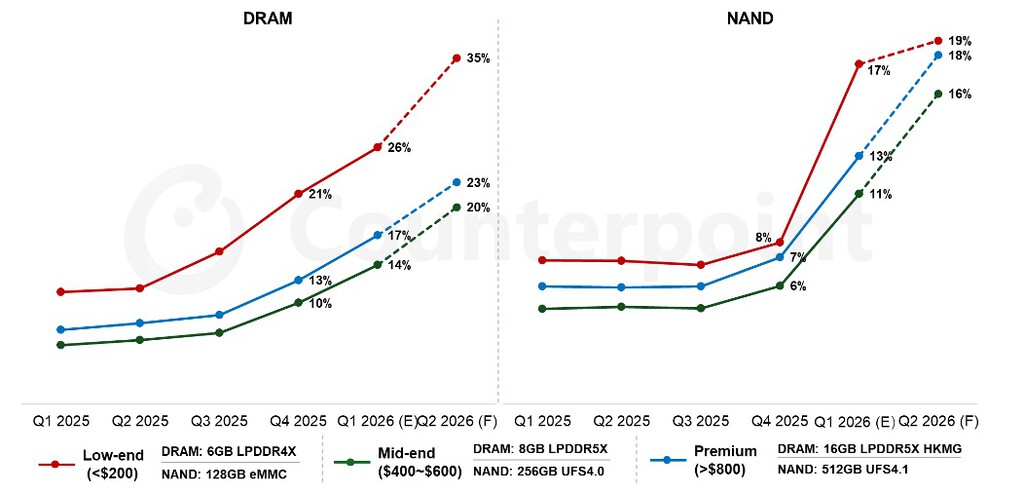
| Component | Q1 2025 Price | Q1 2026 Price | Percentage Increase |
|---|---|---|---|
| DRAM (per GB) | $2.50 | $4.80 | +92% |
| NAND (per GB) | $0.10 | $0.18 | +80% |
| Realme C71 (8GB+256GB) BOM | €110 | €180 | +64% |
Why This Matters for the Mobile Industry
This phenomenon is not a simple fluctuation or a temporary shortage; it's a structural change that jeopardizes the economic viability of many manufacturers. DRAM (which affects speed and multitasking) and NAND (storage capacity) are fundamental to any smartphone. When their costs skyrocket, the entire cost structure of a device shifts.
The most immediate victim is the budget smartphone. Brands like Realme, Xiaomi, and Samsung are being forced to rethink their entry-level strategies. Some are reducing RAM and storage configurations; others are exiting the segment altogether. The result is a market where affordable phones become less capable and more expensive.
- Disappearing entry-level: Phones under €150 with decent specs are vanishing.
- Higher prices for less: Consumers will pay more for devices with lower RAM and storage.
- Brand consolidation: Smaller manufacturers may not survive the squeeze.
- Innovation slowdown: R&D budgets for budget lines are being cut.
- Second-hand market boom: As new budget phones become unaffordable, refurbished devices gain traction.
Who Is Affected by the RAM and NAND Crisis?
The crisis hits hardest in emerging markets where budget phones are the primary means of internet access. In regions like Latin America, Africa, and parts of Asia, the disappearance of affordable smartphones could widen the digital divide. Manufacturers are caught between a rock and a hard place: they cannot absorb the cost increases without bleeding money, but raising prices risks losing their customer base.
Consumers in developed markets are not immune either. The mid-range segment is also feeling the pinch, with flagship features trickling down more slowly. The days of getting near-flagship specs for a fraction of the price are fading.
What to Watch Next in the RAM and NAND Crisis
Industry analysts predict that memory prices will remain high through 2027. The key question is how manufacturers adapt. Some are exploring alternative memory technologies or renegotiating supplier contracts. Others are shifting focus to services and accessories to maintain revenue. The background to this story is set out in 2026 RAM Crisis: Is a High-End Smartphone Still Worth Buying. A related thread runs through The $120 Smartphone Is Dying: Why Budget Phones Are Disappearing for Good. Earlier coverage in Car Prices Surge: The RAM Shortage Crisis Explained shows how the argument developed.
For consumers, the advice is to hold onto your current phone longer or consider refurbished options. The era of the ultra-cheap smartphone with generous specs may be over, at least for now. A closer look at the same subject appears in RAM Crisis 2026: Samsung's Record Quarter as Memory Demand Soars. Anyone following the wider picture can start with LPDDR4 RAM Shortage: Why Budget Smartphones Are Disappearing. The same theme surfaces in Ultra Smartphones Face RAM Crisis: What It Means for Buyers, which takes a different angle.
As the industry grapples with these challenges, the ripple effects will be felt across the entire tech ecosystem. For instance, the push for digital detox and responsible mobile use, such as turning off your phone for five minutes a day, might gain traction as users seek to extend the lifespan of their devices. Context on how this played out before sits in Microsoft Windows Memory Optimization: Slimming Down for a RAM Crisis.
FAQ
What is causing the RAM and NAND crisis?
The crisis is driven by a combination of factors: increased demand from AI and data centers, supply chain disruptions, and a shift in production focus by major manufacturers. This has led to a significant imbalance between supply and demand, driving prices up.
Will smartphone prices go down soon?
According to industry reports, memory prices are expected to remain high through 2026 and possibly into 2027. Consumers should not expect a quick return to the low prices of previous years.
Which phones are most affected?
Budget and entry-level smartphones are the most affected, as they operate on thin margins and rely heavily on affordable memory components. Mid-range and flagship phones are also impacted but to a lesser extent.
What can consumers do?
Consumers can extend the life of their current devices, consider refurbished phones, or opt for models with expandable storage. Staying informed about market trends will help in making purchasing decisions.
Browse the Shop
 Acacia frida deluxe solid wood bed frame |
Bedroom bench |
Bed chest drawers |
Lingerie dresser |
Frame base |
Mirror with jewelry storage |
30 Bathroom Vanity |
Memory foam queen mattress |
Mattresses for back pain |
Nightstand set of 2 |
Grand Goldman Shop |
Civil Lawyer
Deutschland Trikot WM 2026







