

China's crocodile-scale armor is a new biomimetic design that deflects projectiles rather than simply absorbing them. Developed by researchers at Ningbo University, this armor replaces traditional hexagonal plates with small rhomboidal ceramic tiles arranged at 45-degree angles, mimicking the overlapping structure of crocodile scales. The goal is to create a cheaper, lighter armor that can redirect incoming projectiles, causing them to lose stability and fragment before penetrating.
Why Nature Inspires Modern Armor
For decades, military engineers have looked to nature for impact-resistant designs. From spider silk-inspired fibers for bulletproof vests to the layered structures of abalone shells, biological materials often outperform synthetic composites in absorbing energy and resisting penetration. China's crocodile-scale armor continues this tradition, but with a twist: instead of maximizing energy absorption, it focuses on deflection.
Find Original Home Decor sparking conversation at Grand Goldman Shop.

The logic is simple. Rather than making armor thicker, heavier, and more expensive, the Ningbo University team modified the surface geometry to alter how projectiles strike. By forcing projectiles to ricochet or destabilize, the armor reduces the energy they can deliver to the underlying structure.
How Crocodile-Scale Armor Works
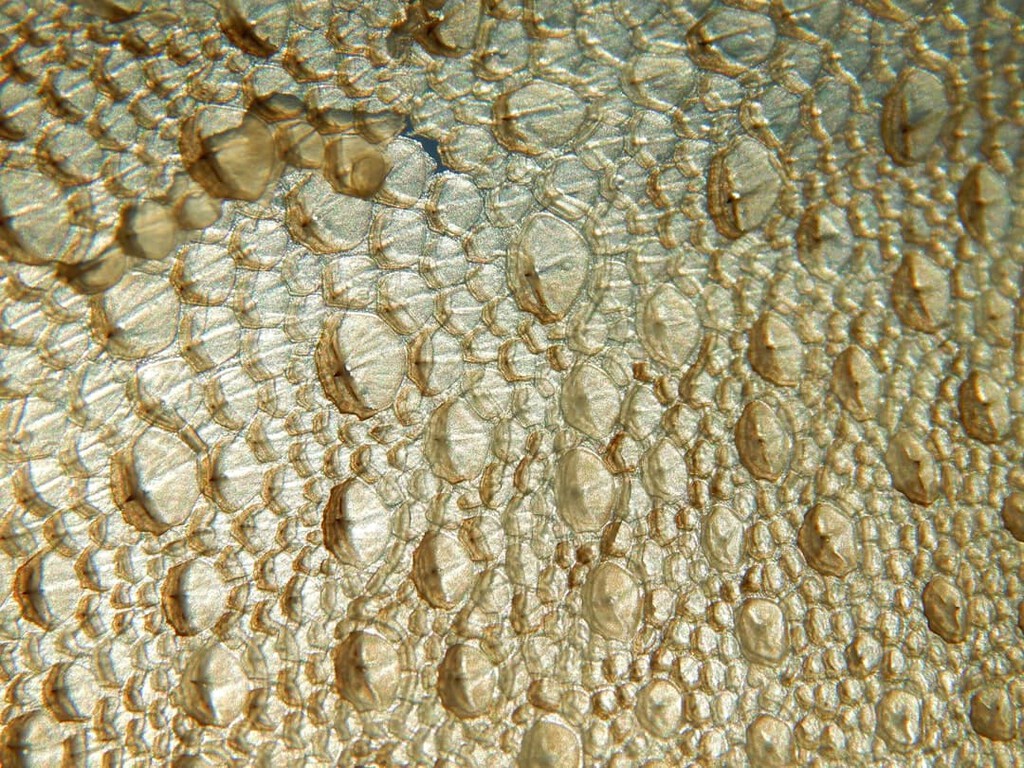
The design draws directly from the irregular, overlapping pattern of crocodile scales. Each scale acts as a small, angled deflector. In the Chinese prototype, these scales are replicated using rhomboidal ceramic tiles set at 45-degree angles. When a projectile hits, the angled surface imparts a lateral force, causing the projectile to veer off course or tumble.
During testing, this configuration more effectively reduced the residual velocity of projectiles compared to conventional flat hexagonal plates. That means the projectile loses more speed and stability before it can penetrate the armor's backing layer.
Key advantages of the crocodile-scale design
- Deflection over absorption: Projectiles are redirected, reducing the energy transferred to the armor.
- Cheaper materials: The design may allow the use of less expensive ceramics or composites.
- Lighter weight: Angled tiles can achieve similar protection with less mass.
- Scalability: The modular tile arrangement can be adapted to different armor shapes.
- Biomimetic precedent: Builds on proven concepts like spider silk-inspired fibers.
Performance and Potential Applications
While specific test data remains limited, the Ningbo University team reported that their design outperformed traditional hexagonal armor in reducing projectile residual velocity. This suggests that crocodile-scale armor could be particularly effective against high-velocity threats where deflection can mean the difference between penetration and survival.
Potential applications include body armor for soldiers, vehicle armor, and protective gear for law enforcement. The lighter weight could also benefit mobile units that need to balance protection with agility.
| Feature | Traditional Hexagonal Armor | Crocodile-Scale Armor |
|---|---|---|
| Tile shape | Hexagonal | Rhomboidal, angled at 45° |
| Primary mechanism | Absorption | Deflection |
| Weight | Heavier | Lighter (potential) |
| Cost | Higher | Lower (potential) |
| Projectile residual velocity | Higher | Lower (tested) |
What This Means for Future Armor
China's crocodile-scale armor is part of a broader global trend toward biomimetic defense solutions. The U.S. military has already tested spider silk-inspired fibers for future body armor, and other nations are exploring similar concepts. The Ningbo University research adds a new dimension by focusing on deflection rather than pure absorption. The background to this story is set out in Saltwater Crocodiles Surf Ocean Currents to Travel 590 Kilometers. A related thread runs through Trending: latest articles. Earlier coverage in Ukraine's Drone Crisis: Tax Error Classifies UAVs as Electric Cars shows how the argument developed.
If the technology proves scalable and cost-effective, it could lead to a new generation of armor that is both lighter and more affordable. That would be a significant shift for military logistics, where weight and cost are constant constraints. A closer look at the same subject appears in Storks as Anti-Drone Weapons: Ukraine and Russia Take Note. Anyone following the wider picture can start with Pentagon Plans Giant Nets to Shield F-35 Jets from Drones. The same theme surfaces in Goldman Media Life: New YouTube Channel for Smart Home Tech, which takes a different angle.
For now, the research remains at the prototype stage. Further testing will determine how the design performs against different types of projectiles and in various environmental conditions. But the principle—using nature's own impact-resistant structures—is sound and increasingly popular. Context on how this played out before sits in China's Hydrogen Turboprop Drone Completes First Cargo Flight. A companion piece, China's Crocodile-Scale Armor Deflects Projectiles on the Battlefield, approaches the same subject from another angle.
FAQ
What is crocodile-scale armor?
Crocodile-scale armor is a biomimetic armor design that uses small rhomboidal ceramic tiles arranged at 45-degree angles to mimic the overlapping scales of a crocodile. This structure deflects projectiles rather than simply absorbing their impact.
How does crocodile-scale armor differ from traditional armor?
Traditional armor often uses flat hexagonal plates to absorb energy. Crocodile-scale armor uses angled tiles to deflect projectiles, causing them to lose stability and fragment, which can reduce the required thickness and weight.
Who developed this armor?
The armor was developed by researchers at Ningbo University in China. Their tests showed that the design reduced projectile residual velocity more effectively than conventional hexagonal plates.
What are the potential benefits of crocodile-scale armor?
Potential benefits include lower cost, lighter weight, and effective deflection of projectiles. This could make it suitable for body armor, vehicle armor, and other protective applications where mobility and affordability are important.
As military technology continues to evolve, biomimetic designs like this one are likely to play a growing role. The same principles of deflection and energy redirection are being explored in other fields, from aerospace to automotive safety. For a related look at how large-scale engineering projects are pushing boundaries, see our coverage of China's 582-ton magnet for artificial sun fusion energy, which highlights another area where innovative materials and designs are making an impact.
The crocodile-scale armor also underscores the value of interdisciplinary research. By studying biological systems, engineers can find solutions that are both elegant and practical. Whether this particular design will see widespread adoption remains to be seen, but it represents a promising step forward in the quest for better protection.
For now, the focus will be on further testing and refinement. If the results hold up, crocodile-scale armor could become a standard in future military and security equipment, proving that sometimes the best ideas come from nature.
Browse the Shop
 Acacia frida deluxe solid wood bed frame |
Bedroom bench |
Bed chest drawers |
Lingerie dresser |
Frame base |
Mirror with jewelry storage |
30 Bathroom Vanity |
Memory foam queen mattress |
Mattresses for back pain |
Nightstand set of 2 |
Grand Goldman Shop |
Civil Lawyer
Deutschland Trikot WM 2026







