

Spanish cities have cracked down on balcony flags, with local councils issuing fines of up to €3,000 for violating horizontal property law. The proliferation of flags—from national and regional to political and sports team banners—has turned facades into colorful mosaics, but also sparked legal battles over community rules. This article breaks down the legislation and what it means for residents.
Why Balcony Flags Are Suddenly a Hot Topic
In recent years, Spanish balconies have become impromptu display spaces for a wide array of flags. The World Cup and other major sporting events turned entire neighborhoods into giant mosaics of symbols, and political and social causes have added to the mix. However, this trend has led to conflicts within communities and, in some cases, fines for residents who violate the rules.
Find Original Home Decor sparking conversation at Grand Goldman Shop.

The core issue is the Ley de Propiedad Horizontal (Horizontal Property Law), which governs communal living in Spain. Article 7.1 of the law, revised in 1999, states that owners may modify elements of their homes as long as they do not alter the building's exterior configuration or harm other owners' rights. But how does this apply to balconies?
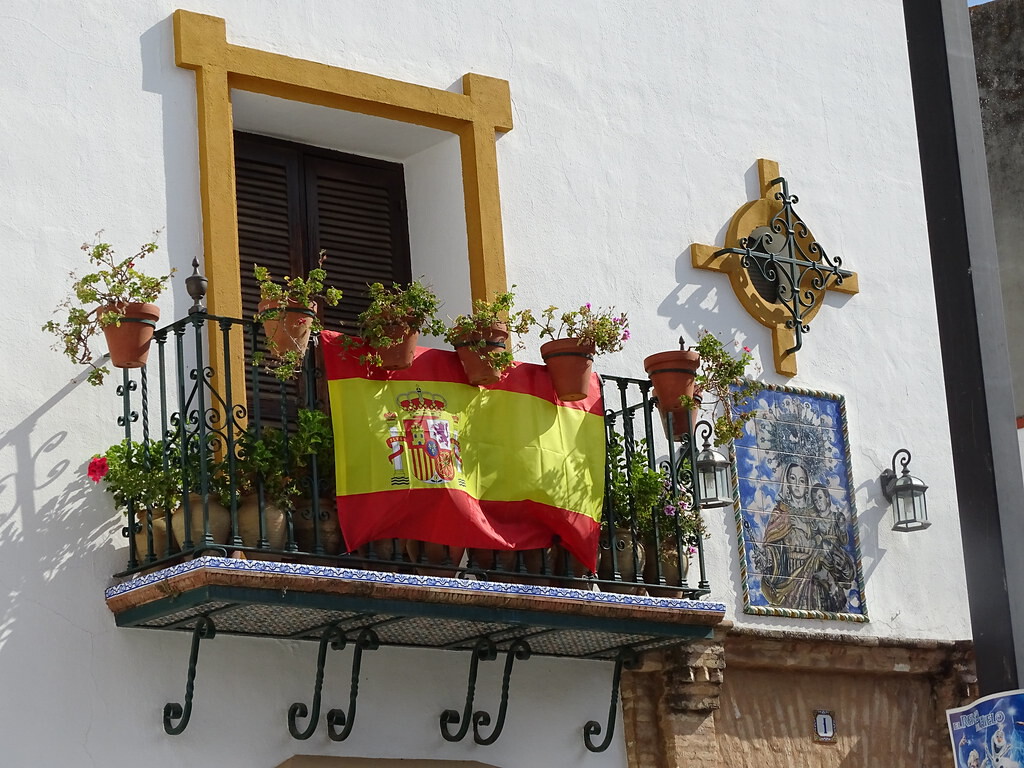
What the Law Says About Balconies and Flags
Under the Horizontal Property Law, balconies are considered common elements for private use. This means that while the balcony is part of the building's facade, its enjoyment is exclusive to the owner, and the use of its floor and walls corresponds to the apartment owner. In practice, this allows you to hang objects like flags.
However, there are limits. If a flag is excessively large or obstructs a neighbor's window, it could be considered an alteration of the facade. The Tribunal Supremo (Supreme Court) has ruled that certain facade alterations may justify the community requiring their removal. Additionally, if the flag affects two cadastral references (i.e., two separate properties), different rules may apply.
When Can a Community Fine You for a Balcony Flag?
Fines for balcony flags are not automatic. They typically arise when a community's statutes or internal rules explicitly prohibit certain displays, or when a flag causes a nuisance or damages the building's aesthetic. The €3,000 figure cited in some reports corresponds to the maximum penalty for serious infractions under the Horizontal Property Law, but such fines are rare and usually follow a formal complaint and a vote by the community.
Key factors that can lead to fines include:
- Size and placement: Flags that are disproportionately large or cover significant portions of the facade may be deemed alterations.
- Obstruction: If a flag blocks a neighbor's light, view, or ventilation, it could be considered a nuisance.
- Community statutes: Some communities have specific rules banning flags or requiring approval.
- Duration: Temporary displays for special events are often tolerated, while permanent flags may face more scrutiny.
- Political or offensive content: While freedom of expression is protected, flags that incite violence or hatred may be subject to separate legal action.
Legal Framework: Horizontal Property Law and Beyond
The Horizontal Property Law provides the foundation, but other regulations may also apply. For example, local ordinances on public space and aesthetics can influence what is allowed on facades. Moreover, if a flag is considered a fire hazard or violates building safety codes, authorities can intervene.
It's also important to distinguish between private balconies and common areas. While balconies are for private use, they are still part of the building's structure, and any modification must respect the community's overall interests. The Supreme Court has consistently upheld the community's right to regulate facade elements to preserve architectural harmony.
Case-by-Case: How Communities Handle Flag Disputes
In practice, most flag disputes are resolved through community meetings rather than fines. The presidente of the community can call a vote to decide whether to allow or prohibit flags. If a majority agrees, the decision becomes binding. Fines are usually a last resort after warnings and mediation fail.
Several recent cases have highlighted the tension between individual expression and community rules. In one instance, a community in Madrid fined a resident for hanging a large political banner that covered two balconies. The resident argued it was a matter of free speech, but the community prevailed because the banner altered the building's facade and affected neighbors' rights. In another case, a community in Barcelona allowed flags only during major sporting events, with a time limit. The background to this story is set out in Trending: latest articles. A related thread runs through New Fire Law Lets You Clear Your Neighbor's Land: What It Means.
What This Means for Residents and Communities
For residents, the key takeaway is to check your community's statutes before hanging any flag. If in doubt, ask the president or bring it up at the next meeting. For communities, clear rules and consistent enforcement can prevent conflicts. It's also wise to consider the balance between personal expression and communal harmony. Earlier coverage in Gelsa's 'Salir a la Fresca' Event Draws Record Crowd of 400 shows how the argument developed. A closer look at the same subject appears in Spain's Public Housing Crisis: Why Only 1.5% of Homes Are Protected.
As Spanish cities continue to grapple with this issue, expect more debates and possibly more fines. The trend reflects broader questions about how we share public spaces and respect each other's rights in dense urban environments. Anyone following the wider picture can start with Garage Parking Space as Storage: What the Law Says for Owners. The same theme surfaces in Spain's New Motorcycle Gear Law: What Riders Must Wear From October, which takes a different angle.
FAQ
Is it legal to hang a flag on a balcony in Spain?
Generally, yes, because balconies are considered common elements for private use, and owners have the right to use them. However, the flag must not alter the building's exterior configuration or harm other owners' rights, as per Article 7.1 of the Horizontal Property Law.
Can my community fine me for hanging a flag?
Yes, if the flag violates community statutes or is deemed a serious alteration of the facade. Fines can go up to €3,000, but they are typically imposed after a formal complaint and a community vote, and are relatively rare.
What should I do if my neighbor's flag blocks my view?
First, try to resolve the issue amicably. If that fails, bring it up at a community meeting. The community can vote to require the removal of the flag if it significantly obstructs your rights. In extreme cases, legal action may be necessary.
Are there different rules for political flags?
Political flags are subject to the same property laws, but freedom of expression protections may apply. However, if a flag incites violence or hatred, it may be banned under other legislation. Communities can also impose neutral rules on all flags to avoid discrimination.
Browse the Shop
 Acacia frida deluxe solid wood bed frame |
Bedroom bench |
Bed chest drawers |
Lingerie dresser |
Frame base |
Mirror with jewelry storage |
30 Bathroom Vanity |
Memory foam queen mattress |
Mattresses for back pain |
Nightstand set of 2 |
Grand Goldman Shop |
Civil Lawyer
Deutschland Trikot WM 2026







