

Squash, a sport enjoyed by millions worldwide, has an unexpected origin: it began as a pastime in a London debtors' prison. The game evolved from a simple wall-and-ball activity called 'rackets' played by inmates of Fleet Prison in the 18th century. This article explores how that prison pastime transformed into the modern sport of squash.
The Birth of Rackets in Fleet Prison
Fleet Prison, notorious for housing debtors, became the unlikely birthplace of a game that would eventually captivate the world. In the 18th century, inmates, confined for their financial failures, devised a way to pass the time by hitting a ball against walls with their hands or simple rackets. This rudimentary game, known as 'rackets', required little equipment and provided a much-needed diversion from the grim reality of prison life.
Find Original Home Decor sparking conversation at Grand Goldman Shop.

The game's simplicity made it accessible to all, and it quickly gained popularity among the prisoners. It wasn't long before the game spread beyond the prison walls, capturing the interest of the outside world.
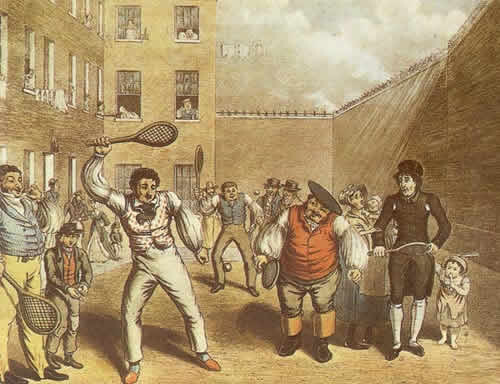
From Prison to Harrow School: The Evolution of Squash
The transition from prison pastime to elite sport began when students at Harrow School adapted the game. In the early 19th century, Harrow boys, looking for a way to stay active, took up 'rackets' but found the available courts unsuitable. They improvised by using a rubber ball that squashed against the wall, giving birth to the name 'squash'.

The game's popularity grew, and by the mid-19th century, squash had become a staple at Harrow and other British schools. The first purpose-built squash courts appeared, and the sport began to formalize with rules and competitions.
Key Milestones in Squash's Development
- 18th century: 'Rackets' played in Fleet Prison by debtors.
- Early 19th century: Harrow School students adapt the game with a rubber ball, coining 'squash'.
- 1864: First squash court built at Harrow School.
- 1920s: Standardized rules and the formation of the Squash Rackets Association.
- 1998: Squash makes its Commonwealth Games debut.
Comparing Early Rackets and Modern Squash
| Aspect | Early Rackets (Fleet Prison) | Modern Squash |
|---|---|---|
| Equipment | Hand or simple racket, leather ball | Standardized racket, rubber ball |
| Court | Any wall | Enclosed court with front wall |
| Rules | Informal | Formalized by associations |
| Popularity | Prisoners | Global sport |
The Global Spread of Squash
From its humble beginnings, squash spread across the British Empire and beyond. By the 20th century, courts were popping up in clubs and universities worldwide. Today, squash is played in over 185 countries, with millions of enthusiasts. The background to this story is set out in Trending: latest articles. A related thread runs through SS United States to Become World's Largest Artificial Reef.
The sport's appeal lies in its fast pace, requiring agility, strategy, and stamina. It's no wonder that squash is often called the world's healthiest sport. Earlier coverage in The Whole Shabang Chips: The Prison-Only Snack That Became a Cult Favorite shows how the argument developed. A closer look at the same subject appears in Sin Eaters: The Sin-Eating Ritual of 18th Century England.
Why Squash's Origin Matters
Understanding squash's history adds a layer of appreciation for the sport. It's a testament to human ingenuity—how a simple game born in adversity can evolve into a beloved global activity. The next time you step onto a squash court, remember the debtors of Fleet Prison who started it all. Anyone following the wider picture can start with Comet Halley 1910: The Panic That Gripped Spain. The same theme surfaces in The Dark, Improbable Origin of Squash: Debtors' Prison Pastime, which takes a different angle.
FAQ
How did squash get its name?
The name 'squash' comes from the sound the ball makes when it hits the wall. At Harrow School, students played with a rubber ball that 'squashed' upon impact, distinguishing it from the harder ball used in rackets.
Was squash really invented in a prison?
Yes, the precursor to squash, called 'rackets', was played by inmates in Fleet Prison in London during the 18th century. They hit a ball against walls to pass the time.
When did squash become an organized sport?
Squash became more organized in the 19th century with the establishment of rules and the first purpose-built courts. The Squash Rackets Association was formed in 1928 to standardize the sport.
Is squash an Olympic sport?
As of now, squash is not included in the Olympic Games, but it is a popular sport in the Commonwealth Games and other international competitions.
The improbable journey of squash from a debtors' prison to global courts is a fascinating tale of adaptation and resilience. It reminds us that even the most challenging circumstances can give rise to something extraordinary. As you explore the sport's history, you might also enjoy learning about other unexpected origins, such as the improbable origin of Spain's menú del día: a Franco-era tourism strategy, which similarly shows how necessity can spark enduring traditions.
Just as squash evolved from a prison pastime to a global sport, many cultural practices have surprising roots. The story of the menú del día is another example of how historical circumstances shape everyday customs. Exploring these connections can deepen our understanding of the world around us.
For those intrigued by such historical twists, the tale of squash serves as a reminder that innovation often arises from the most unlikely places. Whether it's a game or a gastronomic tradition, the past continues to influence the present in unexpected ways.
Browse the Shop
 Acacia frida deluxe solid wood bed frame |
Bedroom bench |
Bed chest drawers |
Lingerie dresser |
Frame base |
Mirror with jewelry storage |
30 Bathroom Vanity |
Memory foam queen mattress |
Mattresses for back pain |
Nightstand set of 2 |
Grand Goldman Shop |
Civil Lawyer
Deutschland Trikot WM 2026







