

Solar panels in Seville have turned into an unexpected refuge and hunting ground for birds of prey, according to research from the University of Málaga. The study monitored a 150 MW photovoltaic plant covering 299 hectares in the province of Seville during its first two and a half years of operation. What the researchers documented challenges the usual story about green energy and wildlife: instead of driving birds away, the plant attracted them.
The findings matter because the energy transition is often framed as a trade-off. Wind turbines are known to kill millions of birds each year, and large solar farms are frequently criticized for the visual damage they do to landscapes. This study suggests the picture is more complicated, and that photovoltaic plants can play a positive ecological role for certain species.
Find Original, High-end Home Decor that spark conversation at Grand Goldman Shop.
Which Birds of Prey Use the Seville Solar Plant
The research team recorded six species of raptors regularly using the facility. They are the common buzzard, the common kestrel, the black kite, the red kite, the booted eagle, and the little owl. Each of these birds is a predator, and their presence at the plant was not a one-off sighting but a recurring pattern over the monitoring period.
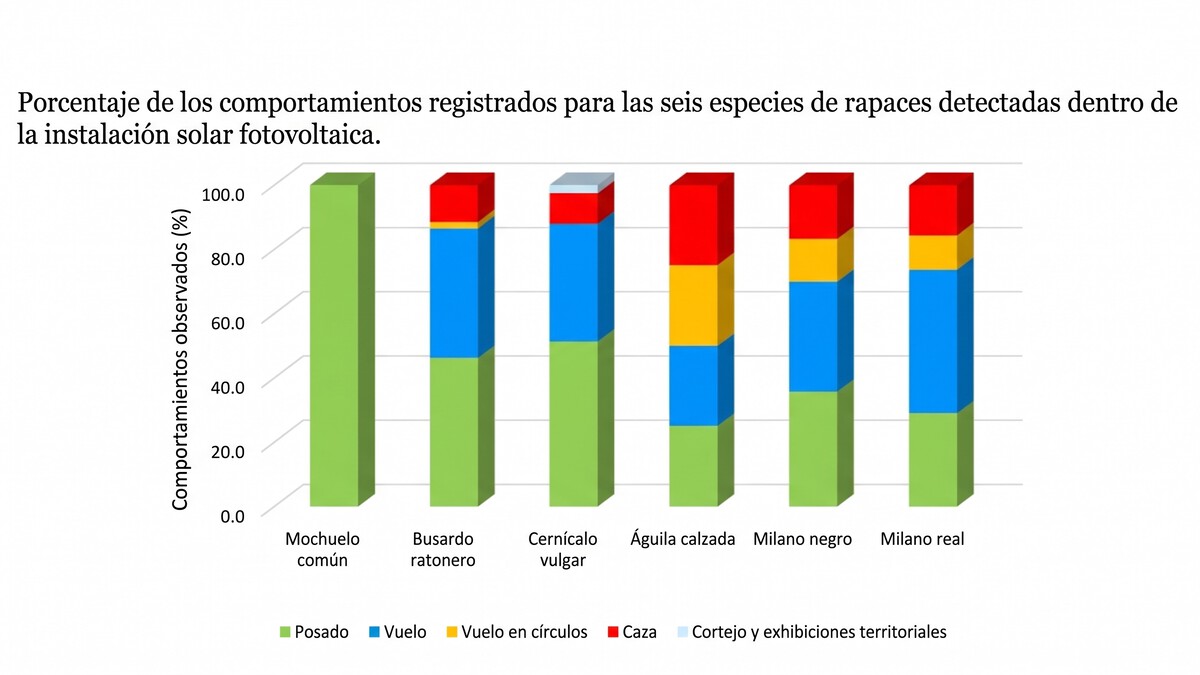
What the birds do there is revealing. Researchers observed them perched on the panels and flying between rows of them. They also saw the raptors circling overhead and actively hunting across the site. The plant, in other words, functions as a base of operations rather than a nesting site.
Perching, Gliding, and Hunting — But Not Breeding
One of the clearest conclusions is that the birds rarely lay eggs at the plant. The solar installation serves primarily as a perch and hunting ground, not a breeding colony. That distinction matters for how the site is managed and for how its ecological value should be understood.
The panels appear to offer elevated vantage points, which raptors use to scan for prey. The open ground between rows may also make small animals easier to spot, turning the facility into an efficient hunting territory.
Why Solar Farms Can Help Wildlife
This is not the first sign that solar infrastructure can benefit the environment. Photovoltaic plants have been used to help regenerate degraded soils, sometimes with the help of sheep that graze between the panels and use them as shade against the sun. The Seville case adds another layer: the structures can become habitat for birds.
The contrast with wind energy is striking. Wind turbines are a well-documented hazard for flying birds, while solar panels are stationary and low to the ground. For raptors that hunt in open landscapes, a solar plant may resemble a field with convenient lookout posts.
- Six raptor species were recorded at a 150 MW solar plant in Seville.
- The species include the common buzzard, common kestrel, black kite, red kite, booted eagle, and little owl.
- Birds used the site mainly for perching, flying between panels, and hunting.
- Nesting at the plant was rare or absent during the monitoring period.
- The study covered the plant's first two and a half years of operation.
What the Research Monitored and How
The University of Málaga team tracked the presence of raptors at the facility over the first 2.5 years of its operation. That timeframe is important because it captures the early phase of a solar plant's life, when the surrounding landscape is still adjusting to the new structures.
The study documents regular use rather than occasional visits. That regularity is what makes the finding significant: the birds appear to have incorporated the plant into their routines.
A Different Kind of Environmental Impact
Critics of large-scale solar often point to land use and visual disruption. This research does not dismiss those concerns, but it does add a counterpoint. The same installation that changes a landscape can also create new opportunities for wildlife.
That does not mean every solar farm is a wildlife sanctuary. Outcomes likely depend on location, design, and management. The Seville plant's size and layout may be part of why it works as a hunting ground.
Comparison: Solar Plants vs. Wind Turbines for Birds
The two main pillars of renewable energy have very different relationships with bird populations. The table below summarizes the key differences based on the Seville findings and widely known patterns.
| Factor | Solar Photovoltaic Plant | Wind Turbines |
|---|---|---|
| Main bird risk | Low direct collision risk | Documented collision mortality |
| Use by raptors | Perching, hunting, flying between panels | Generally avoided or hazardous |
| Breeding on site | Rare in the Seville study | Not typical |
| Land footprint | Large, ground-level | Smaller, tall structures |
| Wildlife side benefits | Shade for grazing animals, soil regeneration | Limited |
Who Is Affected by These Findings
The results are relevant to energy developers, land planners, and conservation groups. Developers now have evidence that solar plants can support biodiversity, which may strengthen the case for well-sited projects. Planners and regulators can use this data when assessing environmental impact.
Conservationists, meanwhile, have a new example to weigh against the known harms of other energy infrastructure. The finding does not settle the debate over green energy and landscapes, but it adds nuance. The background to this story is set out in New Licensing for Game Shoots Could Protect Birds of Prey. A related thread runs through Are Solar Panels Worth It? Expert Answers & Costs. Earlier coverage in Renewable Energy Home Installations: Solar Panels & Heat Pumps shows how the argument developed.
What to Watch Next
The obvious next question is whether these patterns hold at other solar plants and in other regions. Longer monitoring could show whether the birds eventually nest at the site or whether the plant remains a hunting ground only. Researchers may also examine which prey species are thriving between the panels. A closer look at the same subject appears in Heat Pumps and Solar Panels: Affordable Clean Energy Solutions. Anyone following the wider picture can start with Are Solar Panels Worth It? Expert Answers on Cost & Planning. The same theme surfaces in Balcony Solar Panels UK: Save £110/Year from August, which takes a different angle.
Another open question is design. If panel layout and ground cover influence raptor use, developers could adjust future projects to maximize ecological benefits. That would turn an accidental side effect into a deliberate feature of solar development. Context on how this played out before sits in Solar Panels: A Complete DIY Guide to Photovoltaic Systems. A companion piece, Hamza Yassin's African Birds of Prey: A Must-Watch TV Special, approaches the same subject from another angle.
FAQ
Which birds of prey were found at the Seville solar plant?
Researchers recorded six species: the common buzzard, common kestrel, black kite, red kite, booted eagle, and little owl. All six used the 150 MW facility regularly during the first two and a half years of operation.
Do the birds nest at the solar plant?
Generally, no. The study found that the raptors mainly use the panels as a perch and hunting ground. They were observed resting on the panels, flying between them, circling overhead, and hunting, but rarely laying eggs there.
Why might solar panels benefit birds of prey?
The panels provide elevated vantage points for spotting prey, and the open ground between rows may make hunting easier. Unlike wind turbines, solar panels are stationary and low to the ground, so they pose little collision risk to flying birds.
Who conducted the research?
The study was carried out by a team from the University of Málaga. They monitored raptor presence at a 150 MW photovoltaic plant covering 299 hectares in the province of Seville.
Browse the Shop
 Acacia frida deluxe solid wood bed frame |
Bedroom bench |
Bed chest drawers |
Lingerie dresser |
Frame base |
Mirror with jewelry storage |
30 Bathroom Vanity |
Memory foam queen mattress |
Mattresses for back pain |
Nightstand set of 2 |
Grand Goldman Shop |
Civil Lawyer
Deutschland Trikot WM 2026










