

The Necronomicon, a fictional grimoire created by H.P. Lovecraft, has become a real publishing phenomenon, with new editions appearing decades after its introduction. What began as a literary device in a 1922 short story has evolved into a cultural artifact that continues to fascinate readers and writers alike.
The Origins of the Necronomicon
In 1922, a young writer from Providence, Rhode Island, introduced a cursed book into one of his stories. That book, the Necronomicon, did not exist in any library in the world—it was purely a work of fiction. Lovecraft used it as a plot device to add depth and mystery to his tales of cosmic horror.
Find Original Home Decor sparking conversation at Grand Goldman Shop.

The book was said to contain forbidden knowledge and dark magic, driving those who read it to madness. Despite its fictional nature, the Necronomicon captured the imaginations of readers and other writers, who began referencing it in their own works.
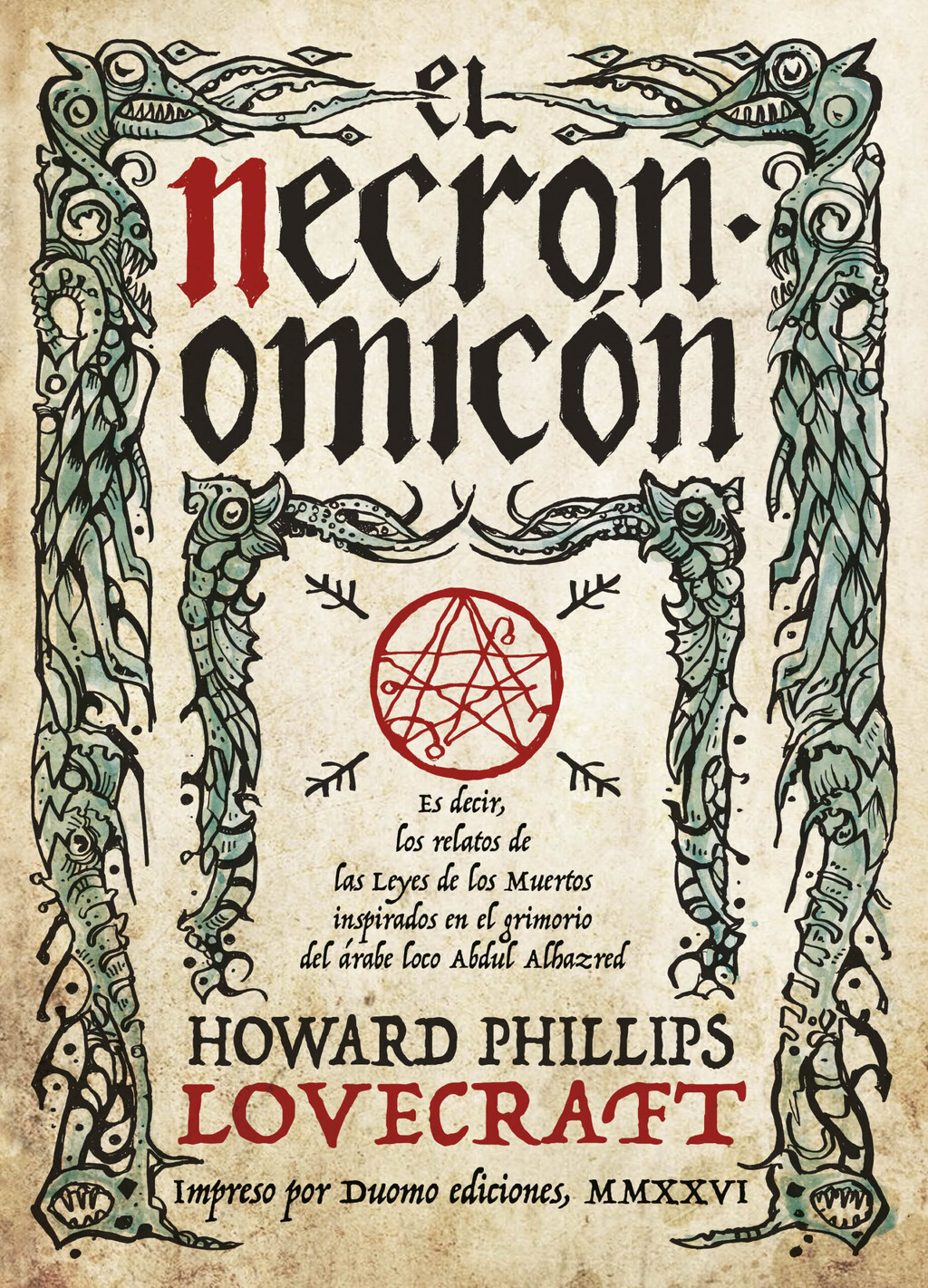
From Fiction to Reality: The Necronomicon in Print
Over the years, the Necronomicon has appeared in numerous forms, from fan-made editions to elaborate hoaxes. Publishers have released various versions, each claiming to be the authentic text. The latest addition comes from Duomo Ediciones, a Spanish publisher that released a new edition this summer.
This 648-page volume collects almost all mentions of the Black Book scattered throughout Lovecraft's fiction, with illustrations by Greta Grendel. The selection was curated by Italian editor Giuseppe Lippi, who divides the material into three sections: the dream, the myth, and terror. Lippi also wrote the prologue, placing the Necronomicon alongside other impossible books of literature, such as Jorge Luis Borges' 'Quixote' by Pierre Menard and Robert W. Chambers' 'The King in Yellow'.
Key Features of the New Edition
- Comprehensive collection: Gathers nearly all references to the Necronomicon in Lovecraft's stories.
- Illustrations: Features artwork by Greta Grendel, enhancing the eerie atmosphere.
- Expert curation: Edited by Giuseppe Lippi, a renowned Lovecraft scholar.
- Thematic organization: Divided into three parts—dream, myth, and terror—for easy navigation.
- Contextual prologue: Lippi situates the Necronomicon within the tradition of fictional books.
Why the Necronomicon Still Fascinates
The enduring appeal of the Necronomicon lies in its mystery. Lovecraft himself claimed it was a joke, a private invention that he never expected to be taken seriously. Yet, the book has spawned real sects, accusations of plagiarism among occultists in New York, and countless adaptations.
Its presence in popular culture, from movies to music, has cemented its status as a symbol of forbidden knowledge. The fact that it never existed only adds to its allure—it is a blank canvas onto which writers and readers project their darkest fears.
Comparing Necronomicon Editions
Several editions of the Necronomicon have been published over the years, each with its own approach. The table below compares some notable versions.
| Edition | Publisher | Year | Pages | Features |
|---|---|---|---|---|
| Duomo Ediciones | Duomo Ediciones | 2023 | 648 | Illustrations by Greta Grendel, curated by Giuseppe Lippi |
| Simon Necronomicon | Avon Books | 1977 | 218 | Presented as a real grimoire, controversial |
| Hay Necronomicon | Various | 1978 | 200 | Compiled by George Hay, focuses on Lovecraft's letters |
| Necronomicon: The Wanderings of Alhazred | Llewellyn Worldwide | 2004 | 288 | Written by Donald Tyson, expands on the mythos |
The Necronomicon's Influence on Popular Culture
The Necronomicon has transcended literature, appearing in films, video games, and music. Its name evokes a sense of ancient evil and hidden knowledge, making it a staple in horror and fantasy genres.
Directors like Sam Raimi have featured it in the Evil Dead series, while bands such as Metallica have referenced it in songs. The book's imagery—often depicted as a bound volume with a face on the cover—has become iconic. The longer history behind the story is traced in Necronomicon: How Lovecraft's Fictional Book Became a Publishing Phenomenon.
Even though it is fictional, the Necronomicon has inspired real-world occult practices. Some groups have created their own versions, claiming to have decoded its secrets. This blurring of fiction and reality is a testament to Lovecraft's creation. The background to this story is set out in Best Recent Science Fiction, Fantasy and Horror Books. A related thread runs through Parasocial Relationships in Books: Meg Mason on Fictional Friendships. Earlier coverage in Disaster Holidays in Fiction: Why Hellish Vacations Make Great Stories shows how the argument developed.
What's Next for the Necronomicon?
As long as there is an appetite for cosmic horror, the Necronomicon will likely continue to appear in new forms. The recent Spanish edition shows that interest in Lovecraft's mythos remains strong. A closer look at the same subject appears in Best Recent Translated Fiction: A Review Roundup of 2025. Anyone following the wider picture can start with Rebecca Perry Wins Waterstones Debut Fiction Prize 2026. The same theme surfaces in Rebecca Perry Wins Waterstones Debut Fiction Prize for Dream-Like, which takes a different angle.
Future editions may explore different aspects of the book, perhaps delving into its fictional history or presenting it as an artifact. The mystery of the Necronomicon endures because it taps into a primal fear of the unknown. Context on how this played out before sits in Trending: latest articles. A companion piece, AI Firms Buy Old Books for Training Data, Then Destroy Them, approaches the same subject from another angle.
FAQ
Is the Necronomicon a real book?
No, the Necronomicon is a fictional book created by H.P. Lovecraft. It first appeared in his 1922 short story 'The Hound' and was later referenced in many of his other works. Despite its fictional nature, several authors and publishers have created their own versions.
Why did Lovecraft create the Necronomicon?
Lovecraft introduced the Necronomicon as a literary device to add depth and mystery to his stories. He often used it to provide a sense of ancient, forbidden knowledge that his characters would encounter. It was never intended to be a real book.
What is the new Spanish edition of the Necronomicon?
The new Spanish edition, published by Duomo Ediciones, is a 648-page volume that collects almost all mentions of the Necronomicon in Lovecraft's fiction. It is curated by Giuseppe Lippi and features illustrations by Greta Grendel. The book is divided into three thematic sections and includes a prologue.
How has the Necronomicon influenced popular culture?
The Necronomicon has appeared in numerous films, video games, and music. It is a staple in horror fiction and has inspired real-world occult practices. Its iconic imagery and mysterious nature continue to captivate audiences.
Browse the Shop
 Acacia frida deluxe solid wood bed frame |
Bedroom bench |
Bed chest drawers |
Lingerie dresser |
Frame base |
Mirror with jewelry storage |
30 Bathroom Vanity |
Memory foam queen mattress |
Mattresses for back pain |
Nightstand set of 2 |
Grand Goldman Shop |
Civil Lawyer
Deutschland Trikot WM 2026







