

Taiwan has begun shielding its Skyguard anti-aircraft guns with fishing nets to counter the threat of cheap drones, a move that highlights how modern warfare is being reshaped by low-cost technology. The image of two anti-aircraft guns covered by a metal dome wrapped in fishing nets may look absurd, but it underscores a serious shift: even weapons designed to shoot down aircraft can become victims of small drones if left exposed.
This development comes as tensions with China continue to rise, and Taipei is adapting its defenses to a new reality where the enemy is not just fast jets but also tiny FPV drones that cost a few hundred euros and can be carried in a backpack.
Find Original Home Decor sparking conversation at Grand Goldman Shop.

Why Taiwan Is Using Fishing Nets to Protect Its Skyguard Systems
The Skyguard system, developed by Oerlikon Contraves (now Rheinmetall), is a radar-guided anti-aircraft gun typically used to protect airfields and other high-value assets. It was designed to engage aircraft, helicopters, and cruise missiles at ranges of up to 4 kilometers. However, these systems are not optimized for detecting and tracking small drones, which present a tiny radar cross-section and can approach from almost any angle.
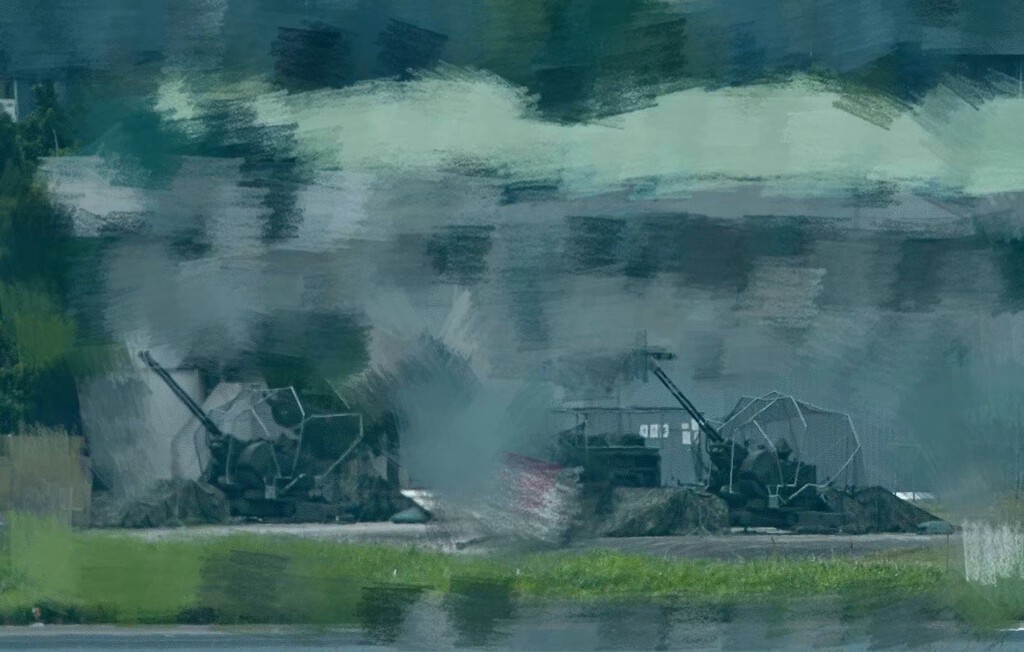
By draping fishing nets over the guns, Taiwan is essentially creating a low-tech physical barrier that can stop or entangle small drones before they reach the sensitive equipment. The nets are supported by a metal frame, forming a kind of cage around the gun. This simple countermeasure is a response to the growing use of commercial drones by both state and non-state actors.
In a hypothetical conflict, China would likely use drones not only for attack but also for reconnaissance, communications relay, and electronic warfare. The fishing nets are a stopgap measure, but they represent a broader trend: armies are rediscovering the value of passive defenses in an era of cheap, ubiquitous aerial threats.
The Drone Threat: Small, Cheap, and Deadly
Small FPV drones have revolutionized the battlefield, as seen in Ukraine, where both sides use them to hunt tanks, artillery, and even individual soldiers. These drones are inexpensive, easy to operate, and can be equipped with explosives to strike targets with precision. For air defense systems like Skyguard, the danger is acute: a drone can be launched from a few kilometers away and dive directly onto the radar or the gun itself.
Traditional air defense relies on radar detection and rapid-firing cannons or missiles. But small drones fly low and slow, and their small size makes them hard to detect. Moreover, the cost asymmetry is stark: a Skyguard system costs millions of dollars, while a drone costs a few hundred. Using a million-dollar missile to shoot down a cheap drone is not sustainable.
Taiwan's fishing nets are a creative, low-cost solution to this problem. They won't stop a determined attack, but they can defeat some drones and force others to change their approach. More importantly, they signal that Taiwan is thinking creatively about asymmetric warfare.
Historical Parallel: From Barrage Balloons to Fishing Nets
During the Battle of Britain in 1940, the RAF used thousands of barrage balloons and miles of cables to protect airfields and factories from low-flying German bombers. These passive defenses forced aircraft to fly higher, making them more vulnerable to fighters and anti-aircraft guns. The fishing nets over Taiwan's Skyguard systems are a modern echo of that approach.
Then, as now, the goal is to complicate the enemy's attack profile. Barrage balloons didn't destroy many aircraft, but they made precision bombing harder. Similarly, fishing nets may not stop every drone, but they add a layer of friction that could save a valuable system from destruction.
The difference is that today's threat is much smaller and more maneuverable. Drones can navigate around obstacles, but they are also fragile. A net can entangle propellers or block the drone's path, causing it to crash. This kind of passive defense is cheap, easy to deploy, and doesn't require sophisticated technology.
What This Means for Taiwan's Defense Strategy
Taiwan's use of fishing nets is part of a broader effort to harden its defenses against Chinese aggression. The island faces a constant threat of invasion and has been investing in asymmetric capabilities such as anti-ship missiles, mines, and now drone countermeasures. The fishing nets are a visible sign of this shift.
But they also reveal vulnerabilities. The fact that Taiwan needs to protect its anti-aircraft guns with nets suggests that its existing air defense systems are not fully adapted to the drone threat. The military is likely working on more advanced solutions, such as electronic jamming and laser weapons, but those are expensive and may not be available in the near term.
In the meantime, the fishing nets serve as a reminder that in modern warfare, even the simplest ideas can have strategic value. They also send a message to Beijing: Taiwan is adapting, and it will not be an easy target.
China's Drone Capabilities and the Threat to Taiwan
China is a world leader in drone technology, producing a wide range of unmanned systems from small quadcopters to large armed drones. In a conflict with Taiwan, the People's Liberation Army would likely use drones for reconnaissance, electronic warfare, and precision strikes. The fishing nets are a direct response to that threat. The background to this story is set out in US Spaceport Laser Weapons to Counter Unauthorized Drones. A related thread runs through AI-Assisted Cyber-Attack on Taiwan: A New Threat. Earlier coverage in China's Bold Taiwan Spy Drama Becomes TV Hit shows how the argument developed.
Moreover, China could deploy swarms of drones to overwhelm Taiwan's defenses. A swarm of cheap drones could saturate air defense systems, forcing them to expend expensive missiles or reveal their positions. The nets are one way to counter swarms, but they are not a silver bullet. A closer look at the same subject appears in Taiwan Tests Mobile Network Shutdown for 17 Million People. Anyone following the wider picture can start with Floating Scarecrows: How Cornish Fishers Save Seabirds from Nets. The same theme surfaces in Taiwan AI-Assisted Cyber-Attack Hits Government Agencies, which takes a different angle.
Taiwan's military is also developing its own drones and counter-drone technologies, often with support from the United States. The fishing nets are a stopgap, but they highlight the need for innovative, low-cost solutions to asymmetric threats. Context on how this played out before sits in Ukraine to Build Missiles Like Drones, Zelenskyy Vows.
FAQ
What are the Skyguard systems that Taiwan is protecting?
The Skyguard is a radar-guided anti-aircraft gun system developed by Oerlikon Contraves, now part of Rheinmetall. It is designed to engage aircraft, helicopters, and cruise missiles at short range, typically protecting airfields and other high-value assets.
Why are fishing nets effective against drones?
Fishing nets can entangle the propellers of small drones or block their flight path, causing them to crash. They are a cheap, passive defense that can be deployed quickly and without sophisticated technology.
How does this relate to historical air defense tactics?
During the Battle of Britain, barrage balloons and cables were used to create physical obstacles for low-flying aircraft. The fishing nets are a modern adaptation of that idea, using simple physical barriers to counter small, low-flying threats.
What other counter-drone measures is Taiwan using?
Taiwan is investing in electronic jamming, laser weapons, and other advanced counter-drone technologies, often with U.S. support. However, these systems are expensive and may not be widely deployed yet, making low-tech solutions like fishing nets a practical interim measure.
The fishing nets over Taiwan's anti-aircraft guns may look improvised, but they reflect a serious calculation about the future of warfare. As drones become more prevalent, militaries around the world will need to find creative ways to protect their assets. For Taiwan, that means using every tool at its disposal—even the humble fishing net.
China's growing drone arsenal is a key part of its military modernization, and Taiwan's response is being watched closely by defense analysts. The island's ability to innovate under pressure could determine its survival in a conflict. In the meantime, the image of a gun wrapped in nets serves as a powerful symbol of how technology is changing the battlefield.
For those interested in the latest energy and utilities innovations, the same spirit of adaptation is driving breakthroughs in fusion energy. Just as Taiwan is repurposing simple materials for defense, engineers are finding new ways to harness fusion power. One notable example is China's 582-ton magnet for artificial sun fusion energy, which demonstrates how large-scale engineering can push the boundaries of what's possible.
While the fishing nets are a tactical fix, they also highlight the importance of strategic thinking in the face of evolving threats. Taiwan's defense planners are clearly aware that the next war will be fought with drones, cyber attacks, and information operations—and they are preparing accordingly.
Browse the Shop
 Acacia frida deluxe solid wood bed frame |
Bedroom bench |
Bed chest drawers |
Lingerie dresser |
Frame base |
Mirror with jewelry storage |
30 Bathroom Vanity |
Memory foam queen mattress |
Mattresses for back pain |
Nightstand set of 2 |
Grand Goldman Shop |
Civil Lawyer
Deutschland Trikot WM 2026







