

Richard Feynman's first principle—you must not fool yourself, and you are the easiest person to fool—remains one of the most uncomfortable truths about human thinking. He delivered this warning in a 1974 Caltech commencement address later titled "Cargo Cult Science," and it has since become a touchstone for anyone serious about integrity in science, business, or daily life.
Feynman was not simply talking about lying. He was pointing to something far harder to detect: our capacity to convince ourselves we are right, to select evidence that favors us, and to invent explanations for whatever contradicts us. The history of science offers spectacular examples of fraud, but Feynman's solution was as simple to state as it is difficult to practice.
Find Original, High-end Home Decor that spark conversation at Grand Goldman Shop.

The First Principle: A Warning From Caltech
The phrase comes from Feynman's 1974 graduation speech at the California Institute of Technology. The Nobel Prize-winning physicist was trying to define scientific integrity and arrived at a conclusion that went far beyond the laboratory.
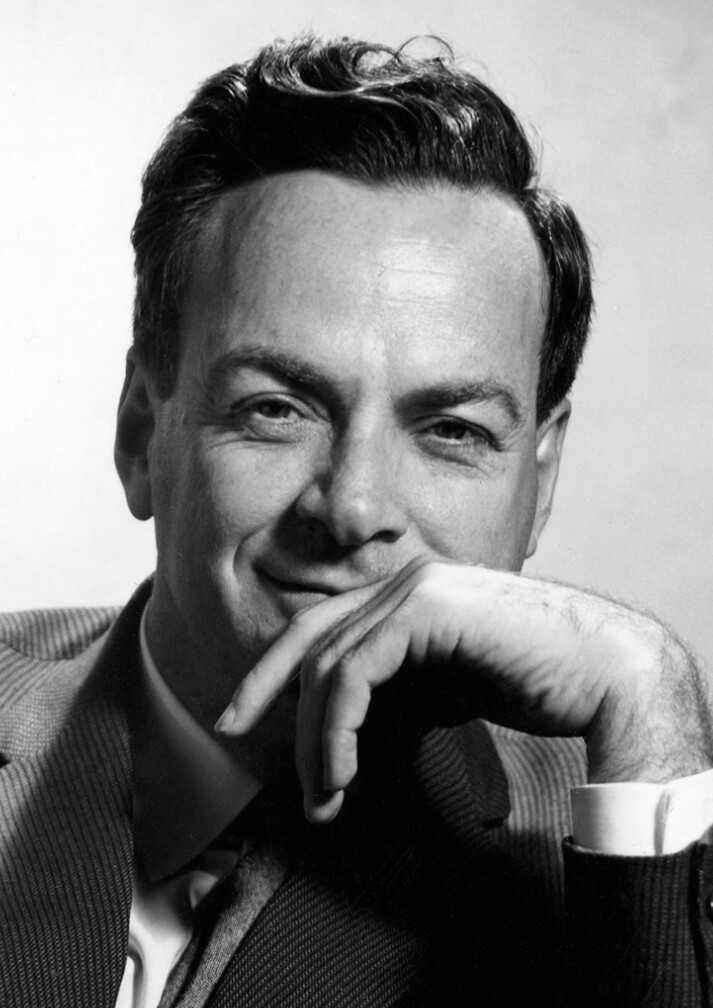
His warning grew from a fascinating paradox: we usually worry about detecting other people's lies, when one of our greatest vulnerabilities lies within ourselves. We can interpret data selectively, downplay whatever contradicts our expectations, or even cling to an explanation long after it has collapsed.

This is not a problem reserved for scientists. It affects investors, managers, doctors, journalists, and anyone who makes decisions based on evidence. The principle is universal because the tendency to self-deceive is universal.
Why Self-Deception Is So Easy
Feynman understood that the human mind is not a neutral judge of facts. It is a story-telling machine that prefers coherence over accuracy. When reality threatens our self-image or our prior beliefs, we often bend the evidence rather than update our views.
Consider how easily we fall into these traps:
- Selective attention: We notice information that confirms our opinions and ignore what challenges them.
- Motivated reasoning: We subject disagreeable evidence to far more scrutiny than agreeable evidence.
- Confirmation bias: We seek out sources that already agree with us and treat them as proof.
- Overconfidence: We believe our judgments are more reliable than they actually are.
- Post-hoc rationalization: We invent explanations after the fact to justify what we already want to believe.
These tendencies are not signs of stupidity. They are default settings of human cognition, and Feynman's genius was to name them plainly and demand that we guard against them.
The Cargo Cult Science Problem
In the same speech, Feynman introduced the term "cargo cult science" to describe research that mimics the forms of science without its substance. Just as cargo cults built runways and headphones hoping to summon airplanes, some researchers adopt the rituals of experimentation—statistics, peer review, jargon—without the honest pursuit of truth.
Feynman's critique was not about deliberate fraud alone. It was about the subtle ways researchers can fool themselves: running experiments until they get a desired result, ignoring data that does not fit, or presenting conclusions with more certainty than the evidence supports. The first principle is the antidote: before you try to convince others, make sure you are not already convincing yourself.
How to Apply Feynman's Principle in Practice
The principle is easy to state but hard to live by. Feynman himself admitted that self-deception is a constant risk, not a one-time hurdle. Still, there are practical habits that can help.
First, actively look for evidence that contradicts your beliefs. If you cannot find any, ask whether you are really looking. Second, state your uncertainties clearly, both to yourself and to others. Third, invite criticism from people who do not share your assumptions. Finally, treat your own conclusions as provisional—always open to revision.
These habits are not just for scientists. In business, they can prevent costly strategic errors. In personal finance, they can stop you from rationalizing bad investments. In health, they can help you ask better questions and avoid wishful thinking.
| Context | Common Self-Deception | Feynman-Inspired Countermeasure |
|---|---|---|
| Scientific research | Ignoring outliers that contradict the hypothesis | Report all data and pre-register methods |
| Business decisions | Overconfidence in a favored strategy | Assign a devil's advocate and seek disconfirming evidence |
| Personal finance | Rationalizing a losing investment | Set clear sell rules and review them objectively |
| Health choices | Believing a miracle cure without evidence | Consult independent sources and demand rigorous studies |
Why the Principle Matters More Than Ever
In an age of information overload and algorithmic echo chambers, the temptation to fool ourselves is stronger than ever. Social media rewards certainty and punishes nuance. Political tribes reward loyalty over truth. The result is a culture where self-deception can feel like a virtue. The background to this story is set out in Trending: latest articles. A related thread runs through 6,500-Year-Old Circular Shrine Found in Czech Republic. Earlier coverage in Aldi Adds Paper Shredder and A4 Laminator Under €20 for Home Office shows how the argument developed.
Feynman's principle cuts against that grain. It demands humility, curiosity, and a willingness to be wrong. It asks us to prioritize reality over comfort. That is not easy, but it is the only path to genuine integrity—whether in a laboratory, a boardroom, or a voting booth. A closer look at the same subject appears in Gen Z Dances Differently: The Fear of Going Viral as a Meme. Anyone following the wider picture can start with Jensen Huang Says AGI Has Arrived With GPT-6 Astra. The same theme surfaces in Oura Ring 4 Review: Four Months of Wearable Health Tracking, which takes a different angle.
Ultimately, Feynman's warning is a call to intellectual courage. The easiest person to fool is yourself, but you are also the only person who can choose not to. Context on how this played out before sits in iPhone Air 512GB Hits Record Low Price Before Apple Event.
FAQ
What did Richard Feynman mean by 'you must not fool yourself'?
Feynman meant that the greatest obstacle to truth is our own tendency to deceive ourselves. We selectively interpret evidence, ignore contradictions, and rationalize beliefs we want to hold. His principle demands constant vigilance against these habits.
When and where did Feynman deliver this principle?
He delivered it in a 1974 commencement address at the California Institute of Technology, later published as "Cargo Cult Science." The speech focused on scientific integrity but has since been applied to many areas of life.
How can I avoid fooling myself in everyday decisions?
Actively seek out disconfirming evidence, state your uncertainties openly, and invite criticism from people who disagree with you. Treat your conclusions as provisional and be willing to change your mind when the evidence demands it.
Is self-deception always conscious?
No. Feynman's point is that self-deception is often unconscious and subtle. We may not realize we are filtering evidence or rationalizing. That is why deliberate habits of self-scrutiny are essential.
Browse the Shop
 Acacia frida deluxe solid wood bed frame |
Bedroom bench |
Bed chest drawers |
Lingerie dresser |
Frame base |
Mirror with jewelry storage |
30 Bathroom Vanity |
Memory foam queen mattress |
Mattresses for back pain |
Nightstand set of 2 |
Grand Goldman Shop |
Civil Lawyer
Deutschland Trikot WM 2026







