

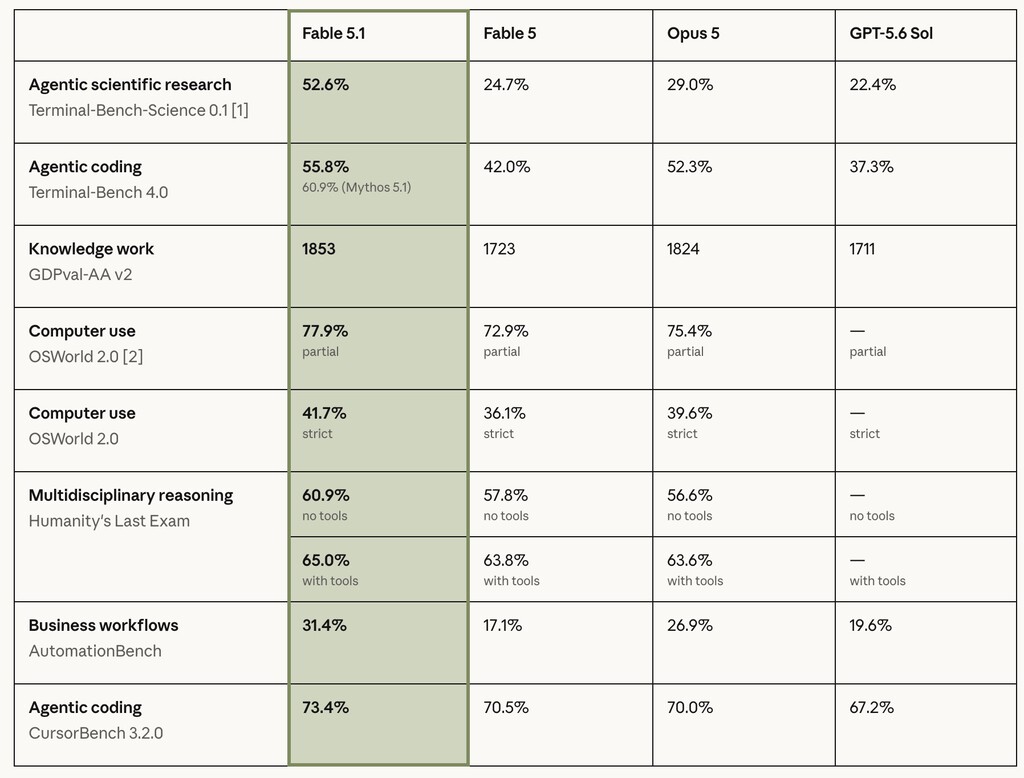
Anthropic has just launched Claude Fable 5.1, which on paper is its most capable AI model to date. In the independent Artificial Analysis evaluation, it reaches 66 points, ahead of Opus 5 at 63 and GPT-5.6 Soly Grok 4.6 at 61. There are significant improvements and some spectacular gains in coding benchmarks, scientific research, and long-running agentic tasks—but caution: several elements condition that performance.
One Model, Two Entry Doors
Anthropic explains in its documentation that Fable 5.1 and Mythos 5.1 belong to the same model class but have different levels of safeguards. Fable 5.1 is the generally available version, while Mythos, as usual, is reserved for partners and trusted organizations because it offers especially sensitive capabilities in cybersecurity.
Find Original Home Decor sparking conversation at Grand Goldman Shop.

This dual-release strategy is not new for Anthropic, but it reinforces a growing trend: the same underlying model can be packaged with different permission levels. For users, the practical takeaway is that the Fable 5.1 you can access is not the full model—it is the version deemed safe for general release.
The Era of Capped Models
We are no longer just in a phase where AI companies develop multiple models. What Anthropic is doing here is similar to what the automotive industry does: it builds a car equipped with everything, but artificially caps it so that if we want to use certain extras, we pay for them. In Fable 5.1 and Mythos 5.1, something similar happens, but the difference is simply what each model allows us to do with the same core capabilities.

This raises important questions about transparency and access. When a model is capped, benchmarks may not tell the full story. The 66-point score for Fable 5.1 reflects the capped version, not the full Mythos 5.1. That distinction matters for anyone comparing models or planning to deploy them in production.
Benchmarks With Fine Print
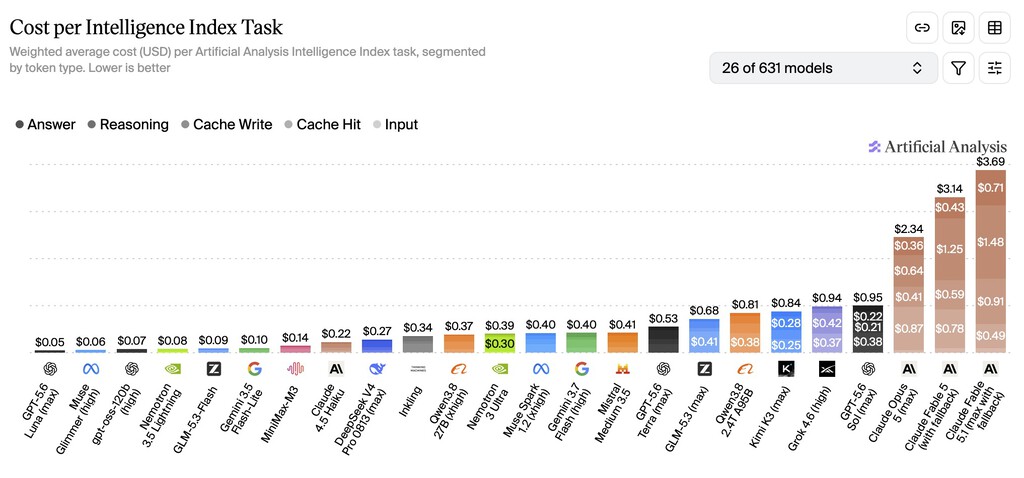
When Artificial Analysis evaluated Fable 5.1, the results showed clear gains in coding, scientific research, and long-running agentic tasks. However, these benchmarks come with caveats. The evaluation is based on the generally available Fable 5.1, which includes safeguards that may limit performance in certain scenarios.
For example, in cybersecurity-related tasks, Fable 5.1 may refuse or restrict actions that Mythos 5.1 would allow. This means the benchmark scores for Fable 5.1 do not represent the model's full potential—they represent what is accessible to the public. Organizations with access to Mythos 5.1 may see different results.
- Fable 5.1 is the generally available model with standard safeguards.
- Mythos 5.1 is reserved for trusted partners and includes sensitive cybersecurity capabilities.
- Benchmarks like Artificial Analysis's 66-point score reflect the capped Fable 5.1, not the full model.
- Improvements are notable in coding, scientific research, and long-running agentic tasks.
- The gap between Fable and Mythos highlights a broader trend of tiered AI access.
Comparison: Fable 5.1 vs. Mythos 5.1 vs. Competitors
| Model | Artificial Analysis Score | Availability | Key Capabilities |
|---|---|---|---|
| Claude Fable 5.1 | 66 | General access | Coding, research, agentic tasks (with safeguards) |
| Claude Mythos 5.1 | Not publicly benchmarked | Trusted partners only | Full capabilities including sensitive cybersecurity |
| Opus 5 | 63 | General access | Previous generation flagship |
| GPT-5.6 Soly Grok 4.6 | 61 | General access | Competitor model |
What This Means for Users and the Industry
For most users, Fable 5.1 represents a significant upgrade over previous models. The improvements in coding and research tasks are real and measurable. However, those who need the full capabilities—particularly in cybersecurity—will not find them in the public version.
This tiered approach is likely to become more common. As AI models grow more powerful, companies face pressure to limit access to potentially dangerous capabilities. Anthropic's decision to split Fable and Mythos is a clear example of this balancing act. It allows the company to release a powerful model while keeping the most sensitive features behind a gate.
For businesses, the lesson is to read the fine print. Benchmark scores are useful, but they only tell part of the story. The model you can actually use may be different from the one that tops the charts. The background to this story is set out in Claude Fable 5.1: New Features and 25% Token Cost Drop. A related thread runs through Can We Stop AI From Deceiving Us? Key Risks and Safeguards. Earlier coverage in Anthropic: Claude May Aid Biological Weapons Development shows how the argument developed.
What to Watch Next
Anthropic has not announced when or if Mythos 5.1 will become more widely available. The company's documentation suggests that access will remain restricted to partners and trusted organizations for the foreseeable future. Meanwhile, competitors are likely to respond with their own tiered offerings. A closer look at the same subject appears in Anthropic Faces Multibillion-Dollar Song Copyright Lawsuit. Anyone following the wider picture can start with Ai Video: latest articles. The same theme surfaces in Fable 5.1: US Leads AI Frontier But China Looms, which takes a different angle.
Users should also watch for independent evaluations of Fable 5.1 in real-world scenarios. Benchmarks are a starting point, but actual performance in coding, research, and agentic tasks will determine how useful the model is in practice. As always, the gap between benchmark and deployment can be wide. Context on how this played out before sits in Claude Opus 5.5: Faster, Cheaper AI With New Safety Limits.
FAQ
What is Claude Fable 5.1?
Claude Fable 5.1 is Anthropic's latest AI model, positioned as its most capable to date. It is the generally available version of the model class that also includes Mythos 5.1, which is reserved for trusted partners.
How does Fable 5.1 differ from Mythos 5.1?
Both belong to the same model class, but Fable 5.1 has standard safeguards for general release, while Mythos 5.1 includes sensitive cybersecurity capabilities and is only available to partners and trusted organizations.
What do the benchmarks show?
In the Artificial Analysis evaluation, Fable 5.1 scores 66 points, ahead of Opus 5 (63) and GPT-5.6 Soly Grok 4.6 (61). However, these scores reflect the capped Fable 5.1, not the full Mythos 5.1.
Can I access the full model?
No, the full capabilities are only available through Mythos 5.1, which is restricted to trusted partners. General users get Fable 5.1 with safeguards that may limit performance in certain areas.
Browse the Shop
 Acacia frida deluxe solid wood bed frame |
Bedroom bench |
Bed chest drawers |
Lingerie dresser |
Frame base |
Mirror with jewelry storage |
30 Bathroom Vanity |
Memory foam queen mattress |
Mattresses for back pain |
Nightstand set of 2 |
Grand Goldman Shop |
Civil Lawyer
Deutschland Trikot WM 2026







