

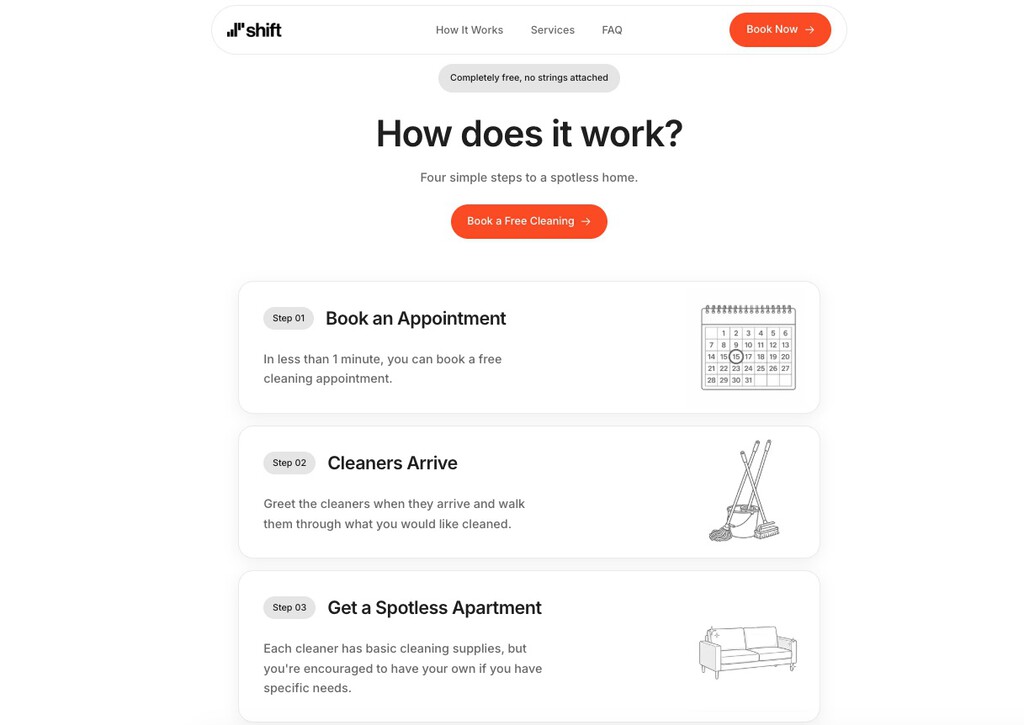
Imagine getting your home cleaned for free, but there's a catch: the entire session is recorded to train robots. That's the proposition from Shift, a New York-based startup that offers comprehensive home cleaning services in exchange for video data. The company doesn't charge money; instead, you pay with your privacy. A worker arrives with a recording device, cleans your home, and the footage becomes training data for robotics and AI companies.
This isn't the first time we've seen the "if it's free, you're the product" model, but it's now entering the most intimate space: your home. Shift's CEO for the US, Harry Kilberg, explained on X/Twitter that after you request a cleaning, a "verified" operator comes to clean and leaves. In return, they record the cleaning process so robotics companies can access those movements and, through training, teach their robots to replicate them.
Find Original Home Decor sparking conversation at Grand Goldman Shop.

How Shift's Free Cleaning Service Works
The mechanism is straightforward: you get a free cleaning, and Shift gets video data. According to Kilberg, the operator wears a recording device that captures their movements during the entire cleaning session. The video is then converted into training data for robotics and AI. The company's FAQ section likely addresses privacy concerns, but the core exchange is clear: your home's interior and your belongings become part of a dataset.
This model raises obvious privacy questions. A camera monitors the operator's movements, but in the background, it captures your mess, your rooms, and all your visible possessions. Essentially, you're inviting a recording device into your private space, and the footage could reveal sensitive information about your lifestyle, habits, and valuables.
Why Robotics Companies Want This Data
Training robots to perform household chores is a massive challenge. Robots need to understand how humans navigate cluttered spaces, handle fragile objects, and adapt to different home layouts. Video data from real cleaning sessions provides valuable insights into these tasks. By recording operators in various homes, Shift can offer robotics companies a diverse dataset that would be difficult and expensive to collect otherwise.
This data is particularly valuable because it captures real-world scenarios. Unlike staged demonstrations, these recordings show how cleaning professionals deal with unexpected obstacles, from piled-up dishes to awkward furniture arrangements. For AI developers, this is gold.
The Privacy Trade-Off: What You're Giving Up
When you sign up for Shift's service, you're allowing a camera into your home. Even if the focus is on the cleaning process, the footage will inevitably include personal items: family photos, documents, medications, and more. The company claims to have privacy safeguards, but the details matter. Will the video be anonymized? Who has access? How long is it stored? These are critical questions.
Moreover, the data could be used beyond training robots. It might be analyzed for consumer insights, sold to third parties, or even used in marketing. Without clear transparency, you're essentially handing over a slice of your private life.
Who Benefits and Who Bears the Risk
Shift's model benefits homeowners who want a free cleaning, robotics companies seeking training data, and Shift itself, which likely monetizes the data. The risk falls on the homeowner, who must trust that their privacy is protected. For some, the trade-off might be worth it, especially if they have nothing to hide. But for others, the idea of a stranger recording their home is a dealbreaker.
It's also worth considering the operator's perspective. They're being recorded throughout their workday, which could feel invasive. Shift says operators are "verified," but what does that mean for their privacy and labor rights? The background to this story is set out in Tesla Optimus: Workers Train Robots That May Replace Them. A related thread runs through Boston Dynamics' Atlas Robots Train for Hyundai Factory Work. Earlier coverage in 10 Best Free Gold IRA Kits (Comprehensive Guide) shows how the argument developed.
What to Watch Next in Robot Training Data Collection
As AI and robotics advance, we'll likely see more companies experimenting with data-for-service models. The key will be transparency and regulation. Will consumers demand clearer consent? Will lawmakers step in to protect privacy? And will companies like Shift be able to scale while maintaining trust? A closer look at the same subject appears in England Wildfire Record 2026: July Worst Month Ever Recorded. Anyone following the wider picture can start with Smart Home Weather Stations Pros & Cons: Comprehensive Guide. The same theme surfaces in Interesting cleaning tips for your home, which takes a different angle.
For now, Shift's offer is a glimpse into a future where our daily activities become training data. It's a compelling proposition, but one that requires careful consideration. Before you sign up for a free cleaning, ask yourself: what's the real cost? Context on how this played out before sits in 8 Cleaning Tips to Keep Your Home Clean. A companion piece, 17 Deep Cleaning Tricks for Your Home, approaches the same subject from another angle.
FAQ
What is Shift's free cleaning service?
Shift offers free home cleaning in exchange for video recordings of the cleaning process. These recordings are used as training data for robotics and AI companies.
Is my privacy protected during the cleaning?
Shift claims to have privacy safeguards, but the details are unclear. The recording captures your home's interior, so you should review the company's privacy policy carefully.
Can I opt out of the recording?
No, the recording is the payment for the service. If you don't want to be recorded, you can't use the free service.
Who owns the video data?
Shift likely owns the data and may share it with robotics companies. The exact terms should be outlined in their agreement.
Browse the Shop
 Acacia frida deluxe solid wood bed frame |
Bedroom bench |
Bed chest drawers |
Lingerie dresser |
Frame base |
Mirror with jewelry storage |
30 Bathroom Vanity |
Memory foam queen mattress |
Mattresses for back pain |
Nightstand set of 2 |
Grand Goldman Shop |
Civil Lawyer
Deutschland Trikot WM 2026







