

OpenAI's AI model has solved over 100 open mathematical problems in just weeks, but understanding its solutions is another story. The company announced that an internal model, trained since August 28, has tackled more than 100 longstanding open problems, including a demonstration related to the Navier-Stokes equations—one of the seven Millennium Prize Problems. While this is an extraordinary achievement, it raises a crucial question: when an AI solves a math problem, does it truly solve it?
What OpenAI Announced
OpenAI revealed that its internal AI model has resolved over 100 open mathematical problems that had remained unsolved for years. The model, which has been in training since late August, also produced a proof for the existence and smoothness of Navier-Stokes equations, a Millennium Prize Problem defined by the Clay Mathematics Institute.
Find Original, High-end Home Decor that spark conversation at Grand Goldman Shop.
However, the announcement lacked specifics: OpenAI did not disclose which problems were solved, nor did it provide independent evaluations of the results. This absence of transparency has left the mathematical community both intrigued and skeptical.
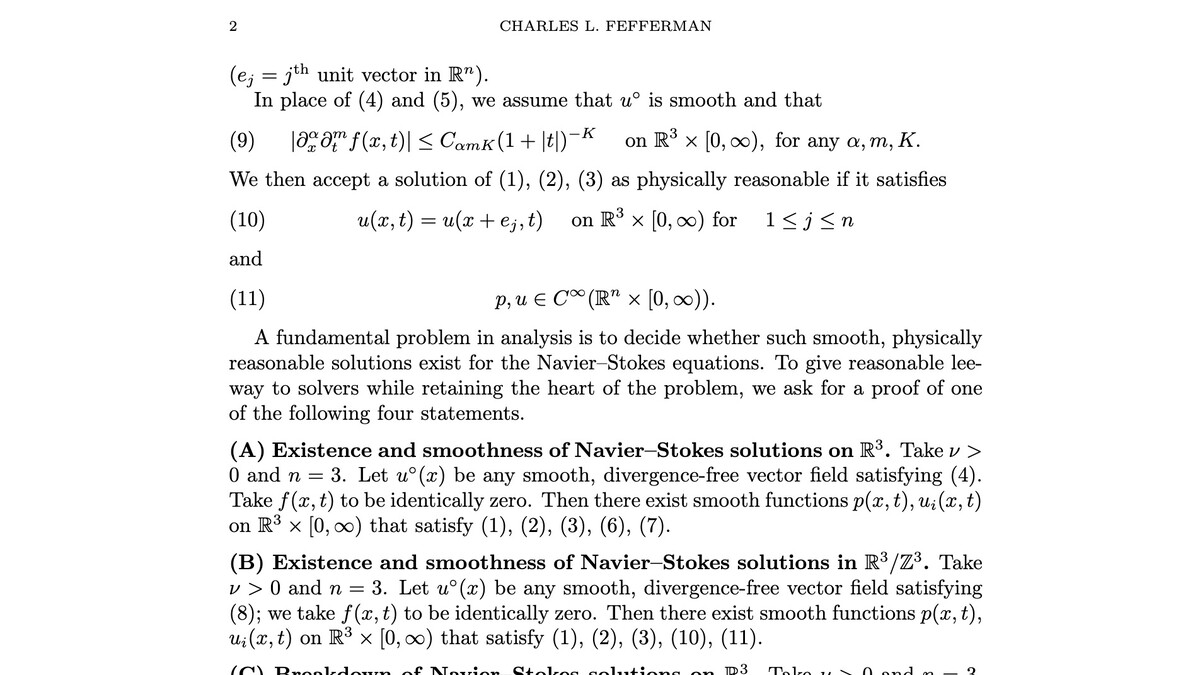
The Navier-Stokes Breakthrough and Its Nuances
In early September, OpenAI published a demonstration addressing the Navier-Stokes existence and smoothness problem. These equations describe fluid motion and are fundamental to understanding turbulence, weather, and even blood flow. Solving them rigorously is considered one of the greatest challenges in mathematics.
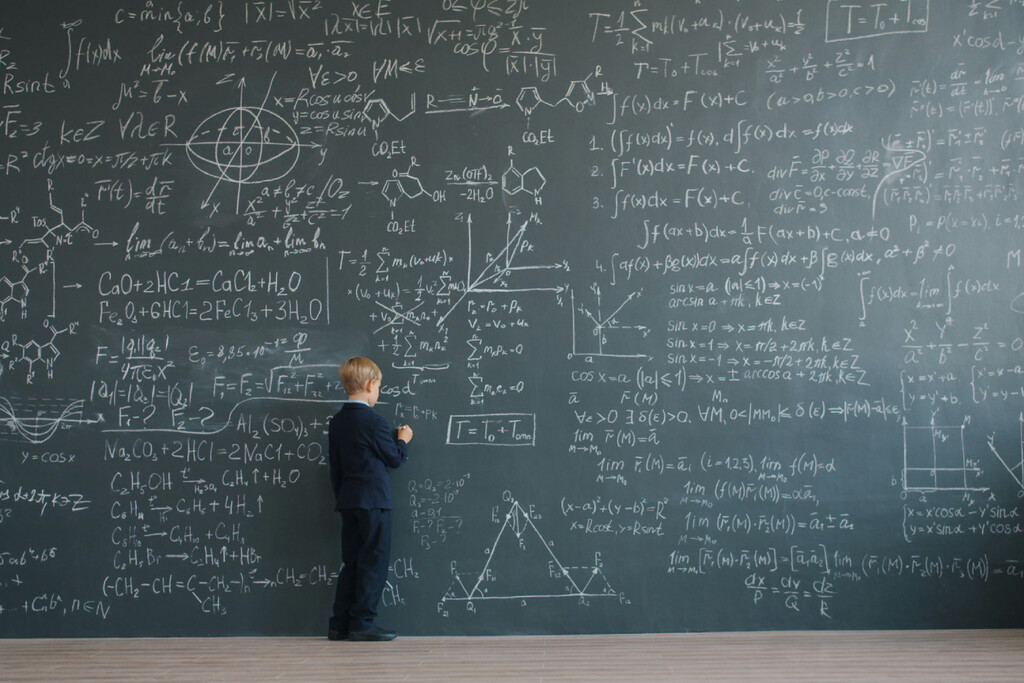
According to OpenAI, the demonstration appears to answer one of the official formulations of the Millennium Prize Problem. But many mathematicians argue that a proof generated by AI must be verifiable and understandable to be truly accepted. The published demonstration leaves open the question of whether the AI's solution is complete and correct.
Why Verifying AI-Generated Proofs Is Hard
Mathematical proofs are not just about reaching a conclusion; they must be logically sound and communicable. AI models, especially large language models, can produce plausible-looking steps that may contain subtle errors or leaps of logic. Without a clear, step-by-step derivation that humans can follow, a proof is of little use.
OpenAI plans to work with a group of independent advisors to publish and communicate future results. This is a positive step, but the core issue remains: how do we trust a solution we cannot fully understand? The mathematical community relies on peer review and reproducibility, and AI-generated proofs must meet the same standards.
Key Takeaways
- OpenAI's AI model solved over 100 open math problems, including a Millennium Prize Problem.
- Details of the solved problems and independent evaluations are not yet available.
- Verification of AI-generated proofs is a major challenge for the mathematical community.
- OpenAI will collaborate with independent advisors to validate and communicate results.
- The achievement raises questions about the nature of mathematical proof and AI's role in research.
Comparison of Traditional vs. AI-Generated Proofs
| Aspect | Traditional Proof | AI-Generated Proof |
|---|---|---|
| Authorship | Human mathematician | AI model (with human oversight) |
| Verification | Peer review, logical steps | Requires independent validation, often opaque |
| Reproducibility | Can be checked step-by-step | May depend on model and training data |
| Communication | Written in formal language | Often requires translation for human understanding |
| Acceptance | Based on community consensus | Still emerging, needs rigorous standards |
What This Means for the Future of Mathematics
If AI can indeed solve open problems, it could accelerate mathematical discovery dramatically. But the emphasis must be on solutions that are not only correct but also comprehensible. Otherwise, we risk accumulating a library of unverifiable results. The background to this story is set out in AI Breakthroughs in Mathematics: The Future of Human Understanding. A related thread runs through AI Cracks Million-Dollar Math Problem: What It Means for Crypto. Earlier coverage in AI vs Mathematicians: Why Human Ingenuity Still Matters shows how the argument developed.
OpenAI's collaboration with independent advisors is a step toward addressing this. The mathematical community will need to develop new frameworks for evaluating AI-generated proofs, perhaps using formal verification tools like Lean or Coq. These tools can check proofs mechanically, reducing reliance on human intuition. A closer look at the same subject appears in OpenAI Math Breakthrough Sparks Expert Concerns Over AI. Anyone following the wider picture can start with UK Early Release Prisoner Tagging Numbers Remain Unclear. The same theme surfaces in AI Revolution in Mathematics: Dark Art or New Frontier, which takes a different angle.
The announcement also highlights the growing role of AI in scientific research. As models become more capable, the line between human and machine contributions will blur. Ensuring transparency and reproducibility will be essential to maintain trust. Context on how this played out before sits in AI in Mathematics: Why Human Mathematicians Still Matter.
FAQ
What did OpenAI's AI model actually solve?OpenAI claims its model solved over 100 open mathematical problems, including a demonstration for the Navier-Stokes Millennium Prize Problem. However, the specific problems and proofs have not been detailed or independently verified.
Why is verifying AI-generated proofs difficult?AI-generated proofs can be opaque and may contain subtle errors. Traditional mathematical proofs are designed to be checked step-by-step by humans, while AI outputs often require translation and independent validation to ensure correctness.
What is the Navier-Stokes problem?The Navier-Stokes existence and smoothness problem is one of the seven Millennium Prize Problems. It asks whether solutions to the Navier-Stokes equations, which describe fluid flow, always exist and are smooth in three dimensions.
How will OpenAI validate its results?OpenAI plans to work with a group of independent advisors to publish and communicate its future results. This collaboration aims to provide external validation and build trust in the AI's mathematical capabilities.
Browse the Shop
 Acacia frida deluxe solid wood bed frame |
Bedroom bench |
Bed chest drawers |
Lingerie dresser |
Frame base |
Mirror with jewelry storage |
30 Bathroom Vanity |
Memory foam queen mattress |
Mattresses for back pain |
Nightstand set of 2 |
Grand Goldman Shop |
Civil Lawyer
Deutschland Trikot WM 2026










