

Unitree has unveiled the As2-W, a wheeled robot dog that navigates impossible terrain at breakneck speed. The Chinese robotics company recently viralized a video showing the quadruped moving effortlessly over rocks, slopes, and uneven ground, leaving viewers stunned.
While humanoid robots dominate headlines, Unitree proves that quadruped robots still have plenty of tricks up their sleeves. The As2-W's unique design—combining legs with wheels—allows it to conquer obstacles that would stop traditional legged robots in their tracks.
Find Original Home Decor sparking conversation at Grand Goldman Shop.

What Makes the Unitree As2-W So Special?
The key innovation is the integration of wheels into each leg. This hybrid approach lets the robot roll smoothly on flat surfaces and step over obstacles when needed. According to Unitree, the video is not sped up—the robot's speed is real.
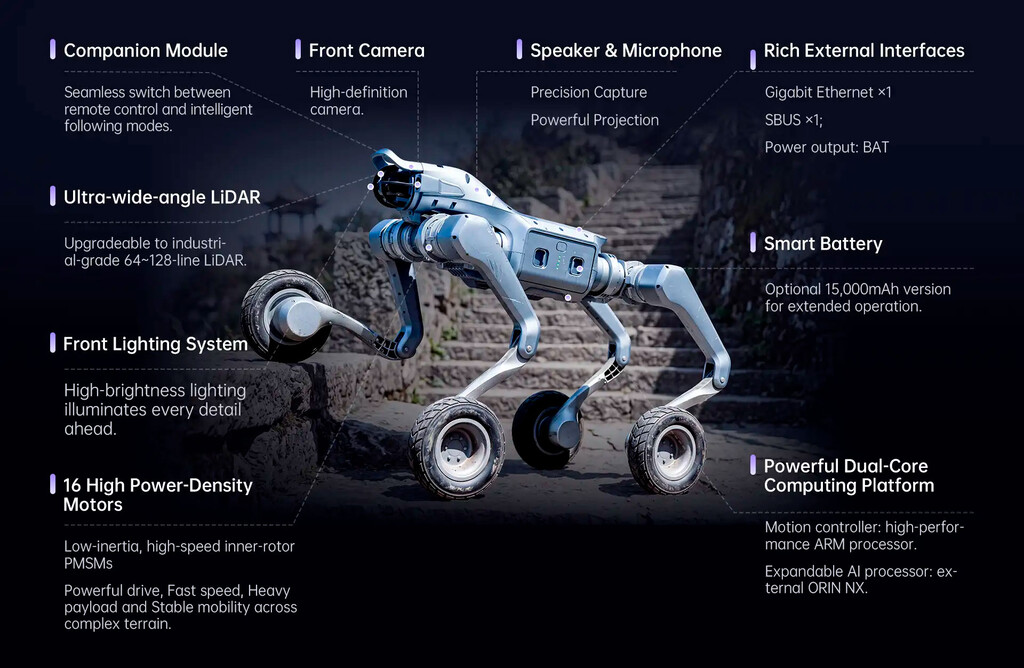
The As2-W can reach a sustained speed of 3.7 meters per second (about 13.3 km/h), with sprint peaks of 6 meters per second (21.6 km/h). On steep downhill slopes, it can go even faster, as seen in the viral footage.

- Hybrid mobility: Wheels on legs enable both rolling and walking.
- High speed: Sustained 3.7 m/s, sprinting up to 6 m/s.
- Long endurance: 15,000 mAh battery provides up to 3 hours of walking or 30 km range.
- Reduced range when loaded: Drops to 2 hours with payload.
- Terrain versatility: Handles rocks, slopes, and uneven ground with ease.
Why the Internet Is Freaking Out
The viral video sparked a mix of awe and unease. On X, one user wrote, "Imagine trying to escape from that thing," while a YouTube commenter said, "Now you can't escape them, guys!" The robot's speed and agility evoke both excitement and dystopian fears.
Such reactions highlight how far quadruped robots have come. Early models were slow and clumsy; the As2-W moves with alarming grace. Its ability to traverse difficult terrain at speed opens up new possibilities for inspection, search and rescue, and even delivery.
Technical Specifications at a Glance
Unitree packed impressive hardware into the As2-W. The 15,000 mAh battery is a standout, offering up to 3 hours of continuous operation or 30 km of travel. When carrying a payload, endurance drops to 2 hours—still respectable for a robot of this size.
| Specification | Detail |
|---|---|
| Model | Unitree As2-W |
| Type | Wheeled quadruped robot |
| Max sustained speed | 3.7 m/s (13.3 km/h) |
| Sprint peak speed | 6 m/s (21.6 km/h) |
| Battery capacity | 15,000 mAh |
| Endurance (no load) | 3 hours / 30 km |
| Endurance (with load) | 2 hours |
These specs position the As2-W as a versatile platform for both research and commercial applications. Its wheeled-leg design is particularly suited for environments where both speed and obstacle negotiation are critical.
Who Will Benefit from This Robot Dog?
Industries that require fast, reliable inspection in hazardous areas stand to gain the most. Think oil and gas facilities, construction sites, and disaster zones. The As2-W can cover ground quickly while still climbing stairs or stepping over debris.
Search and rescue teams could also deploy it to scout areas too dangerous for humans or dogs. With a 30 km range, it can cover significant distances before needing a recharge. And its speed means it can reach victims faster. The longer history behind the story is traced in PhoneBot: UCLA's Smartphone-Powered Robot That Walks.
For researchers, the As2-W offers a platform to study locomotion and control algorithms. The combination of rolling and walking poses interesting challenges and opportunities for AI development. Unitree has a history of supporting academic and commercial innovation with its robots. The background to this story is set out in Robot Dog Kit: Build a 14 km/h Quadruped from 200+ Pieces. A related thread runs through Mexico's Xólotl Robot Dog Merges China and Ukraine Tech. Earlier coverage in Welsh Mountain Inn Helped Conquer Everest: The Pen-Y-Gwryd Story shows how the argument developed.
What to Watch Next
Unitree hasn't announced pricing or availability for the As2-W yet. Given the company's track record, we can expect more details in the coming months. Competitors like Boston Dynamics and ANYbotics are also pushing the boundaries of legged robotics, so the race is on. A closer look at the same subject appears in AI-Guided Robot Dog Patrols Vineyards in Extremadura. Anyone following the wider picture can start with SmartBay Robot Changes All Four Tires in 30 Minutes Without Removing Wheels. The same theme surfaces in Robotic guard dog: is it possible we have one?, which takes a different angle.
The viral success of the As2-W video shows that public interest in robotics is stronger than ever. As these machines become faster and more capable, discussions about safety, ethics, and regulation will intensify. For now, though, the sheer spectacle of a robot dog sprinting across rugged terrain is enough to capture our imagination. Context on how this played out before sits in Ai Video: latest articles. A companion piece, Unitree's Rise in Robotics Has an Unexpected Backer: the US Army, approaches the same subject from another angle.
FAQ
What is the Unitree As2-W?
The Unitree As2-W is a wheeled quadruped robot, essentially a robot dog with wheels on its legs. This design allows it to move quickly on flat surfaces and climb over obstacles, making it highly versatile on challenging terrain.
How fast can the Unitree As2-W go?
It can sustain a speed of 3.7 meters per second (about 13.3 km/h) and reach sprint peaks of 6 meters per second (21.6 km/h). On steep downhill slopes, it can go even faster, as demonstrated in the viral video.
What is the battery life of the As2-W?
The robot is equipped with a 15,000 mAh battery that provides up to 3 hours of continuous walking or 30 km of range. When carrying a payload, the endurance drops to 2 hours.
Is the viral video sped up?
No, Unitree has confirmed that the video is not accelerated. The robot's speed is real, which is why the footage has generated so much buzz online.
Browse the Shop
 Acacia frida deluxe solid wood bed frame |
Bedroom bench |
Bed chest drawers |
Lingerie dresser |
Frame base |
Mirror with jewelry storage |
30 Bathroom Vanity |
Memory foam queen mattress |
Mattresses for back pain |
Nightstand set of 2 |
Grand Goldman Shop |
Civil Lawyer
Deutschland Trikot WM 2026







