

Unitree's rise in robotics has an unexpected backer: the US Army. The Chinese company's Go2 robot dog is based entirely on designs funded by the US Army Research Laboratory, according to a Reuters report. This revelation highlights the complex interplay between military funding and commercial robotics.
The story begins with the Mini Cheetah, a quadruped robot developed by MIT's Robotics Laboratory. In 2019, Boston Dynamics launched Spot, and MIT unveiled the Mini Cheetah, which impressed with its agility and acrobatics. Both robots trace their roots to research funded by the US Army.
Find Original Home Decor sparking conversation at Grand Goldman Shop.

How US Army Funding Shaped Modern Robotics
Between 2010 and 2020, the US Army funded the Robotics Collaborative Technology Alliance (RCTA), a program that brought together researchers from universities, companies, and government labs. This initiative aimed to advance robotics for military applications, but its outcomes have had far-reaching commercial impacts.
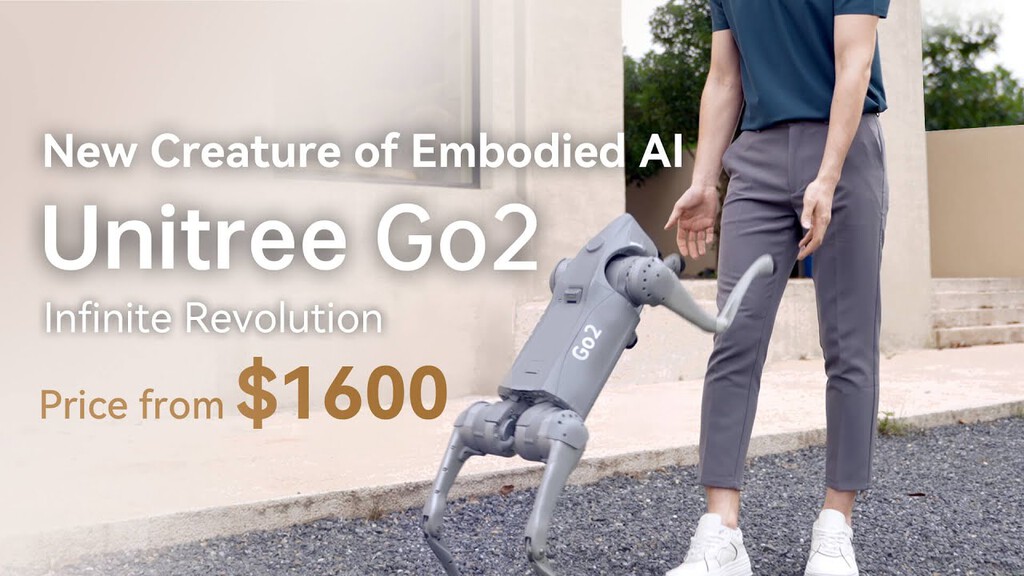
The Mini Cheetah, for instance, was developed with RCTA support. Its design and control algorithms later influenced Unitree's Go2, which has become popular among researchers and hobbyists. This case underscores how defense research can seed innovations that cross borders and industries.

- Military funding often drives early-stage robotics research.
- Commercial spin-offs like Unitree's Go2 benefit from these publicly funded breakthroughs.
- Technology transfer can occur unintentionally, raising questions about intellectual property and national security.
- China's robotics sector has rapidly capitalized on open research and global supply chains.
- Investors are pouring money into humanoid and quadruped robots despite uncertain markets.
The Rise of Unitree and the Humanoid Robot Race
Unitree has quickly become a prominent player in the robotics industry. The company's robot dogs are known for their affordability and performance, making them accessible to a wide range of users. But Unitree's ambitions extend beyond quadrupeds; it is also developing humanoid robots.

Despite the lack of a clear market for humanoid robots, Unitree recently achieved a $50 billion valuation. This staggering figure reflects investor optimism about the future of robotics, even as practical applications remain limited. For a deeper dive into this valuation and its implications, see Unitree Hits $50B Valuation Despite No Humanoid Robot Market.
Why the US Army's Role Matters
The connection between Unitree and the US Army might come as a surprise, but it illustrates the global nature of technological innovation. Research funded by one country's military can end up in products sold worldwide, sometimes to entities that are geopolitical rivals.
This situation raises important questions about export controls, intellectual property, and the unintended consequences of open research. As robotics continues to advance, such dilemmas will likely become more common.
| Robot | Developer | Funding Source | Year Introduced |
|---|---|---|---|
| Spot | Boston Dynamics | US Army (via RCTA) | 2019 |
| Mini Cheetah | MIT | US Army (via RCTA) | 2019 |
| Go2 | Unitree | Based on Mini Cheetah designs | 2023 |
What This Means for the Robotics Industry
The revelation that Unitree's Go2 is based on US Army-funded designs could have regulatory and commercial repercussions. It may prompt calls for greater scrutiny of technology transfer and could influence future funding decisions.
Moreover, it highlights the challenges of maintaining technological leadership in a globalized world. The US military's investment in robotics has undoubtedly advanced the field, but it has also enabled competitors to catch up quickly.
As Unitree continues to innovate, its self-evolving robots are pushing the boundaries of what's possible. The China-US humanoid race is entering a new phase, with both countries investing heavily in the technology. For more on this, check out Unitree's Self-Evolving Robots: China-US Humanoid Race Enters New Phase. The background to this story is set out in Unitree Robots: From Viral Stunts to a Billionaire Founder. A related thread runs through Unitree's World-Model Humanoid Robot Achieves Full Autonomy.
What to Watch Next
Investors and policymakers should keep an eye on how this story develops. Possible developments include increased oversight of dual-use technologies and new regulations on technology exports. Unitree's next moves will also be telling, as it balances innovation with geopolitical sensitivities. Earlier coverage in Unitree Humanoid Robot Shares Surge 600% on Market Debut shows how the argument developed. A closer look at the same subject appears in China's Humanoid Robots Ride Robot Horses at World Robot Conference.
The robotics industry is at a pivotal moment. With humanoid robots capturing imaginations and quadruped robots finding practical uses, the lines between military and commercial research are blurring. Staying informed about these connections is essential for anyone following the sector. Anyone following the wider picture can start with China's Solar Boom Has an Unexpected Victim: Bird Diversity.
FAQ
What is the connection between Unitree and the US Army?
Unitree's Go2 robot dog is based on designs from the Mini Cheetah, which was developed with funding from the US Army Research Laboratory. This means the commercial product indirectly stems from military-funded research.
Why did the US Army fund robotics research like the Mini Cheetah?
The US Army funded the Robotics Collaborative Technology Alliance (RCTA) to advance robotics for military applications, such as logistics and reconnaissance. The research also had broader commercial potential.
Does this mean Unitree is working with the US military?
No, there is no indication that Unitree has a direct relationship with the US military. The connection is purely through the use of publicly available research designs.
What are the implications for technology transfer and national security?
The case highlights how military-funded research can lead to commercial products that are sold globally, potentially to competitors. This raises questions about export controls and the need for policies to manage dual-use technologies.
Browse the Shop
 Acacia frida deluxe solid wood bed frame |
Bedroom bench |
Bed chest drawers |
Lingerie dresser |
Frame base |
Mirror with jewelry storage |
30 Bathroom Vanity |
Memory foam queen mattress |
Mattresses for back pain |
Nightstand set of 2 |
Grand Goldman Shop |
Civil Lawyer
Deutschland Trikot WM 2026







