

The Soviet Mil V-12, a colossal helicopter-aircraft hybrid, lifted 40 tons to 2,000 meters in 1969—a record that remains unbeaten today. This 105-ton machine was the brainchild of Mikhail Mil's design bureau, created to solve a critical Cold War logistics problem.
Imagine a commercial airliner with its wings chopped off and moved to the top, then fitted with two gigantic rotors. That's essentially what the V-12 looked like. Its first international appearance at the 1971 Paris Air Show left spectators in awe, earning it the Sikorsky Prize for the world's most powerful helicopter—awarded by the American Helicopter Society, no less.
Find Original Home Decor sparking conversation at Grand Goldman Shop.

Why the Soviets Built the Mil V-12
In the 1960s, the USSR had intercontinental ballistic missiles like the 8K67, 8K75, and 8K82. But moving these massive weapons to remote areas near the Pacific, such as Siberia, was a logistical nightmare. Roads were scarce, and rail networks didn't reach everywhere.
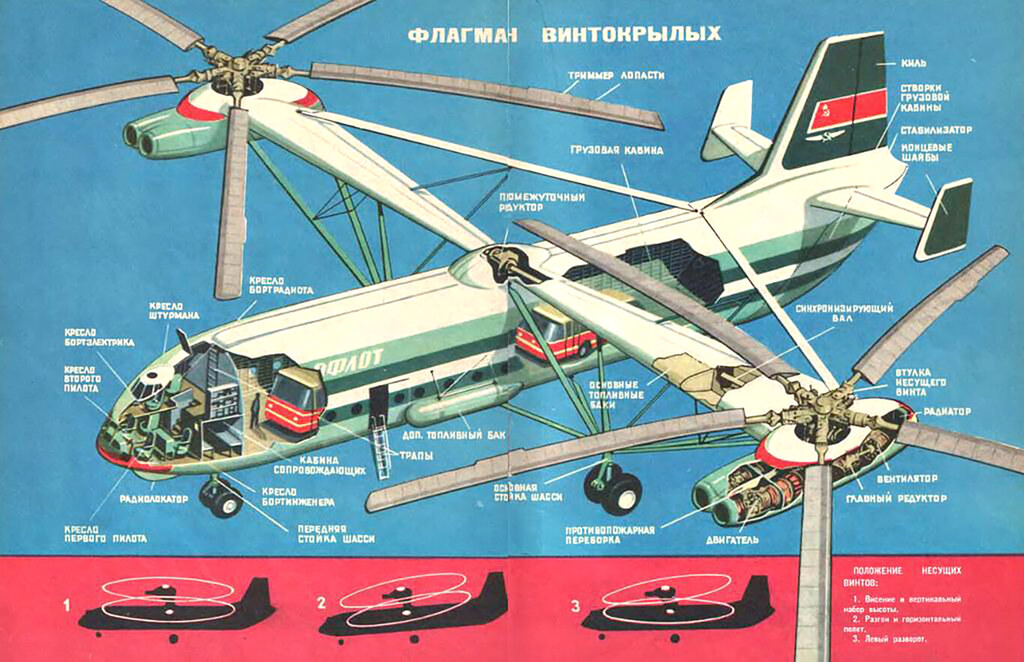
The State Committee for Aviation Technology tasked Mikhail Mil with creating a flying crane capable of lifting 20 to 25 tons. The result was the V-12, a helicopter that could carry oversized cargo slung underneath or loaded inside its massive fuselage.

The Design That Defied Convention
The V-12 featured two enormous rotors mounted side-by-side on stub wings, each driven by its own engine. This configuration eliminated the need for a tail rotor and provided immense lift. The cockpit sat high above the ground, giving pilots a commanding view.
With a maximum takeoff weight of 105 tons, it was by far the largest helicopter ever built. Its size and power were unprecedented, and it quickly captured the world's attention.
The Record-Breaking Flight
On August 6, 1969, the V-12 lifted a payload of 40 tons to an altitude of 2,000 meters. This feat shattered previous records and remains unmatched. To put that in perspective, the second-largest helicopter, the Mil Mi-26, can lift around 20 tons.
The V-12 also set records for altitude with payload and speed over a closed circuit. These achievements were officially recognized by the Fédération Aéronautique Internationale (FAI), cementing its place in aviation history.
Key Specifications
| Specification | Mil V-12 | Mil Mi-26 (for comparison) |
|---|---|---|
| Max Takeoff Weight | 105 tons | 56 tons |
| Payload Capacity | 40 tons (record) | 20 tons |
| Rotor Diameter | 35 m (each) | 32 m |
| Engines | 4 × Soloviev D-25VF | 2 × Lotarev D-136 |
| First Flight | 1967 | 1977 |
Why the V-12 Never Entered Mass Production
Despite its impressive capabilities, the V-12 had several drawbacks. It was expensive to operate, and its massive size made it difficult to handle on the ground. The intended mission—transporting ICBMs—became less critical as missile silos were built closer to deployment areas. Context on how this played out before sits in Soviet Mil V-12: The 105-Ton Helicopter That Set an Unbeaten Record.
Only two prototypes were ever built. The program was eventually canceled, and the V-12 faded into obscurity. However, its legacy lives on as a testament to Soviet engineering ambition. The background to this story is set out in Car: latest articles. A related thread runs through First Nonstop Transatlantic Flight: The 1919 Vickers Vimy.
Legacy and Whereabouts
One of the prototypes is preserved at the Central Air Force Museum in Monino, Russia. Visitors can marvel at its sheer scale and imagine the roar of its four engines. The other prototype was scrapped, but its place in history is secure. Earlier coverage in The Truth About Straight US Highways and Cold War Runway Myth shows how the argument developed. A closer look at the same subject appears in Singapore Court Summons Six Bus and Truck Drivers for Speeding.
The V-12's record still stands because no other helicopter has been designed to lift such massive loads. Modern heavy-lift helicopters focus on efficiency and versatility rather than raw power. Anyone following the wider picture can start with How the US Tricked the USSR to Build the SR-71 Blackbird. The same theme surfaces in Czechoslovak Office Desks of 1937: Mechanical Elevators for Clerks, which takes a different angle.
What We Can Learn from the Mil V-12
- Engineering audacity: The V-12 pushed the boundaries of what was thought possible in helicopter design.
- Cold War competition: It was a product of superpower rivalry, driving rapid technological advancements.
- Niche solutions: Sometimes, extreme problems require extreme solutions, even if they aren't widely adopted.
- Enduring records: The V-12's payload record remains a benchmark for heavy-lift aviation.
- Museum piece: The surviving prototype serves as an educational tool for future engineers.
FAQ
What was the Mil V-12 used for?
The Mil V-12 was designed to transport intercontinental ballistic missiles and other heavy cargo to remote areas of the Soviet Union. It was also intended for civilian heavy-lift operations, but only two prototypes were built.
Why is the Mil V-12's record still unbeaten?
No other helicopter has been built with the same combination of size and power. Modern heavy-lift helicopters are designed for different priorities, such as efficiency and versatility, rather than lifting extreme payloads.
How many Mil V-12 helicopters were built?
Only two prototypes were constructed. One is preserved at the Central Air Force Museum in Monino, Russia, while the other was scrapped.
What is the largest helicopter in service today?
The Mil Mi-26 is currently the largest helicopter in production and service, with a maximum takeoff weight of around 56 tons and a payload capacity of 20 tons.
The Mil V-12 remains a fascinating chapter in aviation history. Its record-breaking flight in 1969 demonstrated the incredible potential of helicopter engineering. While it never became a operational workhorse, it inspired future generations of designers and continues to intrigue aviation enthusiasts worldwide.
Browse the Shop
 Acacia frida deluxe solid wood bed frame |
Bedroom bench |
Bed chest drawers |
Lingerie dresser |
Frame base |
Mirror with jewelry storage |
30 Bathroom Vanity |
Memory foam queen mattress |
Mattresses for back pain |
Nightstand set of 2 |
Grand Goldman Shop |
Civil Lawyer
Deutschland Trikot WM 2026







