

A driver was caught speeding at 168 km/h in a 40 km/h work zone, the most extreme case in a recent DGT (Directorate-General for Traffic) enforcement campaign. The incident, captured by a Guardia Civil Pegasus helicopter, highlights the deadly risks of speeding through roadworks.
The campaign, which ran from June 22 to 28, focused on stretches affected by maintenance, conservation, or layout changes. During those seven days, officers from the Guardia Civil Traffic Group monitored 233,506 vehicles and issued 15,460 complaints for violations in work zones.
Find Original Home Decor sparking conversation at Grand Goldman Shop.

What Happened: The 168 km/h Speeding Case
The most shocking case involved a vehicle clocked at 168 km/h where the general speed limit was 90 km/h, but due to roadworks, a temporary limit of 40 km/h was in place. That means the driver was traveling more than four times the posted limit for that specific stretch.
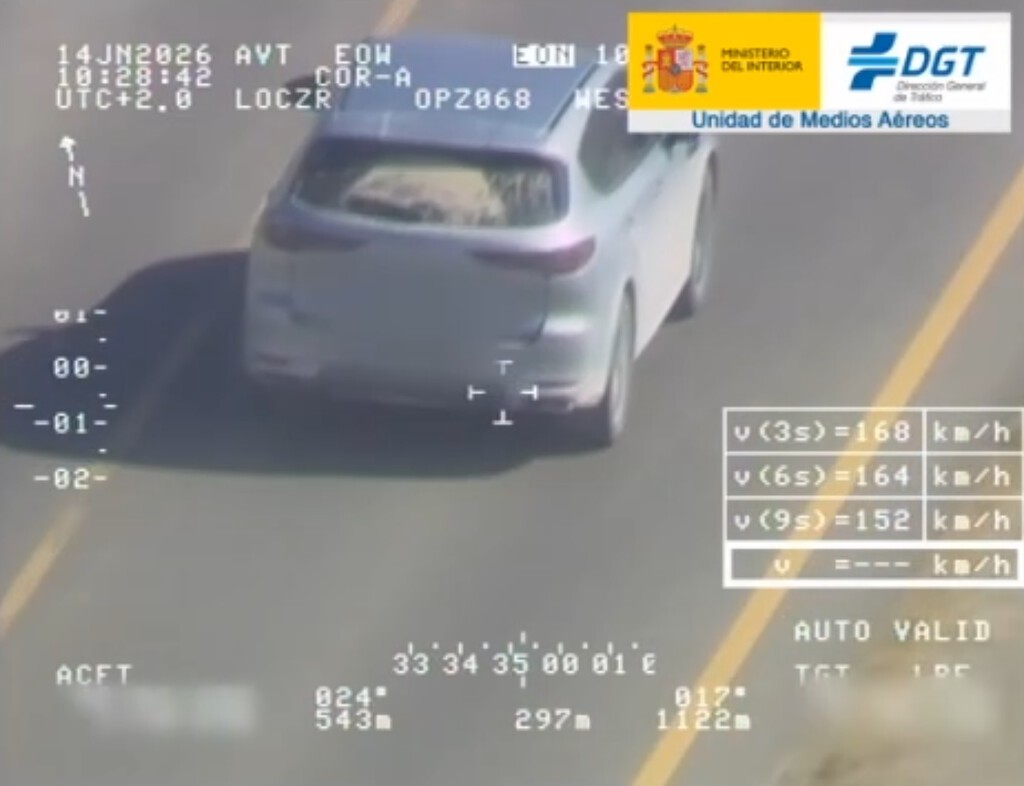
The Pegasus helicopter, equipped with radar and camera technology, recorded the violation. Such extreme speeding in a work zone leaves no margin for error—for the driver or for the workers nearby.
Why Work Zones Are So Dangerous
Work zones present unique hazards: workers may be just feet from moving traffic, lanes may be narrowed or shifted, and heavy machinery can enter the roadway without warning. Reduced speed limits are not arbitrary—they are calculated to give drivers enough time to react to unexpected obstacles.
At 168 km/h, a vehicle covers nearly 47 meters per second. Even with perfect reflexes, stopping distance far exceeds the visibility and space available in a work zone. The risk to human life is immense.
DGT Campaign Results: 15,460 Fines in One Week
The DGT's special surveillance campaign resulted in 15,460 denuncias (complaints) out of 233,506 vehicles controlled—about 6.6% of all vehicles checked. This high violation rate underscores the need for continued enforcement.
The campaign targeted roads with ongoing works, where temporary signs and reduced limits are often ignored by impatient drivers. The DGT aims to raise awareness that speeding in these areas is not just a minor infraction—it can be deadly.
Key Takeaways for Drivers
- Respect temporary speed limits in work zones; they are set for your safety and that of workers.
- Stay alert for sudden lane changes, narrowed lanes, and construction equipment.
- Speeding fines double in work zones in many jurisdictions; in Spain, penalties can be severe.
- Helicopter surveillance like the Pegasus can catch violations you might not see coming.
- Plan ahead and allow extra time if your route includes roadworks.
Comparison of Speed Limits and Stopping Distances
| Speed (km/h) | Reaction Distance (m) | Braking Distance (m) | Total Stopping Distance (m) |
|---|---|---|---|
| 40 | 8.3 | 5.7 | 14.0 |
| 90 | 18.8 | 28.8 | 47.6 |
| 168 | 35.0 | 100.3 | 135.3 |
Note: Reaction distance assumes 0.75 seconds reaction time; braking distance assumes dry asphalt and average deceleration. At 168 km/h, total stopping distance exceeds 135 meters—more than a football field. The background to this story is set out in DGT Chief Pere Navarro: Speeding Fines Target 'Idiots' Not Revenue. A related thread runs through Singapore Court Summons Six Bus and Truck Drivers for Speeding. Earlier coverage in Madrid Traffic Chaos: F1 Grand Prix, Roadworks and Metro Cuts shows how the argument developed.
What This Means for Road Safety
This incident is a stark reminder that speeding in work zones is not a victimless crime. The DGT's campaign and the Pegasus helicopter's footage serve as a warning: enforcement is active, and the consequences can be life-changing. A closer look at the same subject appears in Bill Gates' Speeding Tickets: How a Porsche Almost Cost Him His License. Anyone following the wider picture can start with SpaceX Gigabay: 24 Work Zones, 400-Ton Cranes, 380 Feet Tall. The same theme surfaces in LED Headlights Too Bright: A Growing Road Safety Concern, which takes a different angle.
For drivers, the message is simple: slow down, pay attention, and respect the temporary limits. The few seconds you save are not worth a life. Context on how this played out before sits in Defunding DEI Bike Lanes Threatens Road Safety, Advocates Warn. A companion piece, Volvo EV Safety: How the New Electric Car Learns on the Road, approaches the same subject from another angle.
FAQ
What was the speed limit in the work zone where the driver was caught?
The temporary speed limit was 40 km/h due to roadworks, while the general limit for that road was 90 km/h. The driver was recorded at 168 km/h, more than four times the posted limit.
How many fines were issued during the DGT campaign?
The DGT's campaign from June 22 to 28 resulted in 15,460 complaints out of 233,506 vehicles controlled. This represents about 6.6% of all vehicles checked.
What is a Pegasus helicopter?
The Pegasus helicopter is a surveillance aircraft used by the Guardia Civil. It is equipped with radar and cameras to detect speeding and other traffic violations from the air.
Why are speed limits reduced in work zones?
Speed limits are reduced to protect both drivers and road workers. Lower speeds give drivers more time to react to unexpected hazards such as workers, machinery, or narrowed lanes.
Browse the Shop
 Acacia frida deluxe solid wood bed frame |
Bedroom bench |
Bed chest drawers |
Lingerie dresser |
Frame base |
Mirror with jewelry storage |
30 Bathroom Vanity |
Memory foam queen mattress |
Mattresses for back pain |
Nightstand set of 2 |
Grand Goldman Shop |
Civil Lawyer
Deutschland Trikot WM 2026







