

Barcelona is turning to an unlikely material to reduce the carbon footprint of its streets: olive-based biochar asphalt. The city aims to replace conventional asphalt with a mixture that uses agricultural waste, cutting emissions by up to 75% compared to traditional methods.
This initiative addresses a often-overlooked source of urban CO2: asphalt production. Cities account for 67-72% of global CO2 emissions, and asphalt manufacturing is energy-intensive, relying on petroleum derivatives like bitumen, aggregates, and limestone filler.
Find Original Home Decor sparking conversation at Grand Goldman Shop.

What Is Biochar Asphalt and How Does It Work?
Biochar asphalt substitutes limestone filler with biochar, a charcoal-like substance made from olive pits and pine residues. This biochar is produced through pyrolysis, a process that heats organic material in the absence of oxygen.
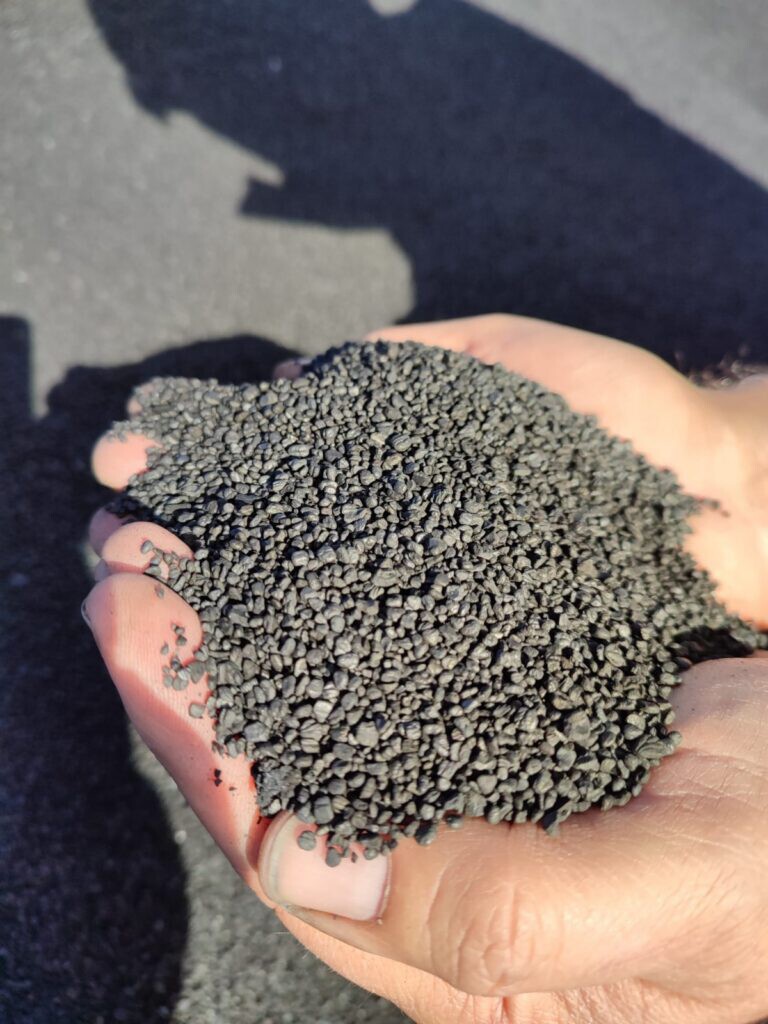
The resulting asphalt not only reduces emissions but also shows improved performance. Initial tests indicate better water resistance, fewer cracks, and enhanced temperature resilience. This could lead to longer-lasting roads and lower maintenance costs.
The Role of Olive Waste
Olive pits are abundant in Mediterranean regions, especially Spain, the world's largest olive oil producer. Using this waste stream turns a disposal problem into a valuable resource, aligning with circular economy principles.
Why Traditional Asphalt Is a Climate Problem
Traditional asphalt production involves heating bitumen and aggregates to high temperatures, typically around 160°C, which requires significant energy. The extraction and processing of bitumen also release substantial CO2.
Moreover, the limestone filler used in asphalt is produced by mining and grinding limestone, adding to the carbon footprint. By replacing these components with biochar, Barcelona's approach tackles multiple emission sources simultaneously.
Who Is Behind the Initiative?
The biochar asphalt was developed by Carboliva, a company specializing in olive-based products, in collaboration with ELSAN, AMSA, and the Universitat Politècnica de Catalunya (UPC). It won the urban challenge "La sección de calle del siglo XXI" (The 21st Century Street Section), promoted by the city of Barcelona. The longer history behind the story is traced in Barcelona's Olive-Based Biochar Asphalt Cuts CO2 Emissions.
This public-private partnership highlights how cities can foster innovation to meet climate goals. The challenge aimed to rethink street design for sustainability, and the biochar asphalt solution stood out for its tangible impact. The background to this story is set out in Energy Utilities: latest articles. A related thread runs through Plastic Recycling: Decades of False Promises and What Comes Next. Earlier coverage in Plastic Recycling: Why Decades of Faith May Be Misplaced shows how the argument developed.
Key Benefits of Biochar Asphalt
- 75% reduction in CO2 emissions from asphalt production
- Utilizes agricultural waste, reducing landfill burden
- Improved durability: less cracking and better water resistance
- Enhanced temperature resilience, potentially extending road lifespan
- Supports circular economy and local waste valorization
Comparison: Traditional vs. Biochar Asphalt
| Feature | Traditional Asphalt | Biochar Asphalt |
|---|---|---|
| Filler material | Limestone | Olive-pit biochar |
| CO2 emissions | High | Up to 75% lower |
| Raw material source | Petroleum, mining | Agricultural waste |
| Water resistance | Standard | Improved |
| Crack resistance | Standard | Improved |
| Temperature resilience | Standard | Enhanced |
What This Means for the Future of Urban Roads
If scaled up, biochar asphalt could significantly reduce the carbon footprint of urban infrastructure. Barcelona's pilot is a proof of concept, but broader adoption would require addressing supply chains and production capacity. A closer look at the same subject appears in Spain's Reservoir Capacity Crisis: Why New Dams Are Impossible. Anyone following the wider picture can start with Dubai's DuneCrete: Desert Sand Concrete Cuts Cement by 50%. The same theme surfaces in Roman Concrete Durability: New Secret from Hadrian's Toilet, which takes a different angle.
Other cities with olive waste streams, particularly in the Mediterranean, could replicate this model. The technology also opens doors for using other types of agricultural waste, such as rice husks or coconut shells, depending on local availability. Context on how this played out before sits in Wind Turbine Blade Recycling Breakthrough: Blades Turned Into Asphalt. A companion piece, Heathrow Expansion: Airlines Must Pay for CO2 Removal, approaches the same subject from another angle.
FAQ
What is biochar asphalt?
Biochar asphalt is a sustainable paving material that replaces limestone filler with biochar made from agricultural waste like olive pits. It reduces CO2 emissions and improves road performance.
How much does biochar asphalt reduce emissions?
It can cut CO2 emissions from asphalt production by up to 75%, according to the developers. This is achieved by avoiding energy-intensive limestone processing and using carbon-sequestering biochar.
Is biochar asphalt more expensive?
Costs are not specified, but using waste materials could offset some expenses. However, initial production may be costlier until economies of scale are achieved.
Where is biochar asphalt being used?
Barcelona is piloting the technology as part of its sustainable street initiative. It is not yet widely commercialized but shows promise for broader adoption.
Browse the Shop
 Acacia frida deluxe solid wood bed frame |
Bedroom bench |
Bed chest drawers |
Lingerie dresser |
Frame base |
Mirror with jewelry storage |
30 Bathroom Vanity |
Memory foam queen mattress |
Mattresses for back pain |
Nightstand set of 2 |
Grand Goldman Shop |
Civil Lawyer
Deutschland Trikot WM 2026







