

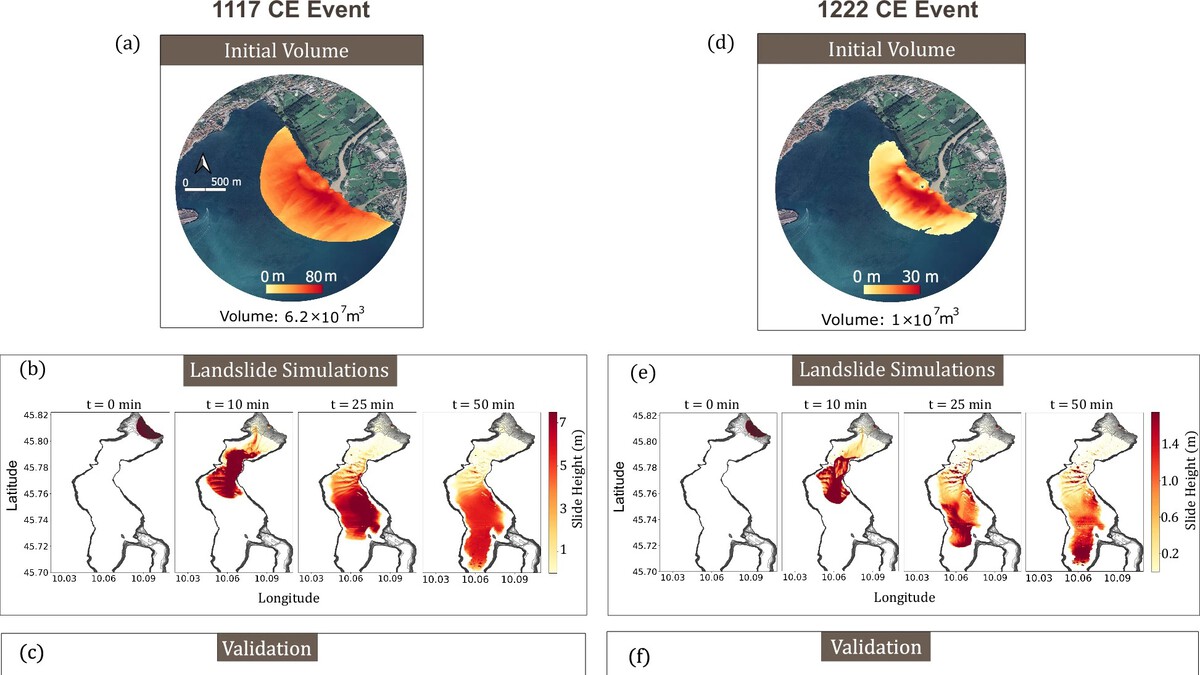
Two medieval tsunamis in Italy's Lake Iseo were likely triggered by human activity, according to a new study that reconstructs these rare events. The research reveals that the tsunamis, which occurred after earthquakes in 1117 and 1222, were not caused solely by seismic shaking but by the underwater collapse of the Oglio River delta, weakened by erosion from centuries of deforestation and farming.
What Happened at Lake Iseo?
On January 3, 1117, a powerful earthquake struck northern Italy. A little over a century later, in 1222, another quake hit the region. A 12th-century Latin manuscript preserved in the Vatican Apostolic Library describes the first event: "Lacus quoque adeo excreverunt ut in villis iuxta positis habitantes paucissimi ab hoc periculo evaderent" — roughly, the lake rose so much that very few inhabitants of nearby villages escaped the danger. In other words, a tsunami.
Find Original Home Decor sparking conversation at Grand Goldman Shop.

But earthquakes alone were not the whole story. An international research team has now reconstructed both medieval tsunamis to uncover their cause. They found that the direct movement of the fault was not the trigger; instead, the collapse of the Oglio River delta underwater set off the waves. The delta, eroded by human land use, was primed to fail.
Why Human Activity Mattered
The study argues that tsunami risk in lakes depends not only on seismicity but also on what we do to the land. Deforestation, cultivation, and grazing — activities past and present — increase erosion. At Lake Iseo, these practices likely destabilized the delta, making it vulnerable to collapse when the earth shook.
This is a crucial insight: human modifications can amplify natural hazards. The researchers emphasize that the delta was "ready to break" due to erosion caused by human activity. Thus, the tsunamis were a combined effect of seismic shaking and anthropogenic landscape change.
Key Takeaways from the Study
- Two medieval tsunamis in Lake Iseo were triggered by underwater delta collapses, not directly by fault movement.
- Human-induced erosion from deforestation and agriculture weakened the delta, making it prone to failure.
- The 1117 tsunami is documented in a 12th-century Vatican manuscript.
- Lake tsunami risk is influenced by both seismic activity and land-use practices.
- Modern land management could play a role in mitigating similar hazards.
Understanding the Risk: Lake Tsunamis vs. Ocean Tsunamis
Lake tsunamis are less known but can be just as destructive. Unlike ocean tsunamis, which are typically triggered by undersea earthquakes or landslides, lake tsunamis often result from delta collapses or rockfalls into the water. The confined nature of lakes can amplify wave heights, as seen in Lake Iseo.
| Factor | Ocean Tsunami | Lake Tsunami (e.g., Lake Iseo) |
|---|---|---|
| Primary Trigger | Undersea earthquakes, landslides | Delta collapses, rockfalls, earthquakes |
| Wave Amplification | Open ocean, coastal shoaling | Confined basin, shallow shelves |
| Human Influence | Coastal development, deforestation | Land-use changes, erosion |
| Documented Examples | 2004 Indian Ocean, 2011 Japan | Lake Iseo (1117, 1222), Lake Geneva |
This comparison highlights that lake tsunamis warrant attention in hazard assessments, especially in seismically active regions with erodible deltas. The background to this story is set out in Lake Iseo Italy: Car-Free Cycling and Autumn Hikes Guide. A related thread runs through Mediterranean Tsunami Risk: What's Real. Earlier coverage in Energy Utilities: latest articles shows how the argument developed.
What This Means for Today
The findings have implications beyond medieval history. Many lakes around the world are surrounded by human-altered landscapes. As climate change and population growth increase pressure on land, the risk of delta collapses may rise. The study suggests that land-use planning should consider tsunami hazards in lakes, not just earthquakes. A closer look at the same subject appears in Granada Earthquakes: Why Active Faults Limit Big Tremors. Anyone following the wider picture can start with Himalaya Glacier Collapse: 47 Dangerous Glacial Lakes Threaten Nepal and China. The same theme surfaces in Nepal Flood 2026: Koshi Valley Devastation and Glacial Risk, which takes a different angle.
Moreover, the research underscores the value of historical records. The Vatican manuscript provided crucial evidence for the 1117 event, showing how past documents can inform modern hazard analysis. Such interdisciplinary approaches — combining geology, history, and archaeology — are essential for understanding rare but high-impact events. Context on how this played out before sits in Granada Earthquakes: 400 Tremors and Families Camping in Parks. A companion piece, Medieval Lake Tsunamis in Italy Linked to Human Activity, approaches the same subject from another angle.
FAQ
What caused the medieval tsunamis in Lake Iseo?
The tsunamis were caused by the underwater collapse of the Oglio River delta, which had been weakened by erosion from human activities like deforestation and farming. Earthquakes in 1117 and 1222 likely triggered the collapses.
How do we know about the 1117 tsunami?
A 12th-century Latin manuscript in the Vatican Apostolic Library describes the lake rising dramatically, leaving few survivors in nearby villages. This historical account, combined with geological evidence, confirms the event.
Are lake tsunamis a modern concern?
Yes. Many lakes are surrounded by human-modified landscapes that increase erosion. As development continues, the risk of delta collapses and subsequent tsunamis may grow, especially in seismic zones.
What can be done to reduce lake tsunami risk?
Sustainable land-use practices, such as reforestation and erosion control, can help stabilize deltas. Additionally, hazard assessments should incorporate both seismic and human-induced factors.
Browse the Shop
 Acacia frida deluxe solid wood bed frame |
Bedroom bench |
Bed chest drawers |
Lingerie dresser |
Frame base |
Mirror with jewelry storage |
30 Bathroom Vanity |
Memory foam queen mattress |
Mattresses for back pain |
Nightstand set of 2 |
Grand Goldman Shop |
Civil Lawyer
Deutschland Trikot WM 2026







