

Nuclear fusion is the physical process that powers the Sun and stars, and it promises a clean, safe, and nearly limitless energy source for humanity. Unlike nuclear fission, which splits heavy atoms, fusion combines light atomic nuclei to release massive amounts of energy. This article explains the fundamental physics of nuclear fusion, the technological hurdles, and the global race to harness the ultimate energy source.
What Is Nuclear Fusion?
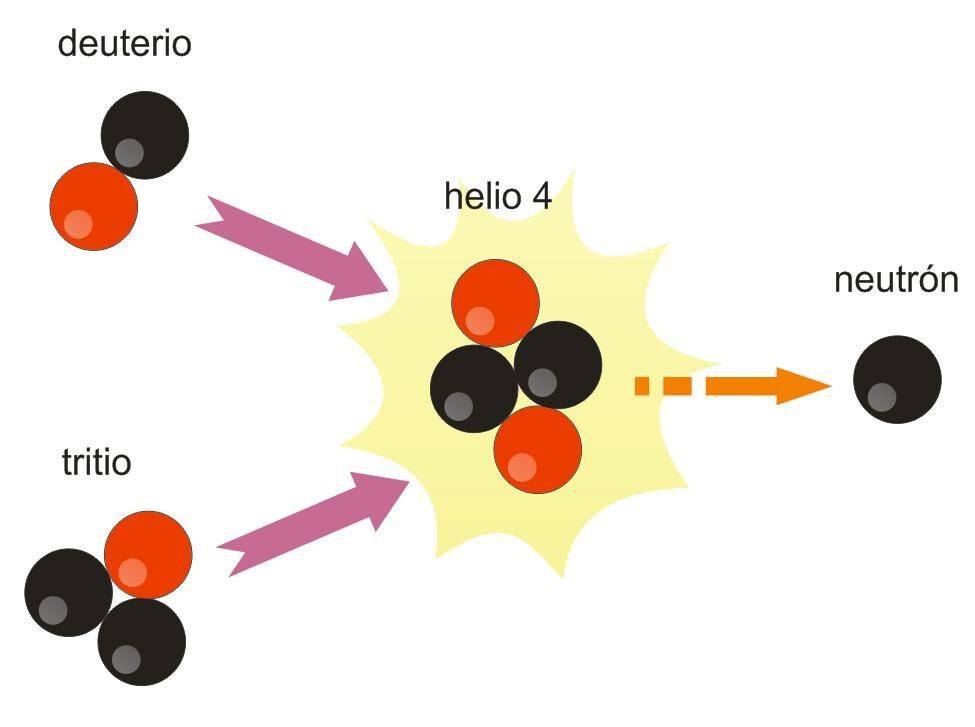
At its core, nuclear fusion is the process where two light atomic nuclei merge to form a heavier nucleus, releasing energy in the process. This reaction is what fuels the Sun, where hydrogen nuclei fuse into helium under extreme temperature and pressure. On Earth, scientists aim to replicate this by using isotopes of hydrogen—deuterium and tritium—which fuse most readily.
Find Original Home Decor sparking conversation at Grand Goldman Shop.

The energy released comes from the small mass difference between the reactants and the products, as described by Einstein's famous equation, E=mc². This mass-to-energy conversion is incredibly efficient: fusion releases millions of times more energy per kilogram of fuel than burning fossil fuels.
Fusion vs. Fission: Key Differences
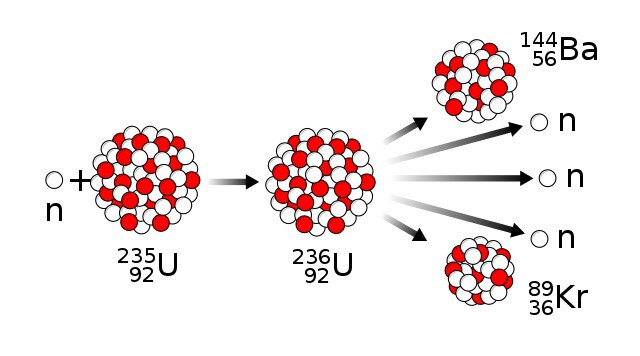
Nuclear fission, used in current power plants, splits heavy atoms like uranium, producing radioactive waste that remains hazardous for thousands of years. Fusion, by contrast, produces no long-lived radioactive waste and cannot melt down—if the reaction conditions are lost, the plasma simply cools and the reaction stops.
Fusion also requires abundant fuel: deuterium can be extracted from seawater, and tritium can be bred from lithium. This makes fusion a virtually inexhaustible energy source. The table below summarizes the main differences.
| Aspect | Nuclear Fission | Nuclear Fusion |
|---|---|---|
| Fuel | Uranium, plutonium | Deuterium, tritium |
| Waste | Long-lived radioactive waste | Short-lived, low-level waste |
| Safety | Meltdown risk | No meltdown risk |
| Energy density | High | Even higher |
The Physics of Fusion: Conditions and Challenges
To achieve fusion on Earth, the fuel must be heated to over 100 million degrees Celsius—hotter than the Sun's core—so that atoms become plasma, a state where electrons are stripped from nuclei. At these temperatures, nuclei have enough energy to overcome their electrostatic repulsion and fuse.
Containing this plasma is a major challenge. Magnetic confinement, used in tokamaks and stellarators, uses powerful magnetic fields to keep the plasma away from the walls. Inertial confinement, on the other hand, uses lasers or particle beams to compress and heat a tiny fuel pellet.
Magnetic Confinement: Tokamaks and Stellarators
The tokamak design, a doughnut-shaped magnetic bottle, is the most advanced fusion concept. ITER, the world's largest tokamak, is being built in France by a consortium of countries. Stellarators, which use complex twisted magnetic fields, offer steady-state operation but are harder to build.
Inertial Confinement: Laser-Driven Fusion
In inertial confinement, facilities like the National Ignition Facility (NIF) in the US focus lasers on a tiny fuel capsule, causing it to implode and fuse. In 2022, NIF achieved a historic milestone: fusion ignition, where the energy released exceeded the laser energy used to drive the reaction.
Recent Breakthroughs and Private Sector Momentum
The fusion field has seen remarkable progress in recent years. The NIF ignition result proved that fusion can produce net energy gain, albeit in a laboratory setting. Meanwhile, private companies like Commonwealth Fusion Systems, Tokamak Energy, and TAE Technologies are developing smaller, faster, and cheaper fusion devices, attracting billions in investment.
These private efforts aim to commercialize fusion by the 2030s, though significant engineering challenges remain, including materials that can withstand neutron bombardment and efficient tritium breeding. The longer history behind the story is traced in China's 582-Ton Magnet for Artificial Sun Fusion Energy.
Why Fusion Matters for the Future
Fusion could provide a stable, baseload power source without carbon emissions, complementing renewables like solar and wind. It would reduce dependence on fossil fuels and enhance energy security. However, fusion is not a silver bullet—it will take decades to deploy at scale, and renewables must be deployed aggressively in the meantime. The background to this story is set out in Europe Puts Nuclear Fusion Hopes to the Test With Wendelstein 7-X. A related thread runs through Nuclear Fusion Is No Longer a Physics Problem: Now It's About Money. Earlier coverage in Nuclear Fusion Commercial Race: Private Firms Target 2035 shows how the argument developed.
- Clean: No greenhouse gases or long-lived radioactive waste.
- Safe: No risk of meltdown; reaction stops if containment fails.
- Abundant: Fuel from seawater and lithium lasts millions of years.
- Baseload: Provides continuous power, unlike intermittent renewables.
- Challenging: Requires extreme temperatures and advanced materials.
Challenges on the Road to Commercial Fusion
Despite progress, fusion faces daunting hurdles. The plasma must be confined stably for long periods, and materials must withstand intense heat and neutron fluxes. Tritium breeding is not yet proven at scale, and the cost of fusion plants remains high. International collaboration, such as ITER, and public-private partnerships are essential to overcome these barriers. A closer look at the same subject appears in Climate Solutions: Positive Tipping Points for Clean Energy. Anyone following the wider picture can start with UK's £30m People's Power: Community Clean Energy Revolution. The same theme surfaces in How to Clean Brass and Polish It to a Mirror Shine: The Ultimate Guide, which takes a different angle.
Regulatory frameworks for fusion are still being developed, and public acceptance will depend on demonstrating safety and environmental benefits. Context on how this played out before sits in Infantino Splits FIFA Caribbean Management to Consolidate Power. A companion piece, Datacenter Backlash Splits Conservatives and Silicon Valley, approaches the same subject from another angle.
FAQ
What is the difference between nuclear fusion and fission?
Nuclear fusion combines light nuclei to release energy, while fission splits heavy nuclei. Fusion produces no long-lived radioactive waste and cannot melt down, making it inherently safer and cleaner.
How close are we to commercial fusion energy?
Recent breakthroughs like NIF's ignition and private sector advances suggest fusion could be commercially viable by the 2030s or 2040s, but significant engineering challenges remain.
What fuel does fusion use?
Most fusion concepts use deuterium and tritium, isotopes of hydrogen. Deuterium is abundant in seawater, and tritium can be bred from lithium.
Is fusion safe?
Yes, fusion is inherently safe. There is no risk of a runaway reaction or meltdown, and it produces no long-lived radioactive waste.
Browse the Shop
 Acacia frida deluxe solid wood bed frame |
Bedroom bench |
Bed chest drawers |
Lingerie dresser |
Frame base |
Mirror with jewelry storage |
30 Bathroom Vanity |
Memory foam queen mattress |
Mattresses for back pain |
Nightstand set of 2 |
Grand Goldman Shop |
Civil Lawyer
Deutschland Trikot WM 2026







