

NVIDIA has unveiled DLSS 5, a groundbreaking technology that promises to revolutionize PC gaming graphics through neural rendering. Announced at GTC 2026, this latest evolution of Deep Learning Super Sampling goes beyond performance boosts and image upscaling to transform how the final image is generated on screen.
For years, DLSS has been a key reason GeForce cards can deliver higher frame rates or resolutions without demanding as much from the hardware. Now, DLSS 5 aims to add photorealistic lighting and materials to scenes by analyzing game data per frame and applying an AI model trained to understand scene semantics.
Find Original Home Decor sparking conversation at Grand Goldman Shop.

What Is DLSS 5 and How Does It Work?
DLSS 5 is described as a real-time neural rendering model that enhances scenes with realistic lighting and materials. Unlike previous versions that focused on upscaling, DLSS 5 analyzes color and motion vectors generated by the game each frame. It then uses an AI model trained to interpret complex elements like light behavior on hair and fabrics, or effects such as light scattering.
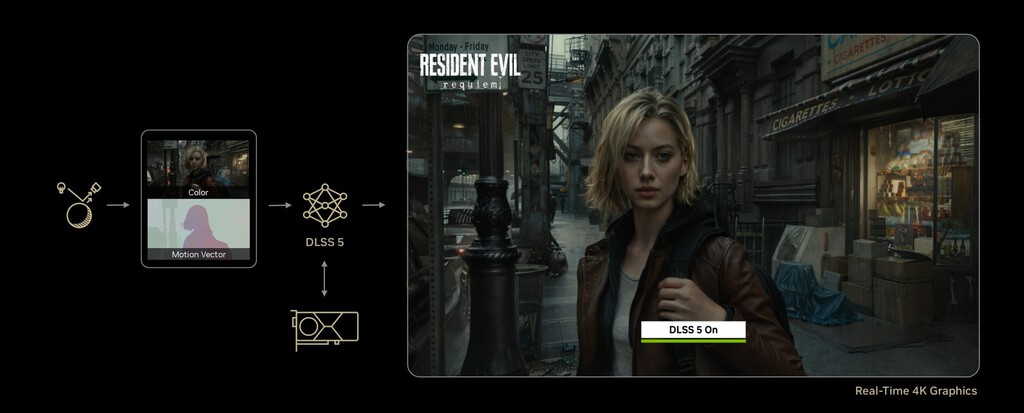
This means the technology doesn't just improve performance—it actively contributes to the visual fidelity by simulating how light interacts with different surfaces. The result is a more immersive and lifelike gaming experience.

Key Features of DLSS 5
- Neural rendering: Adds photorealistic lighting and materials to scenes in real time.
- Semantic understanding: AI model interprets scene elements like hair, fabric, and light scattering.
- Frame analysis: Uses color and motion vectors from the game to apply enhancements accurately.
- Beyond upscaling: Goes beyond traditional upscaling to improve overall image quality.
Why DLSS 5 Matters for Gamers
For PC gamers, DLSS 5 could mean significantly more realistic visuals without sacrificing performance. The neural rendering model works in real time, so it can adapt to dynamic scenes and deliver consistent quality. This is particularly important for fast-paced games where every frame counts.
Moreover, as games become more demanding, technologies like DLSS 5 help extend the lifespan of existing hardware. By offloading complex rendering tasks to AI, gamers can enjoy higher fidelity without needing to upgrade their GPUs as frequently.
DLSS 5 vs. Previous Versions
To understand the leap DLSS 5 represents, it's helpful to compare it with earlier iterations. The table below summarizes the key differences. The background to this story is set out in Nvidia DLSS 5 Sparks Backlash Over AI Beauty Filter Look. A related thread runs through NVIDIA DLSS 5 Backlash: Jensen Huang Says Critics Are Wrong. Earlier coverage in DLSS 5 Release Date Set: Nvidia's Neural Rendering Leap shows how the argument developed.
| Feature | DLSS 4 and earlier | DLSS 5 |
|---|---|---|
| Primary focus | Upscaling and performance | Neural rendering with photorealistic lighting |
| Technology | Image upscaling using AI | Real-time neural rendering model |
| Scene understanding | Limited | Semantic interpretation of elements (hair, fabric, light) |
| Visual impact | Improved clarity and frame rates | Added realism through lighting and materials |
What This Means for the Future of PC Gaming
DLSS 5 signals a shift toward AI-driven rendering as a core part of game development. As developers integrate this technology, we can expect games to look more realistic and run more smoothly on a wider range of hardware. This could democratize high-fidelity gaming, making it accessible to more players. A closer look at the same subject appears in OpenAI's Astra Model Ushers in New Era of Artificial General. Anyone following the wider picture can start with 2026 Gaming PC Deals: Why This PcCom Ready Still Offers Great Value. The same theme surfaces in Xbox Project Helix: Next-Gen Console, Not a Gaming PC, which takes a different angle.
However, adoption will depend on game developers implementing DLSS 5 support. NVIDIA's track record with DLSS suggests strong industry backing, but it will take time for the technology to become ubiquitous. Context on how this played out before sits in Coolmod Black Friday Deal: Gaming PC and Monitor Combo at €1,099.95. A companion piece, Gaming: latest articles, approaches the same subject from another angle.
FAQ
What is neural rendering in DLSS 5?
Neural rendering is an AI-driven technique that generates or enhances images by simulating how light interacts with objects. In DLSS 5, it adds photorealistic lighting and materials to game scenes in real time.
Will DLSS 5 improve performance or just visuals?
DLSS 5 focuses on enhancing visual fidelity through neural rendering, but it also maintains the performance benefits of previous DLSS versions by using AI to handle complex rendering tasks efficiently.
When will DLSS 5 be available?
NVIDIA announced DLSS 5 at GTC 2026 but has not yet announced a release date. It will likely roll out in future game titles and driver updates.
Do I need a new GPU to use DLSS 5?
DLSS 5 will likely require RTX-capable GPUs, as it builds on tensor cores. Specific hardware requirements have not been detailed, but it will probably work on RTX 30-series and newer cards.
Browse the Shop
 Acacia frida deluxe solid wood bed frame |
Bedroom bench |
Bed chest drawers |
Lingerie dresser |
Frame base |
Mirror with jewelry storage |
30 Bathroom Vanity |
Memory foam queen mattress |
Mattresses for back pain |
Nightstand set of 2 |
Grand Goldman Shop |
Civil Lawyer
Deutschland Trikot WM 2026







