

NASA and IBM have developed a new artificial intelligence model to find lunar ice and craters, aiming to better understand the Moon before astronauts return. The NASA-IBM Lunar Foundation Model, trained primarily on data from the Lunar Reconnaissance Orbiter (LRO), is designed to accelerate lunar science and support future exploration.
Why NASA Needs AI to Process Lunar Data
For 17 years, the Lunar Reconnaissance Orbiter has photographed and measured the Moon, building one of the most detailed archives of its surface. NASA says the mission has generated more data than all its other planetary missions combined, with coverage that allows much of the lunar terrain to be observed at high resolution.
Find Original, High-end Home Decor that spark conversation at Grand Goldman Shop.
The challenge is no longer just collecting information but processing it quickly enough to extract useful patterns. That task is becoming more important as the agency prepares for the return of astronauts to the lunar surface.
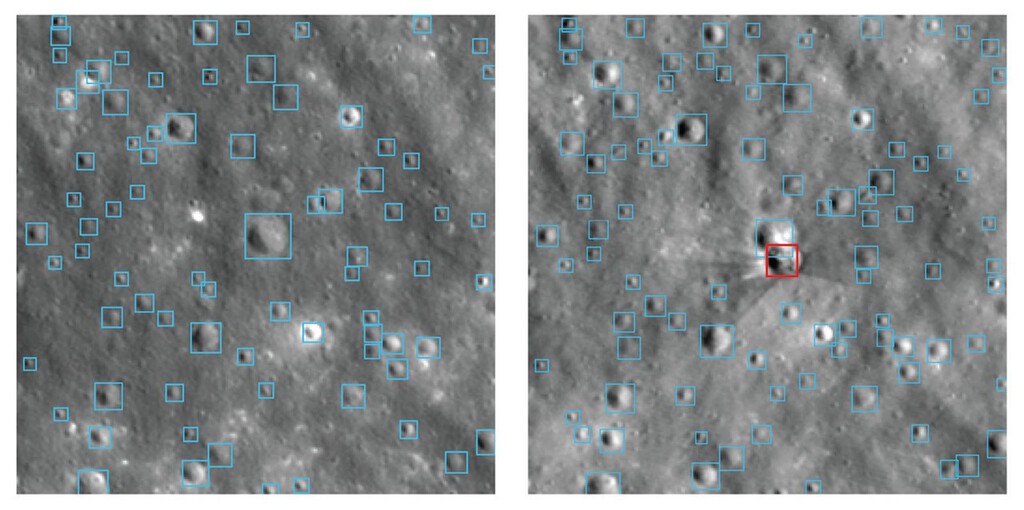
What Is the NASA-IBM Lunar Foundation Model?
To get more out of that material, NASA and IBM, along with several academic institutions, have developed the NASA-IBM Lunar Foundation Model. It is an AI model specialized in lunar science and trained mainly on observations from the Lunar Reconnaissance Orbiter.
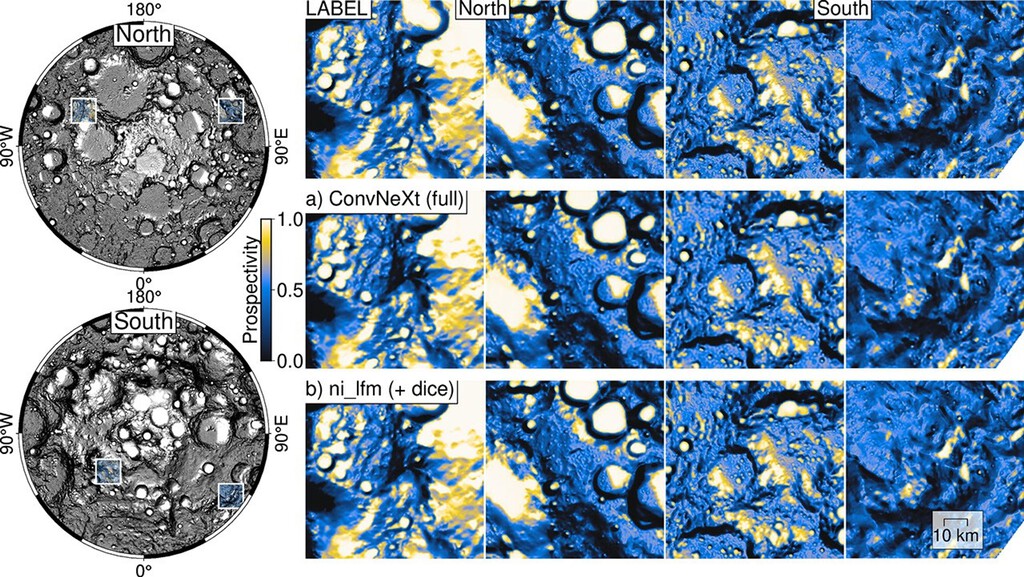
The tool has been released as open source and can be adapted to specific tasks, from mapping craters to studying polar regions or certain volcanic structures. The idea is not to replace scientific analysis but to speed up part of the work that, with traditional models, requires developing and training specialized systems for each task.
How the Model Works and What It Can Do
The key lies in how it was trained. A foundation model first learns general patterns from large amounts of data and can then be fine-tuned for specific applications. In this case, the model has learned from LRO's vast dataset, enabling it to recognize features and patterns across the lunar surface.
This approach allows scientists to adapt the model to various tasks without building a new AI from scratch each time. For example, it could help identify safe landing sites, map resources like ice, or study geological features in detail.
- Faster analysis: The model can process large volumes of lunar data quickly, freeing scientists to focus on interpretation.
- Adaptability: It can be fine-tuned for tasks such as crater detection, polar region studies, or volcanic structure analysis.
- Open source: The model is publicly available, encouraging collaboration and further innovation.
- Support for Artemis: The tool aids NASA's efforts to return astronauts to the Moon sustainably.
- Resource identification: It helps locate lunar ice and other resources crucial for long-term exploration.
What This Means for Future Moon Missions
Finding lunar ice is a priority for NASA because water ice can provide drinking water, oxygen, and rocket fuel. The new AI model could accelerate the identification of ice deposits, particularly in permanently shadowed regions near the poles.
Additionally, the model's ability to map craters and other features will help planners select landing sites and design safer missions. As NASA works toward a sustainable lunar presence, tools like this will be essential for making sense of the enormous amounts of data collected by orbiters. The background to this story is set out in NASA Sends Three Fully Autonomous Robots to the Moon. A related thread runs through NASA Starliner: Astronauts Stranded 9 Months, NASA Still Trusts Boeing. Earlier coverage in NASA Creates Emeritus Astronaut Title as Retirements Rise shows how the argument developed.
Challenges and Limitations
While the model represents a significant advance, it is not a substitute for human expertise. Scientists will still need to validate the AI's findings and interpret the results in context. Moreover, the model's performance depends on the quality and coverage of the training data. A closer look at the same subject appears in Ex-NASA Astronauts Launch Voting Campaign to Restore Democracy. Anyone following the wider picture can start with Spacecraft Rescue Mission for NASA Telescope Fails. The same theme surfaces in IBM's Open AI Model Delivers 90% Performance at 10% Cost, which takes a different angle.
Nevertheless, the open-source release invites the broader research community to test and improve the model, potentially leading to new discoveries and applications. Context on how this played out before sits in Science: latest articles. A companion piece, NASA's Lunar South Pole Landing Plan Draws Astronaut Pushback, approaches the same subject from another angle.
FAQ
What is the NASA-IBM Lunar Foundation Model?
It is an open-source AI model specialized in lunar science, trained primarily on data from the Lunar Reconnaissance Orbiter. It can be adapted to various tasks such as mapping craters and studying polar regions.
How does the model help find lunar ice?
The model can analyze large volumes of lunar data to identify patterns and features associated with ice deposits, particularly in permanently shadowed regions near the poles. This speeds up the search for resources that could support future missions.
Is the model available to the public?
Yes, the model has been released as open source, allowing researchers and developers to use and adapt it for their own lunar science projects.
Will this AI replace human scientists?
No, the model is designed to accelerate analysis, not replace human expertise. Scientists will still need to interpret and validate the AI's findings.
Browse the Shop
 Acacia frida deluxe solid wood bed frame |
Bedroom bench |
Bed chest drawers |
Lingerie dresser |
Frame base |
Mirror with jewelry storage |
30 Bathroom Vanity |
Memory foam queen mattress |
Mattresses for back pain |
Nightstand set of 2 |
Grand Goldman Shop |
Civil Lawyer
Deutschland Trikot WM 2026







