

A new Mars route via asteroid 2001 CA21 could cut round-trip travel time to just 153 days, according to a study from Rio de Janeiro State University. This finding challenges decades of planning that relied solely on Earth's orbital plane for Mars missions.
Currently, a one-way trip to Mars can take up to 8.5 months, posing significant challenges for human health and mission logistics. The proposed shortcut leverages the orbital path of asteroid 2001 CA21, which crosses both Earth's and Mars's orbits, to dramatically reduce travel duration.
Find Original Home Decor sparking conversation at Grand Goldman Shop.

Why Mars Travel Is So Challenging
Traveling to Mars is not for the faint of heart. Even uncrewed missions face numerous hurdles, but the most pressing issue is the sheer duration of the journey. With current technology, a one-way trip can stretch to 8.5 months, exposing astronauts to prolonged radiation and psychological stress.
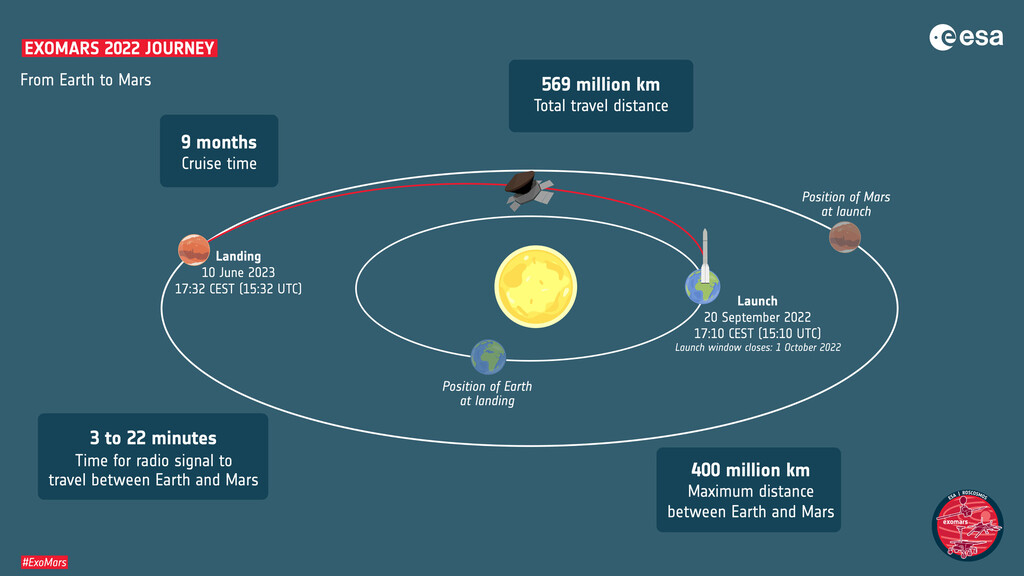
These extended missions require massive supplies of food, water, and oxygen, and the long confinement can lead to muscle atrophy and mental health issues. Reducing travel time is therefore critical for the feasibility of human missions to Mars.
The Asteroid Shortcut: How It Works
The key to this new route lies in the orbits of near-Earth asteroids. The research team, led by scientists at Rio de Janeiro State University, studied asteroids whose orbits intersect both Earth's and Mars's paths. Among them, asteroid 2001 CA21 stood out as a promising candidate for a trajectory shortcut.
Traditionally, mission planners design trajectories based on Earth's orbital plane. However, by incorporating the orbital plane of 2001 CA21, the team discovered new paths that were previously hidden. One such path, according to the study, could reduce the round-trip time to Mars to just 153 days.
What This Means for Future Mars Missions
This discovery could revolutionize mission planning by providing a faster and potentially more fuel-efficient route to Mars. Shorter travel times would reduce astronauts' exposure to cosmic radiation and lessen the logistical burden of carrying supplies. Context on how this played out before sits in New Mars Route via Asteroid 2001 CA21 Cuts Trip to 153 Days.
Moreover, the approach could be applied to other asteroids with favorable orbits, opening up a network of shortcuts for interplanetary travel. However, the study does not propose using the asteroid as a vehicle; rather, it uses the asteroid's orbital characteristics to inform trajectory design. The background to this story is set out in Olivier Mourgue: How His Djinn Chairs Shaped 2001's Future. A related thread runs through Hantavirus Outbreak on Cruise Ship: Lessons for Space Exploration.
- Round-trip time to Mars could be cut to 153 days, down from over 500 days.
- The shortcut uses the orbital plane of asteroid 2001 CA21.
- Shorter missions reduce radiation exposure and supply needs.
- The method could be adapted for other asteroids and destinations.
- Implementation would require advanced trajectory optimization and propulsion.
Comparing Traditional and Asteroid-Assisted Trajectories
| Trajectory Type | Round-Trip Time (days) | Key Advantage | Key Challenge |
|---|---|---|---|
| Traditional (Earth orbital plane) | ~500 | Well-understood | Long duration, high radiation |
| Asteroid-assisted (2001 CA21) | 153 | Significantly shorter | Requires precise timing and new planning |
Challenges and Next Steps
While the prospect of a 153-day round trip is exciting, several challenges remain. The trajectory would require precise launch windows and may demand advanced propulsion systems to match the asteroid's orbital parameters. Earlier coverage in Arts and Humanities Essential for Understanding Space Exploration shows how the argument developed. A closer look at the same subject appears in Arts and Humanities Play Key Role in Space Exploration.
Additionally, the study is theoretical and has not yet been tested in real mission scenarios. Further research is needed to assess feasibility, including fuel requirements and spacecraft capabilities. The team suggests that future missions could incorporate such asteroid-assisted trajectories to reduce travel time and risk. Anyone following the wider picture can start with Science: latest articles. The same theme surfaces in NASA's Psyche Spacecraft Makes Close Mars Flyby Today, which takes a different angle.
FAQ
What is asteroid 2001 CA21?
2001 CA21 is a near-Earth asteroid whose orbit crosses both Earth's and Mars's orbits. Its unique path offers a potential shortcut for Mars missions.
How does this shortcut reduce travel time?
By using the asteroid's orbital plane instead of Earth's, mission planners can design trajectories that take advantage of gravitational assists and shorter paths, cutting round-trip time to 153 days.
Can we use the asteroid as a spacecraft?
No, the study does not propose using the asteroid as a vehicle. It only uses the asteroid's orbital characteristics to inform trajectory design.
When could this be implemented?
The research is still theoretical. Implementation would require further studies, advanced propulsion, and precise timing, likely years or decades away.
Browse the Shop
 Acacia frida deluxe solid wood bed frame |
Bedroom bench |
Bed chest drawers |
Lingerie dresser |
Frame base |
Mirror with jewelry storage |
30 Bathroom Vanity |
Memory foam queen mattress |
Mattresses for back pain |
Nightstand set of 2 |
Grand Goldman Shop |
Civil Lawyer
Deutschland Trikot WM 2026







