

SpaceX and Blue Origin are obsessed with building ever-larger rockets, but a new report suggests this pursuit may be a costly mistake. The aerospace industry has long operated on the assumption that bigger is better when it comes to launch vehicles, but that logic may have limits.
The Current State of Mega-Rockets
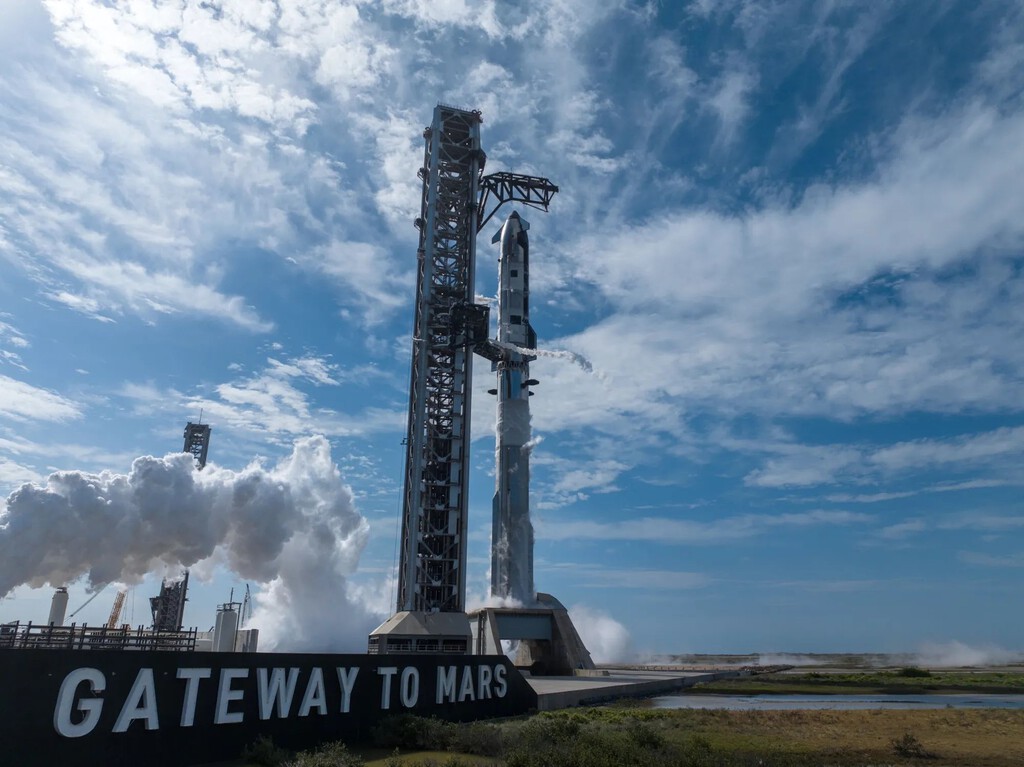
Currently, the largest rocket in the world is SpaceX's Starship, which, when combined with its Super Heavy booster, stands 121 meters tall. However, Starship has yet to complete its testing phases. The tallest operational rocket is NASA's Space Launch System (SLS), which stands 98 meters tall and has been used to power the Artemis missions.
Find Original Home Decor sparking conversation at Grand Goldman Shop.

Despite these achievements, many companies—both public and private—are pushing to build even larger rockets. The goal is to increase payload capacity and reduce the cost per kilogram to orbit. But according to a report published on June 29 by The Aerospace Corp., there may be a point at which larger rockets become too expensive to be profitable.
The Report's Findings: A Fuzzy Limit
The report acknowledges that, in principle, larger and heavier rockets can be more economical because they maximize the payload that can be carried to orbit for a given price. However, beyond a certain size, these savings are offset by manufacturing and operational costs. Even the use of reusable rockets, such as those developed by SpaceX, does not eliminate these operational costs.
The report does not specify an exact size threshold, but it explains that once a rocket exceeds a certain size, the cost per launch begins to rise rather than fall. This is due to factors such as increased complexity, the need for specialized infrastructure, and higher fuel consumption.
Why Bigger Isn't Always Better
The aerospace industry has seen a trend toward larger rockets because they offer economies of scale. A larger rocket can carry more satellites or cargo in a single launch, reducing the number of launches needed and thus the overall cost. However, this only holds true up to a point.
As rockets grow, the engineering challenges become more daunting. Structural integrity, thermal protection, and guidance systems all become more complex and expensive. Moreover, the infrastructure required to support these behemoths—such as larger launch pads and transport vehicles—adds to the cost.
Operational costs also scale with size. Fuel, maintenance, and recovery operations for reusable rockets all increase. The report suggests that these costs can outweigh the benefits of increased payload capacity.
The Reusability Factor
Reusability is often touted as a solution to high launch costs. SpaceX has demonstrated that reusable rockets can significantly reduce the cost of access to space. However, the report notes that reusability does not eliminate operational costs. Even reusable rockets require refurbishment, fuel, and ground operations, all of which scale with size. The longer history behind the story is traced in Blue Origin Northstar Engine: More Powerful and 75% Cheaper.
Furthermore, the development costs for mega-rockets are astronomical. SpaceX has invested heavily in Starship, and Blue Origin is doing the same with New Glenn. These investments must be recouped through launch contracts, but if the rockets are too large and costly to operate, the return on investment may never materialize. The background to this story is set out in China Recovers Rocket First Stage Like SpaceX and Blue Origin. A related thread runs through SpaceX Starship Reaches Orbit for the First Time Ever. Earlier coverage in SpaceX to Attempt Full Starship Recovery and Reuse shows how the argument developed.
What This Means for the Industry
The report's findings have significant implications for the space industry. Companies like SpaceX and Blue Origin may need to reconsider their strategies and focus on optimizing the size of their rockets rather than maximizing it. NASA and other government agencies may also need to reassess their launch vehicle requirements. A closer look at the same subject appears in Blue Origin New Glenn Rocket Grounded After Launch Failure. Anyone following the wider picture can start with SpaceX Louisiana Launch Site Sparks Environmental Backlash. The same theme surfaces in Life Insurance Certificates in Inheritance: A Costly Mistake, which takes a different angle.
Smaller, more efficient rockets could offer better value for money, especially for missions that do not require massive payload capacities. The rise of small satellite constellations and ride-share missions is already driving demand for smaller launch vehicles. Context on how this played out before sits in Morrison-era GST Deal: A Costly Mistake for Australia. A companion piece, SpaceX Rocket Crashes into Moon: What It Means for Space Debris, approaches the same subject from another angle.
Key Takeaways
- SpaceX's Starship is the largest rocket at 121 meters, but it is still in testing.
- A report by The Aerospace Corp. warns that beyond a certain size, rockets become too expensive to be profitable.
- Reusability does not eliminate operational costs, which scale with rocket size.
- The industry may need to shift focus from maximum size to optimal size for cost-effectiveness.
- Smaller rockets and ride-share missions could provide better value for many payloads.
Comparison of Major Rockets
| Rocket | Height (meters) | Status | Reusable |
|---|---|---|---|
| Starship (with Super Heavy) | 121 | In testing | Yes (planned) |
| Space Launch System (SLS) | 98 | Operational | No |
| Falcon 9 | 70 | Operational | Yes |
| New Glenn | 98 | In development | Yes (planned) |
FAQ
What is the largest rocket currently in operation?
The Space Launch System (SLS) is the tallest operational rocket at 98 meters. SpaceX's Starship is taller at 121 meters but is still in testing.
Why might larger rockets be less cost-effective?
Beyond a certain size, manufacturing and operational costs increase faster than payload capacity, offsetting economies of scale. Reusability helps but does not eliminate these costs.
Does reusability solve the cost problem for mega-rockets?
No. While reusability reduces some costs, operational expenses such as fuel, maintenance, and refurbishment still scale with rocket size, potentially making mega-rockets uneconomical.
What should companies focus on instead of building bigger rockets?
Companies should focus on optimizing rocket size for cost-effectiveness and consider smaller, more efficient vehicles for specific missions, especially with the rise of small satellite constellations.
Browse the Shop
 Acacia frida deluxe solid wood bed frame |
Bedroom bench |
Bed chest drawers |
Lingerie dresser |
Frame base |
Mirror with jewelry storage |
30 Bathroom Vanity |
Memory foam queen mattress |
Mattresses for back pain |
Nightstand set of 2 |
Grand Goldman Shop |
Civil Lawyer
Deutschland Trikot WM 2026







