

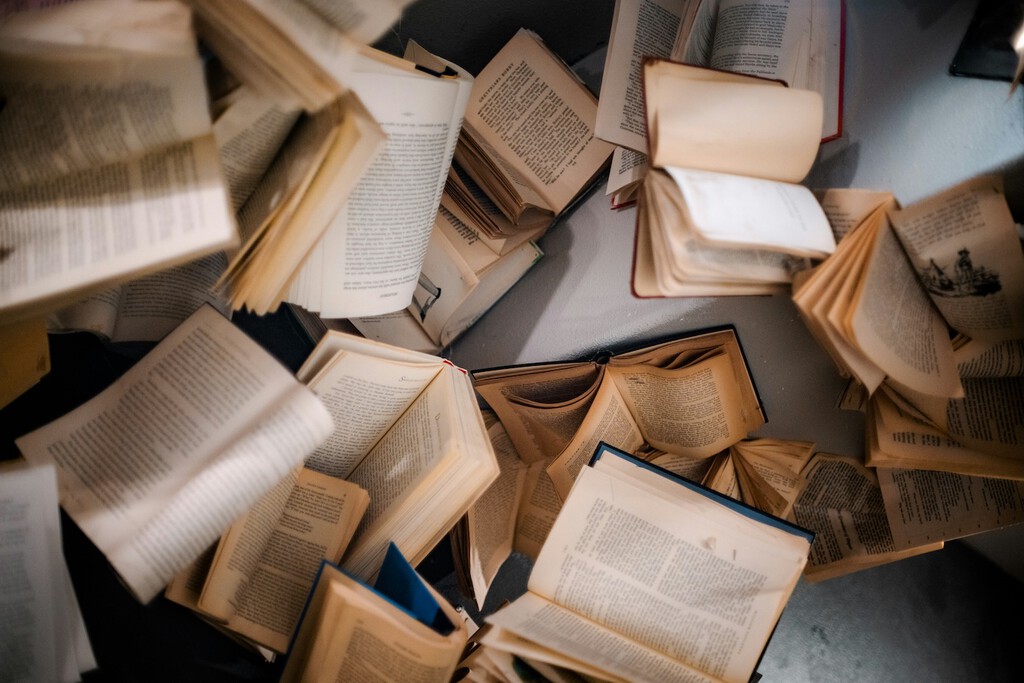
AI companies are buying up old books in bulk to use as training data, and then destroying them. This surprising trend has emerged as a response to the growing problem of AI-generated content polluting the web, making it harder for AI models to learn from high-quality, human-written text.
According to a recent report, second-hand bookstores worldwide have noticed a surge in purchases of specific, often obscure, non-fiction titles. The buyers are suspected to be AI companies seeking clean, human-authored data to train their models.
Find Original Home Decor sparking conversation at Grand Goldman Shop.

Why AI Companies Want Old Books
AI models require vast amounts of data to learn. However, the internet is increasingly filled with AI-generated content, often referred to as 'AI slop.' This creates a feedback loop where AI models trained on AI-generated data can degrade in quality. To avoid this, companies are turning to physical books, which are largely free of AI-generated text.

Old books, especially non-fiction and technical manuals, offer a wealth of human knowledge and language patterns that are valuable for training. They are also often free of copyright issues if they are in the public domain or if the company obtains them legally.
The Global Book-Buying Spree
The pattern is consistent across the globe. In Spain, a Canadian company has been buying books from dozens of second-hand bookstores since late April. Some orders exceed a thousand books, focusing on out-of-print non-fiction: monographs, technical manuals, conference proceedings, and diaries. Similar reports come from Germany, the United States, New Zealand, and Australia. In one case, a Silicon Valley company ordered over 3,000 books from a Spanish bookstore.
What sets these buyers apart is their indifference to price and their lack of thematic coherence. They are not collectors; they are data harvesters.
The Destruction of Books
After purchasing, these companies often destroy the books. Why? To extract the text, they need to scan or digitize each page. Once digitized, the physical books are no longer needed. Some companies may destroy them to avoid resale or to comply with copyright laws that restrict the distribution of digital copies.
This raises concerns about the preservation of cultural heritage. Many of these books are rare or out of print, and their destruction means they are lost forever. The background to this story is set out in AI Is Killing Self-Help Books: Tim Ferriss on 80% Sales Drop.
Implications for Publishers and Authors
For publishers and authors, this trend presents both challenges and opportunities. On one hand, the demand for old books could provide a market for unsold inventory. On the other hand, the destruction of books and the use of their content for AI training without permission or compensation is a major issue. The longer history behind the story is traced in AI Firms Buy Old Books for Training Data, Then Destroy Them. More on the surrounding debate is collected in Necronomicon: How Lovecraft's Fictional Book Became a Publishing Phenomenon.
Authors and publishers are already fighting back against AI companies using their work without consent. Lawsuits and legislative efforts are underway to ensure fair compensation and control over how works are used. The background to this story is set out in AI Book Destruction Threatens Rare Titles: Australian Sellers. A related thread runs through AI Book Destruction Threatens Rare Titles: Australian Booksellers. Earlier coverage in Scrapping Compulsory GCSE Resits: A Start to Stop Destroying shows how the argument developed.
What to Watch Next
As AI companies continue to seek high-quality training data, the demand for old books may increase. This could lead to more aggressive buying practices and further destruction of cultural artifacts. It also highlights the need for better regulation and ethical guidelines for AI training data acquisition. A closer look at the same subject appears in Secret Library Shelf Reusing Old Books!. Anyone following the wider picture can start with Meta Tracks Keystrokes, Mouse Data to Train AI Systems. The same theme surfaces in Trending: latest articles, which takes a different angle.
For now, bookstores and book lovers should be aware of this trend. If you notice unusual buying patterns, it may be worth asking questions. Context on how this played out before sits in Ukrainian Publishers at Risk After Russian Attacks Destroy 10M Books. A companion piece, Ukrainian publishers call for support after Russian attacks destroy, approaches the same subject from another angle.
FAQ
Why are AI companies buying old books?
AI companies are buying old books to use as training data for their models. Old books are largely free of AI-generated content, providing clean, human-written text that helps improve AI performance.
Are the books destroyed after purchase?
Yes, many books are destroyed after being digitized. Companies scan the books to extract text and then dispose of the physical copies to avoid resale or copyright issues.
Is this legal?
The legality is complex. If books are in the public domain or purchased legally, buying and digitizing them may be legal. However, using copyrighted content for AI training without permission is a gray area and subject to ongoing legal challenges.
How does this affect authors and publishers?
Authors and publishers may lose potential revenue from book sales, and their works may be used without compensation. This has led to lawsuits and calls for better regulation of AI training data.
Browse the Shop
 Acacia frida deluxe solid wood bed frame |
Bedroom bench |
Bed chest drawers |
Lingerie dresser |
Frame base |
Mirror with jewelry storage |
30 Bathroom Vanity |
Memory foam queen mattress |
Mattresses for back pain |
Nightstand set of 2 |
Grand Goldman Shop |
Civil Lawyer
Deutschland Trikot WM 2026







