

Archaeologists have unearthed a 1,800-year-old bronze phallus at a Roman bathhouse site beneath a cricket club in Cumbria, England. The three-centimeter figurine, remarkably well-preserved, offers a tangible link to the everyday superstitions of Roman soldiers and citizens stationed near Hadrian's Wall.
The find, recently highlighted by photographer Pete Savin on X, has sparked curiosity about why such objects were commonplace in antiquity. It turns out that in Roman culture, the phallus was far more than a symbol of fertility—it was a powerful amulet believed to ward off evil and bring good luck.
Find Original Home Decor sparking conversation at Grand Goldman Shop.

Discovery at the Carlisle Cricket Club
The artifact was recovered from the site of the Carlisle Cricket Club, a sprawling sports complex on the outskirts of Carlisle. Nearly two millennia ago, this same ground, beside the River Eden, hosted a Roman bathhouse where soldiers and civilians gathered to socialize and relax.
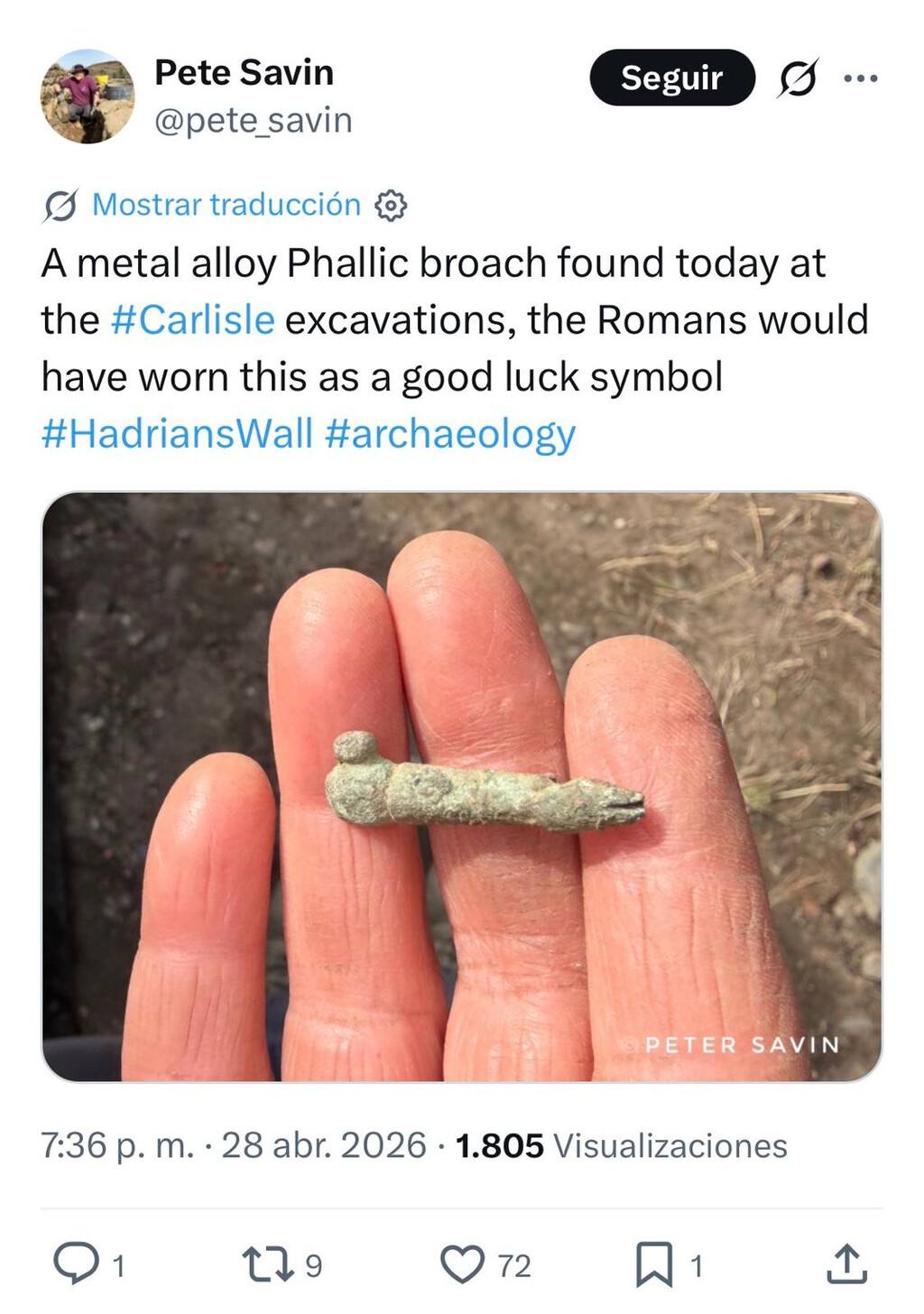
Archaeologists have been excavating the area for years, uncovering ceramics, column fragments, and carved stone heads. The bronze phallus, however, stands out for its surprisingly detailed anatomy and excellent condition. Its discovery was not immediate; researchers had been sifting through the site for some time before the figurine came to light.
Why Romans Carried Phallic Charms
In the Roman world, the phallus was a ubiquitous symbol of protection. It was believed to deflect the evil eye and misfortune, and was often worn as a pendant or kept in pockets. Such charms were especially popular among soldiers, who faced danger daily.
The tiny bronze phallus found in Cumbria would have been a personal talisman, likely carried by someone seeking safety or good fortune. Its small size made it easy to keep close at hand, and its detailed craftsmanship suggests it was a valued possession.
Common Uses of Phallic Amulets
- Protection from the evil eye: Romans believed the phallus could deflect curses and jealousy.
- Military talismans: Soldiers often carried phallic charms for courage and safety in battle.
- Fertility and prosperity: The symbol was also associated with good harvests and personal wealth.
- Everyday wear: Phallic pendants were worn by children and adults alike.
- Public art: Phallic carvings adorned buildings, streets, and even bread ovens for protection.
Roman Baths: More Than Just Hygiene
The bathhouse at Carlisle was more than a place to wash; it was a social hub. Romans visited the baths to exercise, discuss business, and relax. The presence of such a personal amulet at the site underscores the blend of daily life and superstition in Roman Britain.
Excavations have revealed the baths were part of a larger complex, possibly associated with a fort or civilian settlement. The phallus adds a personal touch to the archaeological record, hinting at the individual beliefs of those who lived there.
What the Phallus Reveals About Roman Britain
This small bronze object is a reminder that Roman soldiers and citizens brought their customs and beliefs with them to the far reaches of the empire. Even in remote Cumbria, they held onto protective rituals and symbols.
The find also highlights the importance of continued excavation at sites like the Carlisle Cricket Club. As researchers dig deeper, they uncover not just grand architecture but the intimate details of everyday life. The background to this story is set out in Archaeologists Unearth 1,800-Year-Old Roman Coin Hoard in France. A related thread runs through Ancient Rome to China: The 2,000-Year-Old Trade Map That United Empires.
Preservation and Future Research
The phallus is now being studied by archaeologists, who hope to learn more about its origins and use. Its excellent preservation is due to the anaerobic conditions of the soil, which prevented corrosion. Earlier coverage in Roman Concrete Durability: New Secret from Hadrian's Toilet shows how the argument developed. A closer look at the same subject appears in Rome Turns Ancient Catacombs Into Climate Shelters Amid Heat Waves.
Future analyses may reveal trace elements or wear patterns that could indicate how it was carried or worn. Such details can help piece together the story of its owner and the community that used the bathhouse. Anyone following the wider picture can start with Agrippa by Robert Harris Review: Ancient Rome's Power Duo. The same theme surfaces in Agrippa by Robert Harris: A Riveting Review of Ancient Rome's Rivalry, which takes a different angle.
FAQ
What is the bronze phallus found in Cumbria?
It is a small, 1,800-year-old Roman figurine of a phallus, likely used as a good luck charm or amulet. It was discovered at the site of a Roman bathhouse beneath the Carlisle Cricket Club.
Why did Romans carry phallic symbols?
Romans believed the phallus warded off evil and brought good fortune. It was a common protective symbol, especially among soldiers, and was often worn as a pendant or kept in pockets.
How was the phallus preserved for so long?
The bronze object was buried in anaerobic soil, which slowed corrosion. Its small size and the stable conditions of the site contributed to its remarkable preservation.
Where was the phallus found?
It was unearthed at the Carlisle Cricket Club in Cumbria, England, which sits atop the remains of a Roman bathhouse near Hadrian's Wall.
Browse the Shop
 Acacia frida deluxe solid wood bed frame |
Bedroom bench |
Bed chest drawers |
Lingerie dresser |
Frame base |
Mirror with jewelry storage |
30 Bathroom Vanity |
Memory foam queen mattress |
Mattresses for back pain |
Nightstand set of 2 |
Grand Goldman Shop |
Civil Lawyer
Deutschland Trikot WM 2026







