

Thousands of cigarette filters are crossing into Russia without Ukraine being able to stop them, and their ultimate destination is missile production. This is the uncomfortable finding of a Ukrainian investigation that reveals how a seemingly harmless chemical—cellulose acetate—travels through legal commercial channels to become a key ingredient in Russian weapons.
The investigation exposes a chain that links European industry to the Russian military. It is not about sophisticated components or banned technology, but about a dual-use material that is difficult to control and easy to hide within global trade.
Find Original Home Decor sparking conversation at Grand Goldman Shop.

What Is Cellulose Acetate and Why Does It Matter?
Cellulose acetate is a derivative of cellulose, produced in millions of tons annually worldwide. It is best known for its use in cigarette filters, but it is also essential in the manufacture of propellants and rocket fuels.
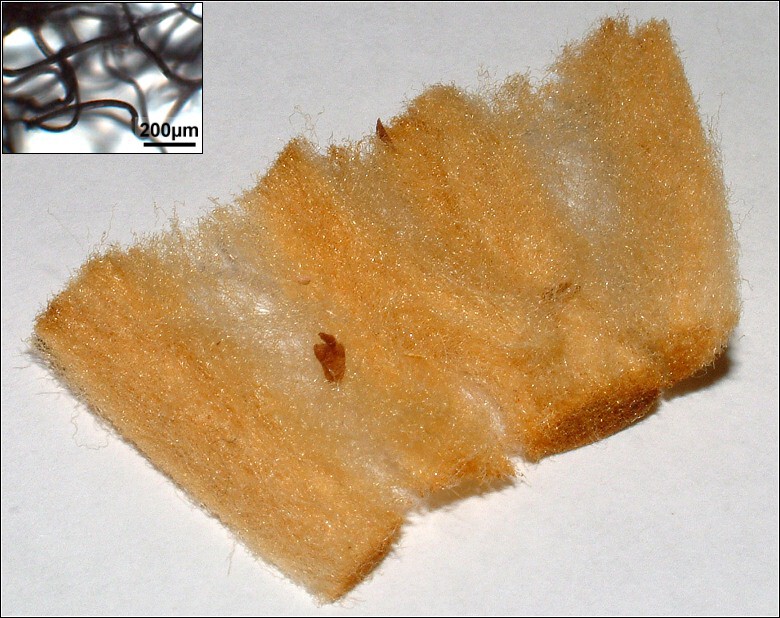
This dual-use nature makes it a critical resource for Russia's military. According to the investigation, Russia lacks the capacity to produce cellulose acetate at the scale and quality needed, forcing it to rely on imports even during wartime.
The Technical Gap
Russia's inability to produce high-quality cellulose acetate domestically is a significant vulnerability. The material requires precise manufacturing processes, and without it, Russia's missile production could be severely hampered.
However, the global supply chain provides a workaround. Cellulose acetate is traded legally for civilian purposes, and once it enters Russia, its end use is difficult to monitor.
How the Supply Chain Works
The investigation traces the path of cellulose acetate from European producers to Russian end-users. The material is often shipped through intermediaries and front companies, making it hard to track.
Because cellulose acetate is not subject to the same export controls as military-grade materials, it can be exported under the guise of civilian use. Once inside Russia, it is diverted to military applications.
- Dual-use material: Cellulose acetate is used in cigarette filters and rocket propellants.
- Russian dependency: Russia cannot produce enough high-quality cellulose acetate domestically.
- Legal loopholes: The material is not heavily restricted, allowing it to flow through commercial channels.
- Opaque intermediaries: Front companies and middlemen obscure the final destination.
- Impact on the battlefield: The material ends up in missiles used against Ukrainian cities.
Why This Matters for Global Security
The case highlights a broader problem: the difficulty of controlling dual-use materials in global trade. Even with sanctions in place, civilian goods can be diverted to military use.
It also underscores the challenges Ukraine faces in stopping these flows. Despite efforts to intercept shipments, the volume and complexity of trade make it nearly impossible to halt every transaction.
The European Connection
European producers are not necessarily complicit, but their products are being used in ways they may not intend. The investigation suggests that stronger due diligence and export controls are needed.
Without coordinated action, the loopholes will persist, and cellulose acetate will continue to fuel Russia's war machine.
Comparison of Export Control Regimes
| Material | Civilian Use | Military Use | Export Controls |
|---|---|---|---|
| Cellulose Acetate | Cigarette filters, textiles | Rocket propellants | Limited |
| Advanced Electronics | Consumer devices | Guidance systems | Strict |
| Specialty Alloys | Industrial tools | Armor, missiles | Moderate |
The table illustrates the disparity: cellulose acetate is not as tightly controlled as other military-relevant materials, making it an attractive loophole. Context on how this played out before sits in Cigarette Filters to Missiles: Russia's Acetate Supply Chain.
What to Watch Next
Ukraine and its allies are likely to push for tighter controls on cellulose acetate and other dual-use chemicals. The investigation may prompt the EU to review its export policies. The background to this story is set out in Trending: latest articles. A related thread runs through Ukraine Opens Russian S-71K Missile and Finds Foreign Parts.
Meanwhile, Russia will continue to seek ways to procure the material. The cat-and-mouse game is far from over. Earlier coverage in Ukraine Finds Western Chips in Russian Kh-101 Missiles shows how the argument developed. A closer look at the same subject appears in Russia's Cheap Missiles Overwhelm Ukraine's Scarce Interceptors.
For businesses, the case is a reminder that even innocuous products can have serious consequences. Due diligence is essential to ensure that civilian goods do not end up in the wrong hands. Anyone following the wider picture can start with Kerch Bridge Strike: Ukraine Cripples Russia-Crimea Link. The same theme surfaces in Ukraine Missile Strike Critically Damages Kerch Bridge in Crimea, which takes a different angle.
FAQ
What is cellulose acetate used for?
Cellulose acetate is primarily used in cigarette filters, textiles, and photographic film. It is also a key ingredient in rocket propellants and other military applications.
Why can't Russia produce its own cellulose acetate?
Russia lacks the technical capacity and quality standards to produce cellulose acetate at the scale needed for both civilian and military uses. It relies on imports to meet demand.
How does cellulose acetate reach Russia despite sanctions?
Because cellulose acetate is a dual-use material with legitimate civilian applications, it is not subject to strict export controls. It can be shipped through intermediaries and front companies, making it difficult to trace.
What can be done to stop this trade?
Stronger export controls, increased transparency, and due diligence by producers and governments are needed. International coordination is essential to close the loopholes.
Browse the Shop
 Acacia frida deluxe solid wood bed frame |
Bedroom bench |
Bed chest drawers |
Lingerie dresser |
Frame base |
Mirror with jewelry storage |
30 Bathroom Vanity |
Memory foam queen mattress |
Mattresses for back pain |
Nightstand set of 2 |
Grand Goldman Shop |
Civil Lawyer
Deutschland Trikot WM 2026







