

The Iran war has disrupted the global fertilizer trade, and that is terrible news for your grocery basket. The conflict has blocked or severely restricted maritime traffic through the Strait of Hormuz, a chokepoint for nitrogen fertilizers like urea. According to the UN, before the war, one-third of global maritime fertilizer traffic passed through this strait. Any disruption to fertilizer supplies can cascade into lower crop yields and higher food prices.
Why the Strait of Hormuz Matters for Fertilizers
The Strait of Hormuz is not just a critical oil passage; it is also a strategic artery for nitrogen fertilizers. The Persian Gulf region is a major producer of urea, a key nitrogen fertilizer. The International Food Policy Research Institute (IFPRI) and other analysts have warned that the conflict could alter global distribution of urea.
Find Original Home Decor sparking conversation at Grand Goldman Shop.

Since the war began in early March, with US and Israeli strikes on Tehran, maritime traffic has been blocked or conditioned. This has raised alarms about a potential food crisis. Unlike oil, fertilizer trade disruptions may not make headlines immediately, but their impact on agriculture and food security can be profound.
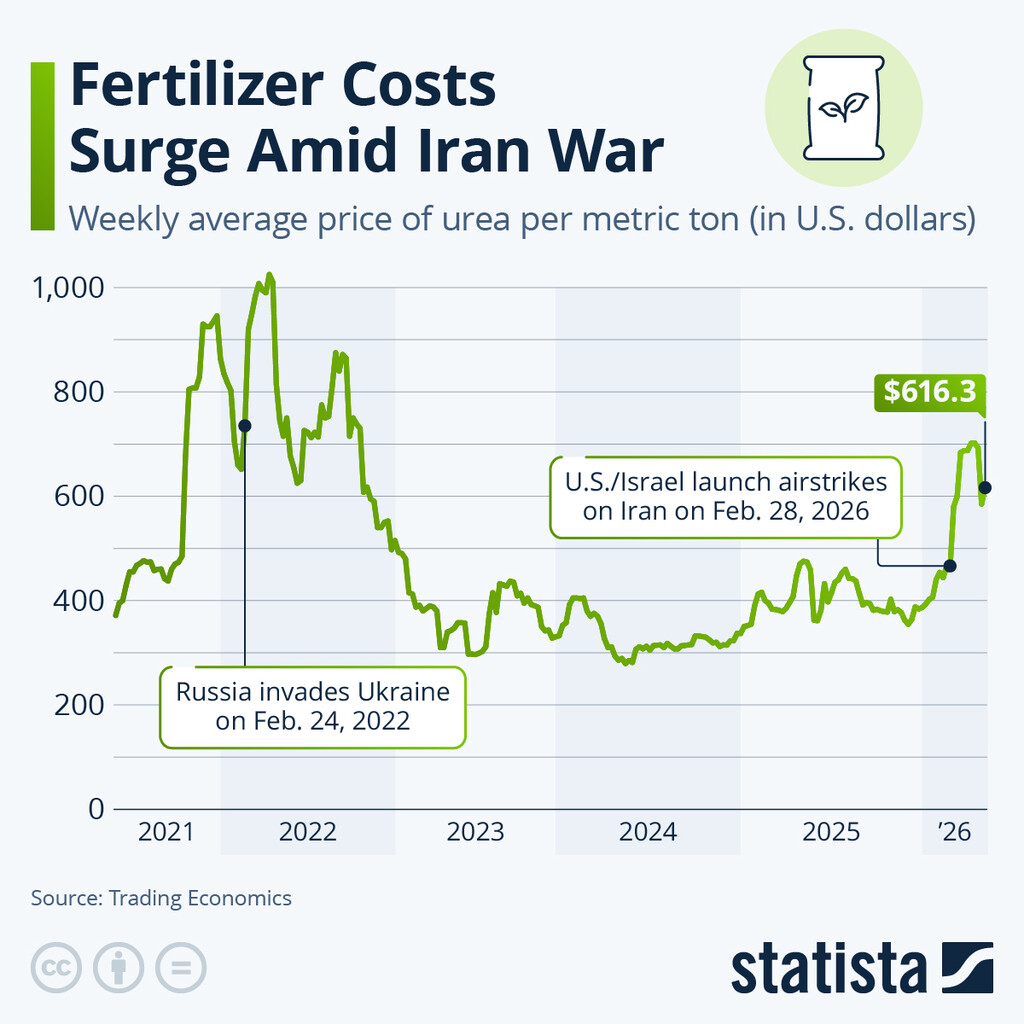
How Fertilizer Supply Disruptions Affect Food Prices
Fertilizers are essential for crop yields. Nitrogen fertilizers like urea provide nutrients that plants need to grow. When fertilizer supplies are disrupted, farmers face higher costs or shortages, leading to reduced application rates and lower harvests.
Lower harvests mean higher food prices. This affects everyone, but especially low-income households who spend a larger share of their income on food. The war in Iran could thus contribute to global food inflation, compounding existing pressures from the Ukraine war and other factors. The background to this story is set out in US Strikes Iran 10th Time; Iran Declares Full-Scale War. A related thread runs through UK Food Crisis: Strategic Reserves Needed for Food Security. Earlier coverage in Panama Canal Traffic Cuts: Drought Disrupts Global Shipping shows how the argument developed.
Key Takeaways for Consumers and Farmers
- One-third of global maritime fertilizer traffic passed through the Strait of Hormuz before the war.
- The Persian Gulf is a major source of urea, a critical nitrogen fertilizer.
- Disruptions can lead to higher fertilizer prices and reduced crop yields.
- Consumers may see higher prices for staples like bread, cereals, and produce.
- Farmers may need to adjust planting decisions and seek alternative fertilizer sources.
Comparing Fertilizer Types and Their Vulnerability
| Fertilizer Type | Key Nutrient | Main Sources | Vulnerability to Hormuz Disruption |
|---|---|---|---|
| Urea | Nitrogen | Persian Gulf, China, India | High – significant share transits Hormuz |
| Ammonia | Nitrogen | Middle East, Russia, Trinidad | High – also shipped via Gulf |
| Potash | Potassium | Canada, Russia, Belarus | Low – not reliant on Hormuz |
| Phosphate | Phosphorus | Morocco, China, US | Low – different supply chains |
What to Watch Next
Analysts are monitoring the situation closely. If the blockage persists, fertilizer prices could spike, prompting farmers to reduce usage or switch to alternatives. Governments may intervene with subsidies or trade deals to secure supplies. A closer look at the same subject appears in Emir of Qatar's Private Jet So Large It Disrupted Palma Airport Traffic. Anyone following the wider picture can start with Iran War Cost Hits $37.5 Billion: Senator Warns of Forever War. The same theme surfaces in Trump’s Iran War Repeats Afghanistan Mistakes—A Forever War, which takes a different angle.
For consumers, the key indicator will be food price indices in the coming months. Any sustained increase in fertilizer costs will likely translate into higher prices at the checkout. It is a reminder of how interconnected our world is, and how conflicts in distant regions can hit home in unexpected ways. Context on how this played out before sits in Trump's Iran War: Is America Stuck in Another Forever War?. A companion piece, Europe Turns to Manure to Solve Fertilizer Crisis, approaches the same subject from another angle.
FAQ
Why is the Strait of Hormuz important for fertilizers?
The Strait of Hormuz is a narrow waterway through which a third of global maritime fertilizer traffic passes. It is a critical route for nitrogen fertilizers like urea from the Persian Gulf to world markets.
How does the Iran war affect fertilizer supplies?
The war has blocked or restricted maritime traffic, disrupting the distribution of fertilizers. This can lead to shortages and higher prices, impacting farmers and ultimately food prices.
What can consumers do to prepare for potential food price increases?
Consumers can stay informed about food price trends and adjust budgets accordingly. Supporting policies that ensure stable fertilizer supplies and food security can also help mitigate the impact.
Are there alternative fertilizer sources to bypass the Strait of Hormuz?
Some alternatives exist, such as increasing production in other regions or using different fertilizer types. However, replacing the volume that transits Hormuz is challenging in the short term.
Browse the Shop
 Acacia frida deluxe solid wood bed frame |
Bedroom bench |
Bed chest drawers |
Lingerie dresser |
Frame base |
Mirror with jewelry storage |
30 Bathroom Vanity |
Memory foam queen mattress |
Mattresses for back pain |
Nightstand set of 2 |
Grand Goldman Shop |
Civil Lawyer
Deutschland Trikot WM 2026







