

The Iran war missile depletion has become a critical issue as Germany warns that stockpiles of interceptor missiles could run dangerously low by May. In modern conflicts, a single anti-missile interceptor can cost more than a home in a major European city, while the drone it attempts to destroy can be built for the price of a compact car. Yet in just days of modern combat, entire armies can consume the equivalent of years of industrial production, revealing how today's wars are fought as much in factories as on the front lines.
Iran War Missile Depletion: Eating Years of Arsenals in Weeks
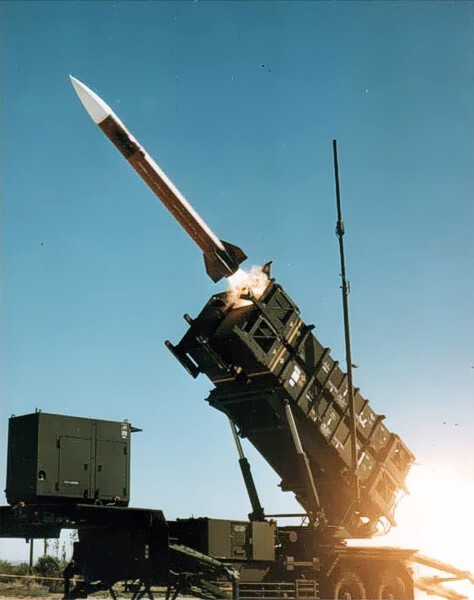
The conflict between the United States, Israel, and Iran has entered a phase of unprecedented accelerated ammunition consumption. In just days, volumes of missiles equivalent to years of production have been expended, especially systems like Tomahawk, Patriot, and THAAD, whose costs are in the millions and whose replenishment can take years.
Find Original Home Decor sparking conversation at Grand Goldman Shop.

This dynamic is not only driving up economic costs and political pressure in Washington but also exposing a structural vulnerability: major powers are simply not prepared to sustain prolonged high-intensity wars, especially when they must simultaneously manage global commitments against rivals like China or Russia.
The Rheinmetall Warning: Germany Counts the Cost
The most forceful warning comes from Europe's largest defense contractor, Rheinmetall. The company's CEO has publicly stated that European stockpiles of interceptor missiles are insufficient to sustain a prolonged conflict and that production rates must increase dramatically. Germany's defense ministry has begun auditing its own inventories, with preliminary assessments suggesting that at current expenditure rates, key munitions could be depleted by May.
This warning underscores a broader issue: the defense industrial base in Europe and the US has been optimized for peacetime production, not for the high-intensity consumption of modern warfare. The result is a critical gap between what militaries need and what factories can deliver.
Why Interceptors Are So Scarce
Interceptor missiles are complex systems requiring specialized components, skilled labor, and long lead times. A single Patriot missile takes months to produce, and the supply chain involves hundreds of suppliers across multiple countries. Scaling up production is not a matter of simply turning a dial; it requires years of investment and coordination.
Moreover, the demand for interceptors is global. Countries in Asia, the Middle East, and Europe are all seeking to bolster their air defenses, creating fierce competition for limited production slots. This scarcity drives up prices and extends delivery timelines, further straining stockpiles.
What This Means for Global Security
The depletion of missile stockpiles has immediate strategic implications. If the US and its allies run low on interceptors, they may be forced to ration their use, potentially leaving gaps in air defense. This could embolden adversaries and increase the risk of escalation.
Furthermore, the situation highlights the vulnerability of extended supply chains. In a prolonged conflict, the side that can produce and replenish munitions fastest will have a decisive advantage. Currently, that advantage may lie with adversaries who have invested heavily in domestic production and stockpiling.
- Interceptors are expensive and slow to produce, with costs in the millions and lead times of months or years.
- Modern conflicts consume munitions at unprecedented rates, quickly depleting stockpiles that took decades to build.
- Germany's audit reveals critical shortages, with key munitions potentially exhausted by May.
- Global demand for air defense systems is straining already limited production capacity.
- Strategic vulnerability: running low on interceptors could force difficult choices and embolden adversaries.
Comparing Interceptor Costs and Production Rates
The table below illustrates the stark disparity between the cost of interceptors and the drones they target, as well as the production timelines that make rapid replenishment difficult. The background to this story is set out in US Missile Stockpiles Depleted: Iran's Strategic Advantage. A related thread runs through Iran War Cost US $38 Billion and Depleted Missile Stockpile, Report. Earlier coverage in Iran War Cost Hits $37.5 Billion: Senator Warns of Forever War shows how the argument developed.
| System | Cost per Unit | Production Rate (per year) | Replenishment Time |
|---|---|---|---|
| Patriot PAC-3 | ~$4 million | ~500 | 2-3 years |
| THAAD | ~$12 million | ~100 | 3-4 years |
| Tomahawk | ~$2 million | ~200 | 1-2 years |
| Attack Drone (e.g., Shahed) | ~$20,000 | Thousands | Weeks |
What to Watch Next
As the conflict continues, the focus will shift to production capacity. The US and Europe are ramping up investment in munitions production, but results will take time. In the meantime, military planners must carefully manage inventories to avoid critical shortages. A closer look at the same subject appears in Rheinmetall Opens Telford Factory to Restore UK Tank Barrel Production. Anyone following the wider picture can start with UK Dangerously Reliant on China for Critical Minerals, MPs Warn. The same theme surfaces in Pentagon Disrespects War Dead as Iran War Threat Looms, which takes a different angle.
The May deadline highlighted by Germany serves as a stark reminder that modern warfare is as much about industrial endurance as it is about battlefield tactics. The side that can out-produce its adversary may ultimately prevail. Context on how this played out before sits in Trump's Iran War Repeats Afghanistan Mistakes: A Forever War. A companion piece, US Strikes Iran 10th Time; Iran Declares Full-Scale War, approaches the same subject from another angle.
FAQ
Why is Germany counting its missile stockpiles?
What happens in May without sufficient interceptors?
How long does it take to produce a Patriot missile?
Why are interceptors so expensive compared to drones?
Browse the Shop
 Acacia frida deluxe solid wood bed frame |
Bedroom bench |
Bed chest drawers |
Lingerie dresser |
Frame base |
Mirror with jewelry storage |
30 Bathroom Vanity |
Memory foam queen mattress |
Mattresses for back pain |
Nightstand set of 2 |
Grand Goldman Shop |
Civil Lawyer
Deutschland Trikot WM 2026







