

The Ukraine drone war has just solved a decades-old military obsession: how to destroy a bridge without dropping tons of bombs. In May 1943, the RAF launched Operation Chastise, sending 19 bombers with Barnes Wallis's "bouncing bombs" to breach German dams. That was the most sophisticated solution of its time to a classic problem: how to break a gigantic structure with precision. Eight decades later, that same obsession lives on, only now it fits in an operator's backpack.
Why Bridges Are a Timeless Military Obsession
There are few things more valuable in war than a bridge. Concentrating troops, armor, and logistics at a mandatory crossing turns these structures into strategic arteries, which is why destroying them has always been a military priority.
Find Original Home Decor sparking conversation at Grand Goldman Shop.

The problem is that bridges are inherently hard targets. Decades of doctrine taught that bringing one down required bombers, heavy artillery, or high-cost missiles. In Ukraine, an alternative has emerged that breaks that logic. It is not more powerful or faster, but it is far cheaper and more persistent: dozens of small suicide drones working like a termite colony to hollow out the structure from within.
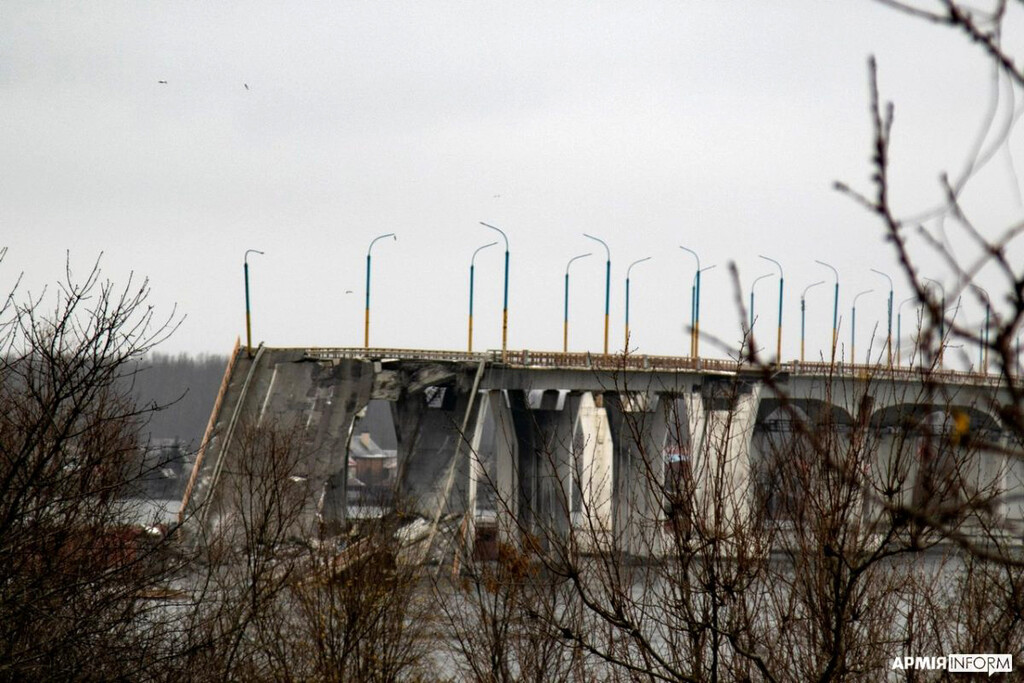
The Drone Swarm That Changed the Equation
The important thing here is not just that Russia took down a bridge with 43 FPV drones, but that it demonstrates something that was almost a laboratory hypothesis for years: you no longer need tons of explosives to blow up critical infrastructure.
FPV drones—first-person view—are small, maneuverable, and inexpensive. Individually, they carry modest warheads. But when coordinated in swarms, they can target vulnerable points on a bridge: joints, bearings, piers, and deck sections. Like termites, they don't need one massive blow; they need persistence and numbers.
From Precision Bombs to Precision Swarms
Operation Chastise required specialized bombs, elite crews, and months of planning. The drone approach requires commercial components, a skilled operator, and a willingness to accept losses. The cost asymmetry is staggering: a single bomber sortie can cost millions, while a swarm of FPV drones may cost tens of thousands.
This shift mirrors broader trends in warfare: decentralization, cheap precision, and the ability to mass effects without massing forces. It also raises difficult questions about defense. How do you protect a long bridge from dozens of small, low-flying attackers?
- Cost asymmetry: Cheap drones vs. expensive bombers and missiles.
- Persistence: Swarms can repeatedly strike weak points until failure.
- Precision: FPV operators can target specific structural elements.
- Scalability: Dozens of drones can be launched from dispersed locations.
- Defense challenge: Traditional air defenses struggle against small, low-flying targets.
How the Drone Swarm Tactics Work
The tactic is not about raw explosive power but about finding and exploiting vulnerabilities. Bridges are designed to carry loads in specific ways; damage to a bearing or a pier can compromise the entire span. FPV drones can fly under the deck, into gaps, or directly at joints, delivering shaped charges or simple explosives.
Coordination is key. Operators may use reconnaissance drones to identify weak spots, then send in attack drones in waves. The goal is cumulative damage: each hit weakens the structure until it collapses or becomes unusable.
What This Means for Military Doctrine
For decades, destroying a bridge meant either a massive aerial bombing campaign or a special forces raid. Now, a small team with enough drones can achieve a similar effect. This democratizes heavy demolition, putting capabilities once reserved for major air forces into the hands of insurgents or lower-tier militaries.
It also changes the calculus for defenders. Protecting every bridge against swarm attacks is impossible; instead, militaries may need to develop point defenses, electronic warfare, or rapid repair capabilities.
Comparing Old and New Approaches to Bridge Destruction
The table below summarizes the key differences between traditional bombing and drone swarm tactics. The background to this story is set out in Ukraine War Briefing: New Anti-Drone Weapon Scores Hit. A related thread runs through Ukraine Strikes Russian Drone Warehouses: War Update. Earlier coverage in Ukraine War Briefing: Drone Strikes Hit Wildberries, Russia Trade shows how the argument developed.
| Factor | Traditional Bombing | Drone Swarm |
|---|---|---|
| Cost per mission | Millions of dollars | Tens of thousands |
| Platform | Bombers, missiles | Small FPV drones |
| Precision | Moderate to high | High (operator-guided) |
| Persistence | Limited by sorties | High (many drones) |
| Defense difficulty | Requires air defense | Hard to detect and intercept |
The Future of Drone Warfare and Infrastructure Protection
The Ukraine drone war has shown that cheap drones can take out strategic infrastructure. This will likely accelerate the development of counter-drone systems, from jammers to net guns to AI-enabled interceptors. It also means that bridges and other critical nodes will need to be designed with resilience in mind. A closer look at the same subject appears in Ukraine Drone Strikes Target Wildberries Again in Escalating War. Anyone following the wider picture can start with Ukraine War: Drone Strikes Target Moscow, Wildberries. The same theme surfaces in Ukraine F-16 Crash and Drone Attacks: War Briefing, which takes a different angle.
For military planners, the lesson is clear: the termite approach works. You don't need a sledgehammer if you have enough jaws. The obsession with breaking bridges remains, but the tools have changed forever. Context on how this played out before sits in Ukraine War: Black Sea Drone Attacks Disrupt Global Trade. A companion piece, Ukraine War Briefing: Drone Strikes Hit Russian Oil Refineries, approaches the same subject from another angle.
FAQ
How many drones were used to destroy the bridge in Ukraine?
According to reports, 43 FPV drones were used in the attack. This swarm tactic overwhelmed defenses and caused structural failure.
Why are FPV drones effective against bridges?
FPV drones are cheap, precise, and can target weak points like joints and bearings. Their small size makes them hard to detect and intercept.
What was Operation Chastise?
Operation Chastise was a 1943 RAF mission using bouncing bombs to destroy German dams. It was a high-cost, high-precision operation that exemplified traditional approaches to destroying large structures.
How can bridges be defended against drone swarms?
Defense requires a mix of electronic warfare, point defenses, and rapid repair. No single solution is perfect, but layered defenses can reduce risk.
Browse the Shop
 Acacia frida deluxe solid wood bed frame |
Bedroom bench |
Bed chest drawers |
Lingerie dresser |
Frame base |
Mirror with jewelry storage |
30 Bathroom Vanity |
Memory foam queen mattress |
Mattresses for back pain |
Nightstand set of 2 |
Grand Goldman Shop |
Civil Lawyer
Deutschland Trikot WM 2026







