

The United States military's cyber warfare capabilities are under scrutiny after a new report from the Center for Strategic and International Studies (CSIS) warned that the current structure of US cyber forces is insufficient to deter, compete, and fight in the cyber domain. The report, produced in collaboration with the Cyberspace Solarium Commission 2.0 project, identifies a critical organizational gap: no single entity is responsible for coherently recruiting, training, and equipping the personnel needed by US Cyber Command.
While the US maintains unparalleled conventional military strength—spanning land, naval, air, and space forces—recent conflicts have shown that superiority no longer rests solely on traditional platforms. The war in Ukraine has highlighted the outsized role of drones, forcing a rethink of tactics and defenses. Meanwhile, cyberattacks have become a central tool of confrontation, and experts argue that this is where the US structure is beginning to show strain.
Find Original Home Decor sparking conversation at Grand Goldman Shop.

Why Cyber Warfare Is Now a Critical Battlefield
Cyber operations have moved from the periphery to the core of modern conflict. State and non-state actors alike use cyberattacks to disrupt infrastructure, steal sensitive data, and sow chaos without firing a shot. For the US military, maintaining dominance in this domain is essential to protecting national interests and supporting allies.
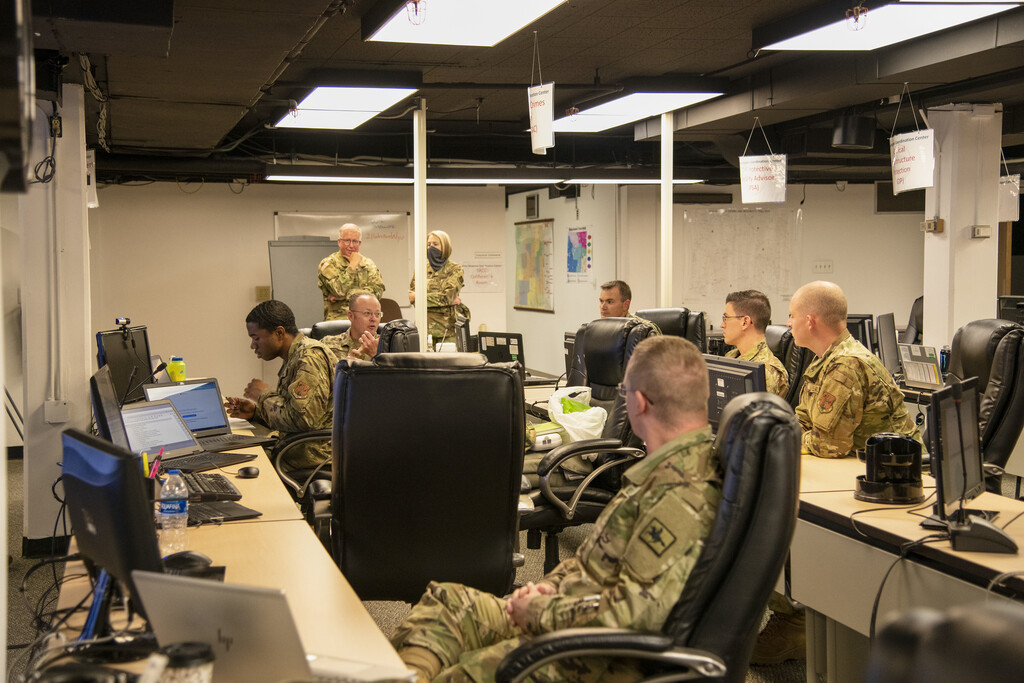
Yet the CSIS report suggests that the US may be falling short. The problem is not a lack of specialists, units, or operational capability, according to the authors. Instead, it is a structural deficiency: the absence of a unified authority to manage cyber personnel from recruitment through training to equipping. This fragmentation could undermine readiness and effectiveness in a crisis.
The Core Problem: Fragmented Responsibility
The report’s diagnosis is stark: no organization concentrates the responsibility for building and sustaining the cyber workforce that US Cyber Command needs. This means that recruiting, training, and equipping are handled by different entities, potentially leading to inefficiencies, gaps in skills, and a lack of coherence in how cyber warriors are prepared for battle.
Without a single accountable body, the US risks fielding a cyber force that is less than the sum of its parts. In a domain where speed and adaptability are paramount, such fragmentation could be a decisive disadvantage.
- No unified command for recruiting, training, and equipping cyber personnel.
- Structural gaps may hinder the US military’s ability to deter and fight in cyberspace.
- Recent conflicts underscore the growing importance of drones and cyber tools.
- Experts warn that conventional superiority alone is no longer enough.
- Report calls for a coherent approach to building the cyber workforce.
How the US Cyber Force Compares
To understand the stakes, consider how the US military stacks up in traditional domains versus cyber. The table below summarizes key aspects.
| Domain | US Strength | Key Challenge |
|---|---|---|
| Land | Highly capable, well-equipped | Adapting to drone warfare |
| Naval | Global reach, advanced fleets | Protecting against cyber threats |
| Air | Air superiority, stealth technology | Integration with cyber operations |
| Space | Satellite networks, space command | Vulnerability to cyber attacks |
| Cyber | Advanced capabilities, skilled personnel | Fragmented recruitment and training |
What the Report Recommends
While the CSIS report does not prescribe a specific solution, its findings imply that the US must streamline its approach to cyber personnel. Creating a centralized authority or assigning clear responsibility to an existing organization could help ensure that recruiting, training, and equipping are aligned with operational needs.
Such a move would require coordination across the Department of Defense, Congress, and other stakeholders. It would also need to address cultural and bureaucratic hurdles that often impede reform in large organizations.
Implications for National Security
The stakes are high. In a world where cyberattacks can disrupt power grids, financial systems, and military command networks, having a coherent and well-prepared cyber force is not optional. The US’s ability to deter adversaries and defend its interests depends on it.
Moreover, allies and partners look to the US for leadership in cyberspace. A perceived weakness could embolden adversaries and undermine collective security. The report’s warning should serve as a wake-up call for policymakers and military leaders alike. The background to this story is set out in Pete Hegseth's Leadership Crisis Threatens US Military Readiness. A related thread runs through Ukraine appoints new top commander Mykhailo Drapatyi.
What to Watch Next
Lawmakers and Pentagon officials are likely to debate the report’s findings in the coming months. Key questions include whether to establish a new command for cyber personnel or to expand the authority of an existing one. Funding and legislative action will also be critical. Earlier coverage in US Military Power Limits: Iran Conflict Lessons shows how the argument developed. A closer look at the same subject appears in Mykhailo Drapatyi Appointed Ukraine's New Commander-in-Chief.
As the character of warfare evolves, the US must adapt its structures to stay ahead. The cyber domain is unforgiving of complacency, and the window for reform may be narrowing. Anyone following the wider picture can start with US Military Justice in UK: Special Relationship Loopholes Exposed. The same theme surfaces in US Military Deal With Greenland: Sovereignty and Arctic Security, which takes a different angle.
FAQ
What is the main finding of the CSIS report on US cyber forces?
The report finds that the current structure of US cyber forces is insufficient for deterrence and combat because no single organization is responsible for recruiting, training, and equipping personnel for US Cyber Command.
Why is cyber warfare considered a US Achilles heel?
Despite advanced capabilities, the fragmented approach to managing cyber personnel creates inefficiencies and gaps that could undermine the US military’s effectiveness in cyberspace.
How does the war in Ukraine relate to this issue?
The conflict has highlighted the growing role of drones and cyberattacks, demonstrating that traditional military superiority is not enough and reinforcing the need for robust cyber capabilities.
What solutions are proposed to address the cyber workforce gap?
The report does not prescribe a specific fix, but implies that centralizing responsibility for recruiting, training, and equipping cyber personnel could improve coherence and readiness.
Browse the Shop
 Acacia frida deluxe solid wood bed frame |
Bedroom bench |
Bed chest drawers |
Lingerie dresser |
Frame base |
Mirror with jewelry storage |
30 Bathroom Vanity |
Memory foam queen mattress |
Mattresses for back pain |
Nightstand set of 2 |
Grand Goldman Shop |
Civil Lawyer
Deutschland Trikot WM 2026







