

HP's ZGX Nano AI, dubbed the "little beast," is a compact workstation designed to train large language models (LLMs) and control robots in real time without relying on the cloud. This on-device approach addresses growing concerns over data sovereignty and operational efficiency, allowing organizations to keep sensitive data local while reducing latency and bandwidth costs.
Why On-Device AI Matters for LLMs and Robotics
As AI models grow more complex, the need for efficient, localized processing becomes critical. Cloud-based solutions, while scalable, introduce latency, dependency on internet connectivity, and data privacy risks. The HP ZGX Nano AI aims to mitigate these issues by providing a powerful, self-contained environment for AI development and deployment.
Find Original Home Decor sparking conversation at Grand Goldman Shop.

For LLM training, on-device processing means faster iteration cycles and greater control over proprietary data. For robotics, real-time control requires immediate response, which is often impossible with cloud round-trips. The ZGX Nano AI bridges this gap by delivering high-performance computing at the edge.

Key Features of the HP ZGX Nano AI
While specific technical specifications are not detailed in the source, the device is positioned as a "small beast" capable of handling demanding AI workloads. It likely includes advanced GPUs, ample memory, and optimized software stacks for AI frameworks. The emphasis on training LLMs and controlling robots suggests robust compute power and low-latency I/O.

- On-device LLM training: Eliminates cloud dependency for model development.
- Real-time robot control: Enables immediate response for autonomous systems.
- Data sovereignty: Keeps sensitive data local, enhancing privacy and compliance.
- Operational efficiency: Reduces bandwidth costs and latency associated with cloud services.
- Compact form factor: Fits into edge environments without requiring data center infrastructure.
How It Compares to Cloud-Based AI
The table below outlines the trade-offs between cloud-based AI and on-device solutions like the HP ZGX Nano AI.

| Aspect | Cloud-Based AI | HP ZGX Nano AI (On-Device) |
|---|---|---|
| Latency | Higher due to network round-trips | Low, real-time processing |
| Data Privacy | Data leaves premises; compliance risks | Data stays local; enhanced sovereignty |
| Scalability | Highly scalable with cloud resources | Limited by local hardware; scalable via multiple units |
| Cost | Ongoing cloud service fees | Upfront hardware investment; lower operational costs |
| Connectivity | Requires reliable internet | Operates offline |
Use Cases: From LLMs to Robotics
The HP ZGX Nano AI is versatile, supporting a range of AI applications. In LLM training, it allows researchers to fine-tune models on proprietary datasets without exposing them to third-party clouds. This is particularly valuable in industries like healthcare and finance, where data sensitivity is paramount.
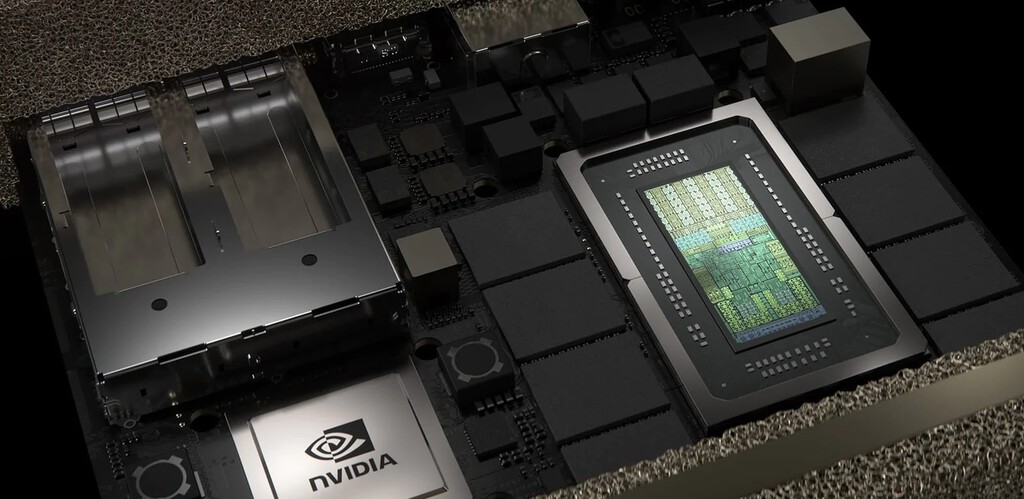
In robotics, the device can be integrated into autonomous systems, enabling real-time decision-making. For example, a robot arm in a manufacturing plant could adjust its actions based on sensor data without waiting for cloud instructions. This reduces downtime and improves safety.
Challenges and Considerations
While on-device AI offers many benefits, it also presents challenges. Hardware limitations may restrict the size of models that can be trained locally. Additionally, managing and updating edge devices across an organization can be complex. However, for many applications, the advantages outweigh these drawbacks.
Another consideration is the initial cost of hardware. Organizations must weigh this against long-term savings from reduced cloud usage. As edge computing matures, we can expect more powerful and cost-effective solutions. The background to this story is set out in Ato AI Device for Seniors: How a Grandfather Inspired a Simple Gadget. A related thread runs through Trending: latest articles. Earlier coverage in Paris Rent Control Success: 5% Lower Rents After Seven Years shows how the argument developed.
The Future of Decentralized AI
The HP ZGX Nano AI represents a step toward decentralized AI, where processing occurs closer to the data source. This aligns with broader trends in edge computing and the Internet of Things (IoT). As AI models become more efficient, on-device training and inference will become increasingly feasible. A closer look at the same subject appears in Mova P70 Pro Ultra Robot Vacuum: 30,000 Pa Power and €100. Anyone following the wider picture can start with Fire TV Stick 4K Plus Review: Boost Your Smart TV Performance. The same theme surfaces in China's Robot Schools: How Data Training Teaches Robots to Work, which takes a different angle.
Moreover, the ability to control robots in real time without cloud dependency opens up new possibilities for automation in remote or connectivity-constrained environments. From agriculture to space exploration, the potential is vast. Context on how this played out before sits in Free Home Cleaning in Exchange for Robot Training Data. A companion piece, HP ZGX Nano AI: Train LLMs and Control Robots Without the Cloud, approaches the same subject from another angle.
FAQ
What is the HP ZGX Nano AI?
The HP ZGX Nano AI is a compact workstation designed for on-device AI workloads, including training large language models and controlling robots in real time without cloud dependency.
Why is on-device AI important for data sovereignty?
On-device AI keeps sensitive data local, reducing the risk of exposure to third-party cloud providers and helping organizations comply with data protection regulations.
Can the HP ZGX Nano AI train large language models?
Yes, it is specifically designed to handle LLM training on-device, allowing for faster iteration and greater control over proprietary data.
How does real-time robot control benefit from on-device AI?
Real-time robot control requires immediate processing of sensor data and decision-making. On-device AI eliminates latency from cloud round-trips, enabling faster and more reliable responses.
Browse the Shop
 Acacia frida deluxe solid wood bed frame |
Bedroom bench |
Bed chest drawers |
Lingerie dresser |
Frame base |
Mirror with jewelry storage |
30 Bathroom Vanity |
Memory foam queen mattress |
Mattresses for back pain |
Nightstand set of 2 |
Grand Goldman Shop |
Civil Lawyer
Deutschland Trikot WM 2026







