

Paris has a peculiar feature that millions of people walk over every day without knowing it: beneath its streets, hundreds of kilometers of a communication network that functioned like a mechanical internet long before the internet existed are still buried. For over a century, those air-compressed tubes sent messages from one end of the city to the other in a matter of minutes. When the technology became obsolete, no one removed them. They simply stayed there, hidden under the asphalt.
When the Telegraph Was No Longer Enough
The story began during the era of Napoleon III. The electric telegraph had revolutionized communications, but a problem remained: the message arrived quickly at the telegraph office, yet it could then take a long time to travel through the streets to its recipient.
Find Original Home Decor sparking conversation at Grand Goldman Shop.

Inspired by a system that London had started using a few years earlier, Paris decided to build an underground network capable of eliminating that last bottleneck. The first trials began in 1866 and, shortly after, the city already had its own infrastructure to transport correspondence via compressed air.
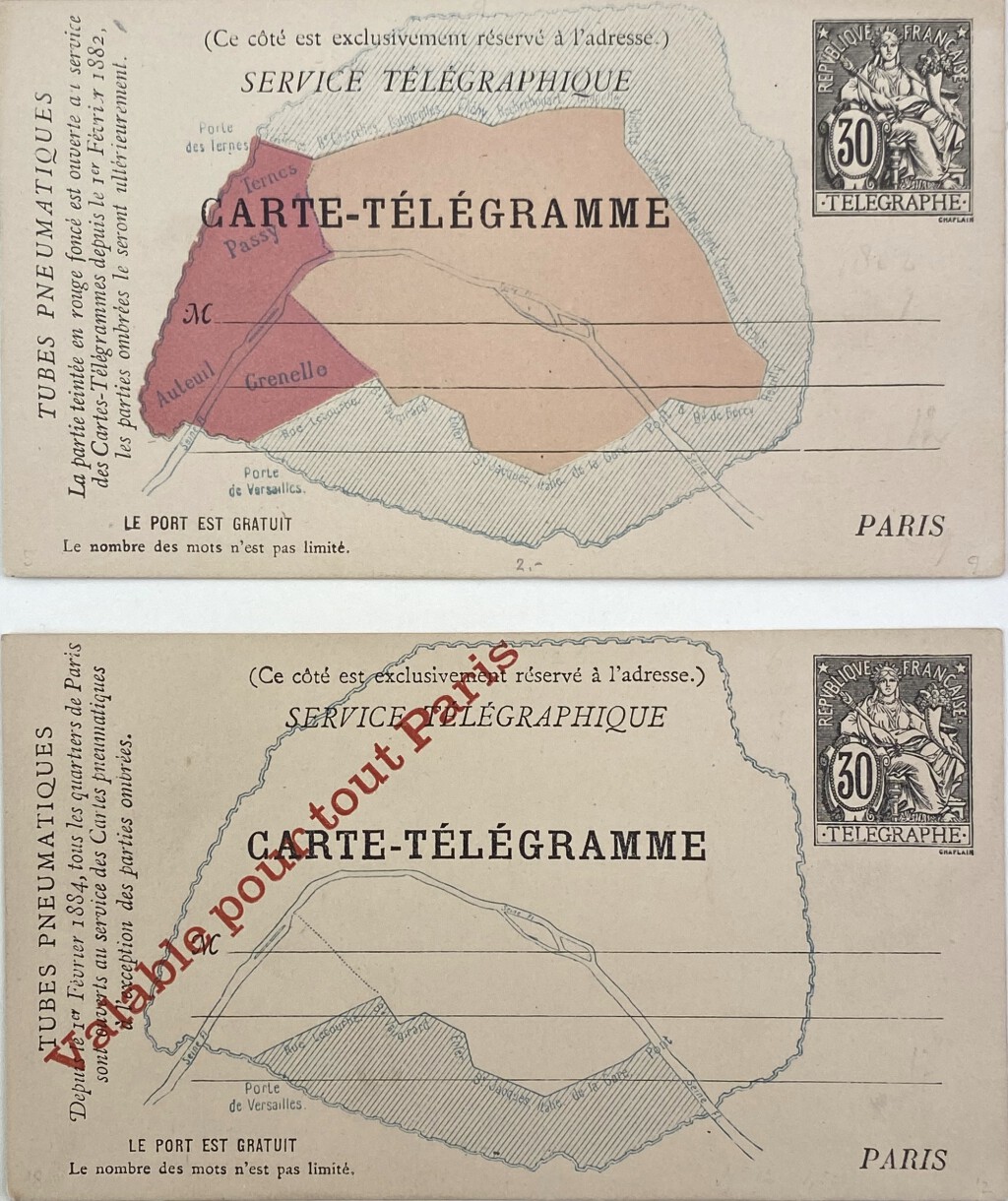
The Mechanical Internet of the Belle Époque
The operation was as simple as it was ingenious. Each letter was inserted into a metal cylinder that fit perfectly into tubes just 6.5 centimeters in diameter. Compressed air then propelled the cylinder through the network at high speed.

At its peak, the network spanned 427 kilometers and connected every arrondissement, post office, and major institution. Messages could travel across Paris in minutes, a feat unmatched by any other method at the time.

How the Pneumatic Tube Network Worked
The system relied on a central pumping station that generated compressed air. Operators would place the capsule into the tube, and a combination of pressure and vacuum would send it to its destination.
Each capsule could hold several letters, and the tubes were designed to minimize friction. The network was so efficient that it became an essential part of Parisian daily life, used for everything from government dispatches to love letters.
- Speed: Messages crossed Paris in minutes, far faster than horse-drawn carriages.
- Scale: 427 km of tubes connected the entire city.
- Technology: Compressed air propelled capsules through 6.5 cm tubes.
- Legacy: The network remained in operation for over a century.
- Abandonment: When it became obsolete, the tubes were simply left in place.
Why the Tubes Are Still Buried
Removing the network would have been a massive and costly undertaking. The tubes were buried deep under streets, buildings, and infrastructure, and by the time the system was decommissioned, the city had little incentive to dig them up.
Today, the tubes are a hidden part of Paris's heritage, occasionally uncovered during construction work. They serve as a reminder of a time when compressed air was the cutting edge of communication. The background to this story is set out in Staple Gun Guide: Manual, Electric, or Pneumatic?. A related thread runs through Trending: latest articles. Earlier coverage in Renault's Île Seguin Factory: The Island That Became a Car Plant shows how the argument developed.
Comparison with Modern Technologies
| Feature | Pneumatic Tubes (1866) | Modern Internet |
|---|---|---|
| Transmission medium | Compressed air in tubes | Fiber optic cables |
| Speed | Minutes across Paris | Instant globally |
| Data type | Physical letters | Digital data |
| Network size | 427 km | Global |
| Status | Abandoned but buried | Active and expanding |
What the Pneumatic Tubes Teach Us About Technology
The story of Paris's pneumatic tubes is a lesson in how technology evolves. What was once revolutionary can become obsolete, but the infrastructure often remains, hidden and forgotten. A closer look at the same subject appears in The Improbable Origin of Spain's Menú del Día: A Franco-Era Tourism Strategy. Anyone following the wider picture can start with All Roads Led to Constantinople, Not Rome, Study Finds. The same theme surfaces in Czechoslovak Office Desks of 1937: Mechanical Elevators for Clerks, which takes a different angle.
It also highlights the importance of adaptability. The tubes were eventually replaced by the telephone and later by digital communication, but the concept of sending messages quickly across a city remains central to modern life. Context on how this played out before sits in Google's Submarine Cable Plan Makes Dominican Republic Digital Hub. A companion piece, Paris Pneumatic Tubes: 427 km of Forgotten Internet Underground, approaches the same subject from another angle.
FAQ
What were the Paris pneumatic tubes used for?
They were used to transport letters and small packages across Paris quickly. The system was particularly useful for telegraph offices, which needed to deliver messages rapidly.
How fast were the pneumatic tubes?
Messages could travel across the city in minutes, much faster than horse-drawn carriages. The exact speed depended on the distance and the pressure of the compressed air.
Why weren't the tubes removed?
Removing the network would have been extremely costly and disruptive. By the time the system was obsolete, it was easier to leave the tubes buried than to dig them up.
Can you still see the pneumatic tubes in Paris?
The tubes are mostly hidden underground, but some remnants can be seen in museums or during special tours. Occasionally, construction work uncovers sections of the network.
Paris's pneumatic tube network is a fascinating chapter in the history of communication. It shows how cities adapt and how technology can leave behind hidden legacies. Next time you walk the streets of Paris, remember that beneath your feet lies a forgotten internet, a testament to human ingenuity.
Browse the Shop
 Acacia frida deluxe solid wood bed frame |
Bedroom bench |
Bed chest drawers |
Lingerie dresser |
Frame base |
Mirror with jewelry storage |
30 Bathroom Vanity |
Memory foam queen mattress |
Mattresses for back pain |
Nightstand set of 2 |
Grand Goldman Shop |
Civil Lawyer
Deutschland Trikot WM 2026







