

In 1945, the United States launched one of the most ambitious canine experiments ever attempted: the superdog experiment, which involved over 500 dogs, 13 years of research, and $632,000 (about $9 million today) to explore the limits of genetics. Funded by the Rockefeller Foundation, the project asked a question rooted in a darker era: could selective breeding produce an extraordinarily intelligent dog?
The Birth of the Superdog Experiment
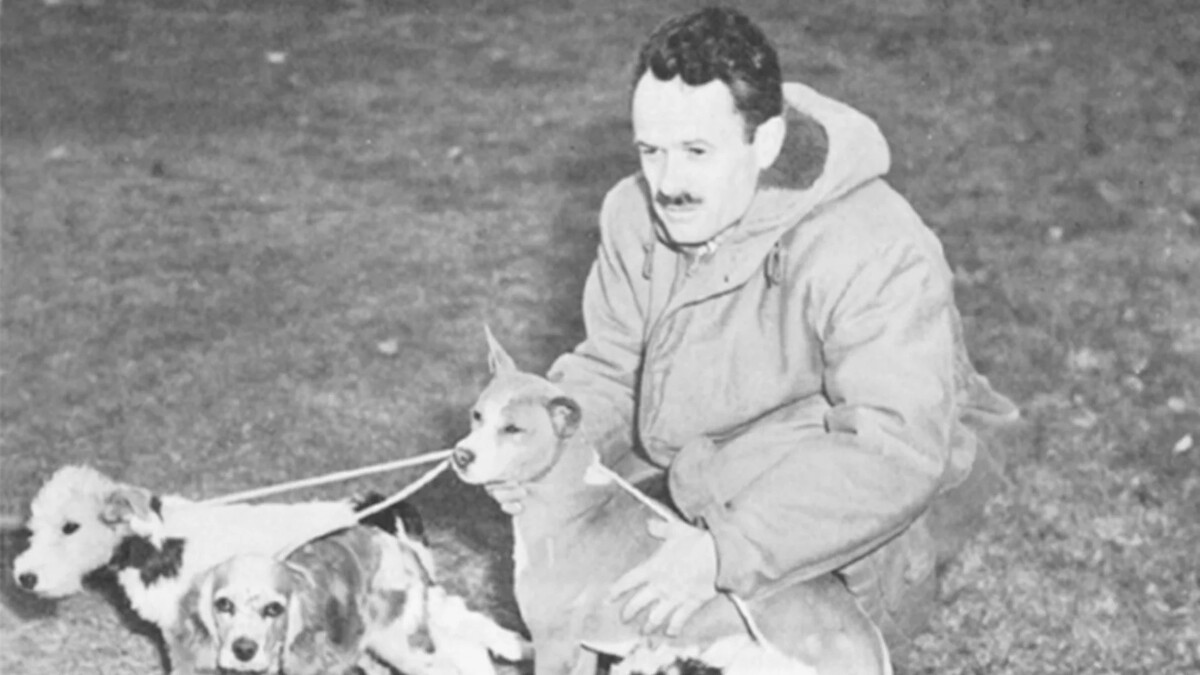
The project began in Maine in the mid-1940s and became known as the School for Dogs. Researchers John Paul Scott and John Fuller had enormous facilities, dozens of workers, and five breeds—cocker spaniel, beagle, Shetland sheepdog, basenji, and wire fox terrier—whose puppies they could follow from birth.
Find Original, High-end Home Decor that spark conversation at Grand Goldman Shop.
They recorded each puppy's first startle, play behaviors, when they began eating solid food or wagging their tails, and from five weeks old subjected them to tests of intelligence, learning, dominance, personality, and trainability.
Why the Superdog Experiment Mattered
The scale of the project is best understood in its historical context. The Holocaust had discredited eugenics and its claims to improve humans through genetic selection, while some influential figures still harbored such ideas. The superdog experiment was partly an attempt to study genetics and behavior in a controlled way, perhaps to deflect from human eugenics.
It also promised practical benefits: a smarter dog could be a better companion, worker, or service animal. The researchers hoped to identify genetic markers for intelligence and trainability.
Key Takeaways from the Superdog Experiment
- The project cost $632,000 in the 1940s, equivalent to nearly $9 million today.
- Over 500 puppies from five breeds were studied from birth.
- Researchers tested intelligence, learning, dominance, and personality.
- The study found that genetics alone could not explain intelligence; environment played a crucial role.
- The experiment contributed to the development of behavioral genetics in dogs.
Inside the School for Dogs
The facilities were vast, with dozens of workers dedicated to monitoring the puppies. Each dog was observed and tested systematically, generating a wealth of data on development and behavior.
From five weeks, puppies underwent a battery of tests designed to measure their cognitive abilities and temperament. The researchers aimed to see if certain breeds or lineages showed superior intelligence.
What the Tests Revealed
The tests showed that while breed differences existed, individual variation was huge. No single breed consistently produced super-intelligent dogs, and genetics alone could not predict a dog's performance.
Environment, training, and early experiences proved just as important as genetic background.
Why the Superdog Experiment Ultimately Failed
After 13 years, the project concluded without producing a superdog. The researchers discovered that intelligence is polygenic and heavily influenced by environment. The idea of breeding a perfect dog through simple genetic selection was unrealistic.
Moreover, the ethical and scientific climate had shifted. The project's association with eugenics made it controversial, and funding dried up.
Comparison of Breeds in the Superdog Experiment
| Breed | Key Traits Observed | Intelligence Ranking |
|---|---|---|
| Cocker Spaniel | Social, eager to please | Moderate |
| Beagle | Curious, independent | Moderate |
| Shetland Sheepdog | Highly trainable, sensitive | High |
| Basenji | Independent, less trainable | Low |
| Wire Fox Terrier | Energetic, stubborn | Moderate |
The table shows that trainability and intelligence varied more within breeds than between them, underscoring the complexity of genetic influence.
The Legacy of the Superdog Experiment
Despite its failure to create a superdog, the project left a lasting legacy. It helped establish the field of behavioral genetics in dogs and influenced later research on canine cognition. The background to this story is set out in 30 Of The Most Intelligent Dog Breeds According To Science. A related thread runs through Trending: latest articles. Earlier coverage in Winchester Cathedral Diver Saved 170m Cathedral from Collapse shows how the argument developed.
It also served as a cautionary tale about the limits of genetic determinism and the importance of environmental factors. A closer look at the same subject appears in Ancient Rome to China: The 2,000-Year-Old Trade Map That United Empires. Anyone following the wider picture can start with MediaMarkt Tech Deals: LG OLED TV, Kindle, and Fire TV Stick. The same theme surfaces in Police Dog Heatstroke Death Sparks Criminal Investigation in Tennessee, which takes a different angle.
Today, scientists understand that dog intelligence is a complex trait shaped by many genes and experiences. The superdog experiment was a bold but flawed attempt to simplify what is inherently complex. Context on how this played out before sits in Monkey Shortage in China: The Hidden Bottleneck in Drug Research.
FAQ
What was the superdog experiment?
The superdog experiment was a 13-year project funded by the Rockefeller Foundation that aimed to breed a super-intelligent dog through selective genetics. It involved over 500 puppies from five breeds.
Why did the superdog experiment fail?
It failed because intelligence is a complex trait influenced by many genes and environmental factors. No single genetic selection could produce a superdog, and the project's association with eugenics made it controversial.
How much did the superdog experiment cost?
The project cost $632,000 in the 1940s, which is equivalent to nearly $9 million today.
What breeds were used in the superdog experiment?
The breeds were cocker spaniel, beagle, Shetland sheepdog, basenji, and wire fox terrier.
Browse the Shop
 Acacia frida deluxe solid wood bed frame |
Bedroom bench |
Bed chest drawers |
Lingerie dresser |
Frame base |
Mirror with jewelry storage |
30 Bathroom Vanity |
Memory foam queen mattress |
Mattresses for back pain |
Nightstand set of 2 |
Grand Goldman Shop |
Civil Lawyer
Deutschland Trikot WM 2026










